Buyers face too many “popular” makeup bag options. The risk is clear. A nice style can still cause complaints, returns, and weak repeat orders.
In 2026, I see buyers wanting travel makeup bags with organized compartments, easy-clean materials, strong zippers, practical capacity, and stable bulk quality. I do not think color alone should lead the sourcing decision. Structure, lining, stitching, logo method, and QC control matter more for B2B buyers.
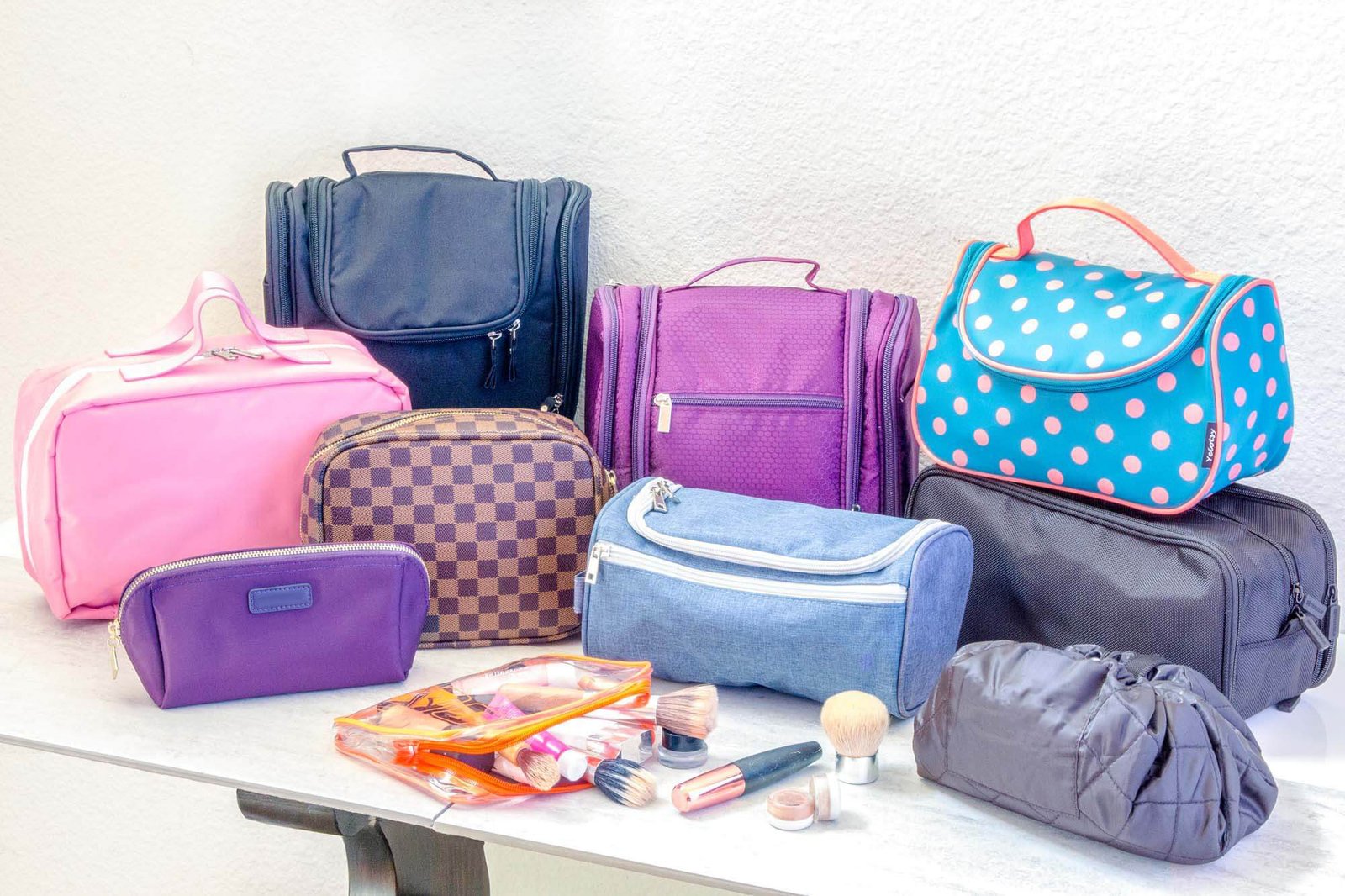
When I talk with buyers, I often hear the same first questions. They ask which style is popular. They ask whether I can offer a lower price. They ask whether I can copy a sample. I understand these questions because buyers need sales speed and margin. I also know the bigger risk sits deeper inside the product. A travel makeup bag must work inside luggage, hotel bathrooms, gym bags, and airport security checks1. If the structure is weak, the customer will notice it fast. If the lining peels, the zipper jams, or the bottle leaks inside, the retail design cannot save the order. I think the best 2026 travel makeup bag is not one universal model. It is a clear match between channel, price, size, material, user task, and factory control.
What makes a travel makeup bag retail-ready?
A makeup bag can look good in photos. The problem starts when it reaches a shelf, a warehouse, or a customer’s suitcase and fails.
I see a retail-ready travel makeup bag as one that has clear capacity, stable shape, clean stitching, smooth zipper movement, safe packing, and bulk quality that matches the approved sample.
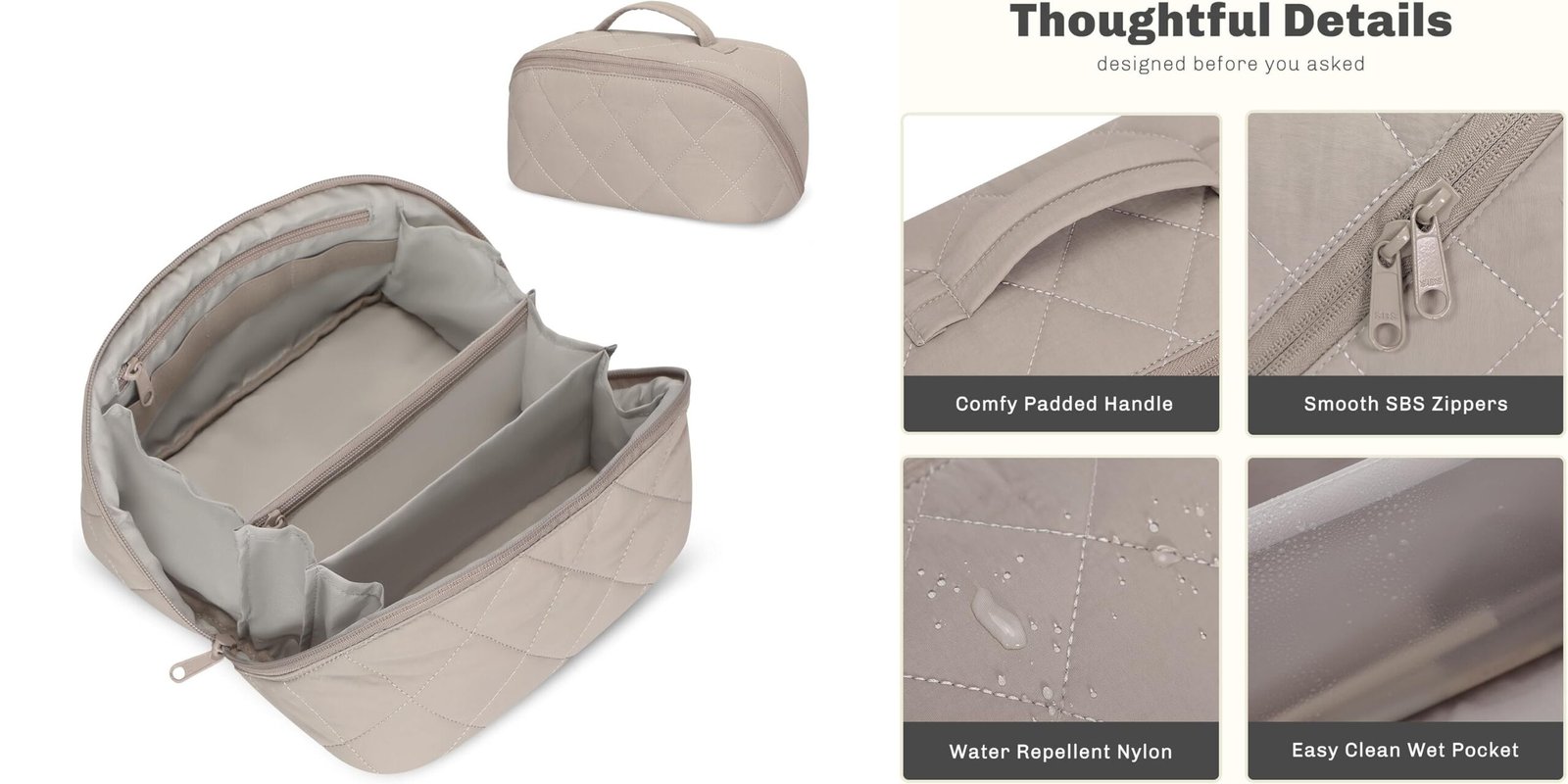
I check retail readiness before I check trend value
When I develop travel makeup bags for buyers, I do not start with color only. I start with how the product will be sold and used. A supermarket buyer may need strong price control and simple display packing. A gift buyer may need a more premium touch and a clear logo position. A brand product manager may need a special structure that supports private label value.
I also look at the parts that customers touch first. The zipper must open smoothly. The puller must feel secure. The handle must not twist too easily. The lining must not feel like it will tear after a few trips. These small points affect reviews and repeat orders.
| Retail-ready point | What I check | Buyer risk it reduces |
|---|---|---|
| Capacity | I check bottles, brushes, and palettes | I reduce poor user experience |
| Shape | I check whether the bag stands or collapses | I reduce shelf and use problems |
| Zipper | I check smooth movement and pull strength | I reduce returns and complaints |
| Lining | I check thickness and wipe-clean feel | I reduce stains and damage claims |
| Packing | I check folding, stuffing, and carton loading | I reduce shipment deformation |
A good sample is only the start. I still need material confirmation, production standards, and inline QC. Bulk goods can drift if the factory does not control fabric, cutting, sewing, and packing.2 For B2B buyers, this is where real sourcing value appears.
Which waterproof materials are easiest to clean?
Many buyers ask for waterproof makeup bags. The risk is that “waterproof” can mean different things in real production and daily use.3
I usually guide buyers toward easy-clean materials such as TPU, PVC, coated polyester, nylon with coating, and PU-coated fabrics4, based on price level and market need.
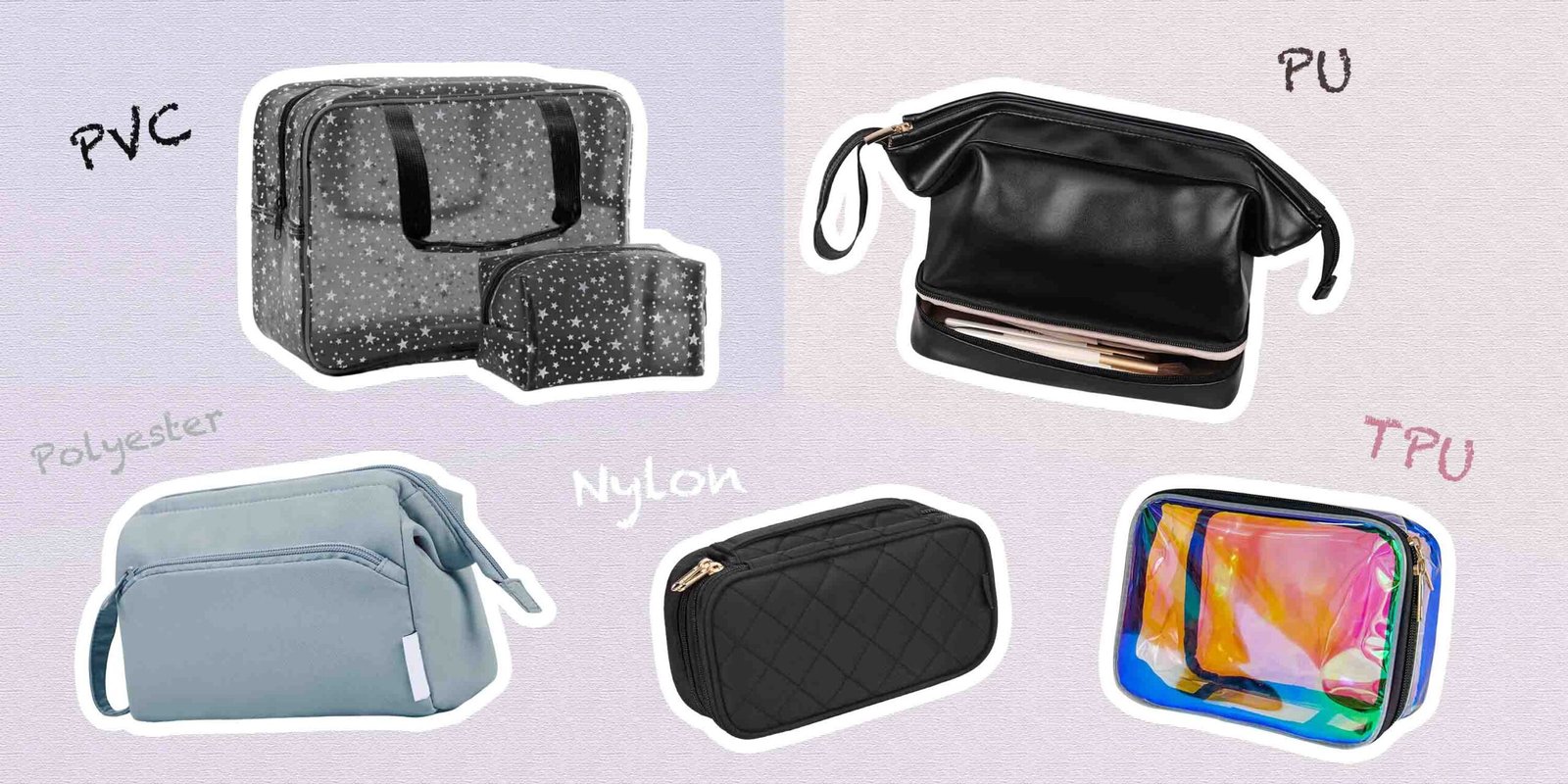
I separate easy-clean use from full waterproof claims
I prefer careful words when I discuss waterproof materials. Some materials resist splashes well. Some surfaces wipe clean fast. Some constructions still have stitched seams, zipper gaps, or fabric edges that can let water pass5. I do not want buyers to build a sales claim that the product cannot support.
For travel makeup bags, easy cleaning is often more important than extreme waterproof performance. Cosmetics can spill. Facial oil can leak. Toothpaste can mark the lining. The user wants to wipe the inside quickly and keep the bag usable.
| Material option | I see this advantage | I watch this risk |
|---|---|---|
| TPU | I see a clear, flexible, modern look | I check thickness and softness |
| PVC | I see low cost and easy cleaning | I check smell and market rules6 |
| Coated polyester | I see good price and color choice | I check coating strength |
| Nylon with coating | I see light weight and durability | I check water resistance level |
| PU-coated fabric | I see a soft premium feel | I check peeling risk over time |
When buyers push for the lowest price, material quality can drop first. A thin coating may look fine in a photo. It may fail after folding, heat, or long storage.7 I always suggest that buyers confirm hand feel, wipe-clean effect, odor, thickness, and color fastness during sampling. I also suggest that they approve the material standard before bulk production, not only the finished sample.
Do buyers need clear compartments for travel cosmetics?
A bag without clear storage can become a messy pocket. The customer loses time, and the buyer may lose product value.
I think many 2026 travel makeup bags should include clear compartments when the target user carries liquids, small items, brushes, or airport travel cosmetics.
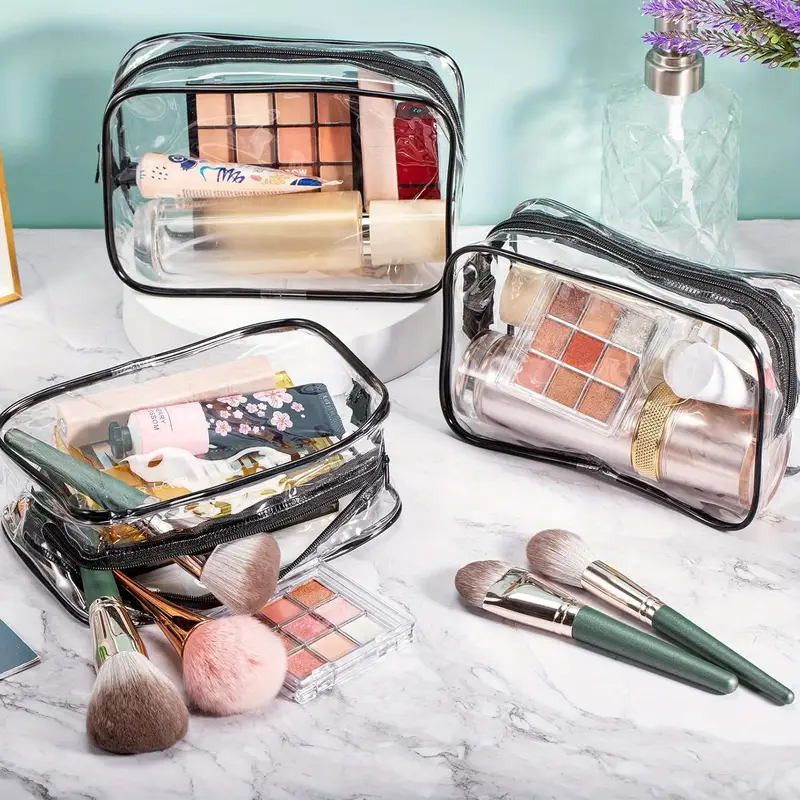
I use compartments to solve real travel tasks
Clear compartments are useful when the user needs to find products fast.8 They help with skincare bottles, small cosmetics, cotton pads, samples, and travel-size toiletries. They also help when the bag opens inside a hotel bathroom. The user can see items without emptying the whole bag.
Still, I do not add clear panels to every design. Clear material can scratch. It can crease.9 It can change the price. It can also look cheap if the thickness or stitching is poor. I choose it when it supports the product position.
| Compartment type | I use it for | I consider this before production |
|---|---|---|
| Clear front pocket | I use it for fast item display | I check clarity and scratch risk |
| Mesh pocket | I use it for light items and brushes | I check stretch and sewing strength |
| Elastic loops | I use them for brushes and tubes | I check tension after use |
| Removable pouch | I use it for liquids or small sets | I check snap, zipper, or hook strength |
| Divider panel | I use it for better organization | I check whether it reduces usable space |
For buyers, compartments should not be decoration. They should match a real use case. If the target market buys skincare sets, I may suggest upright bottle storage. If the channel sells gifts, I may suggest a removable pouch. If the price must stay low, I may simplify the layout but keep one strong main pocket and one useful inner section. Good organization creates perceived value without needing a very complicated shape.
What size works for skincare, brushes and toiletries?
A beautiful makeup bag can fail if it cannot hold the products that customers actually carry during travel.
I choose size by use case. I check bottle height, brush length, daily skincare volume, toiletry needs, luggage fit, and retail price target before I suggest dimensions.
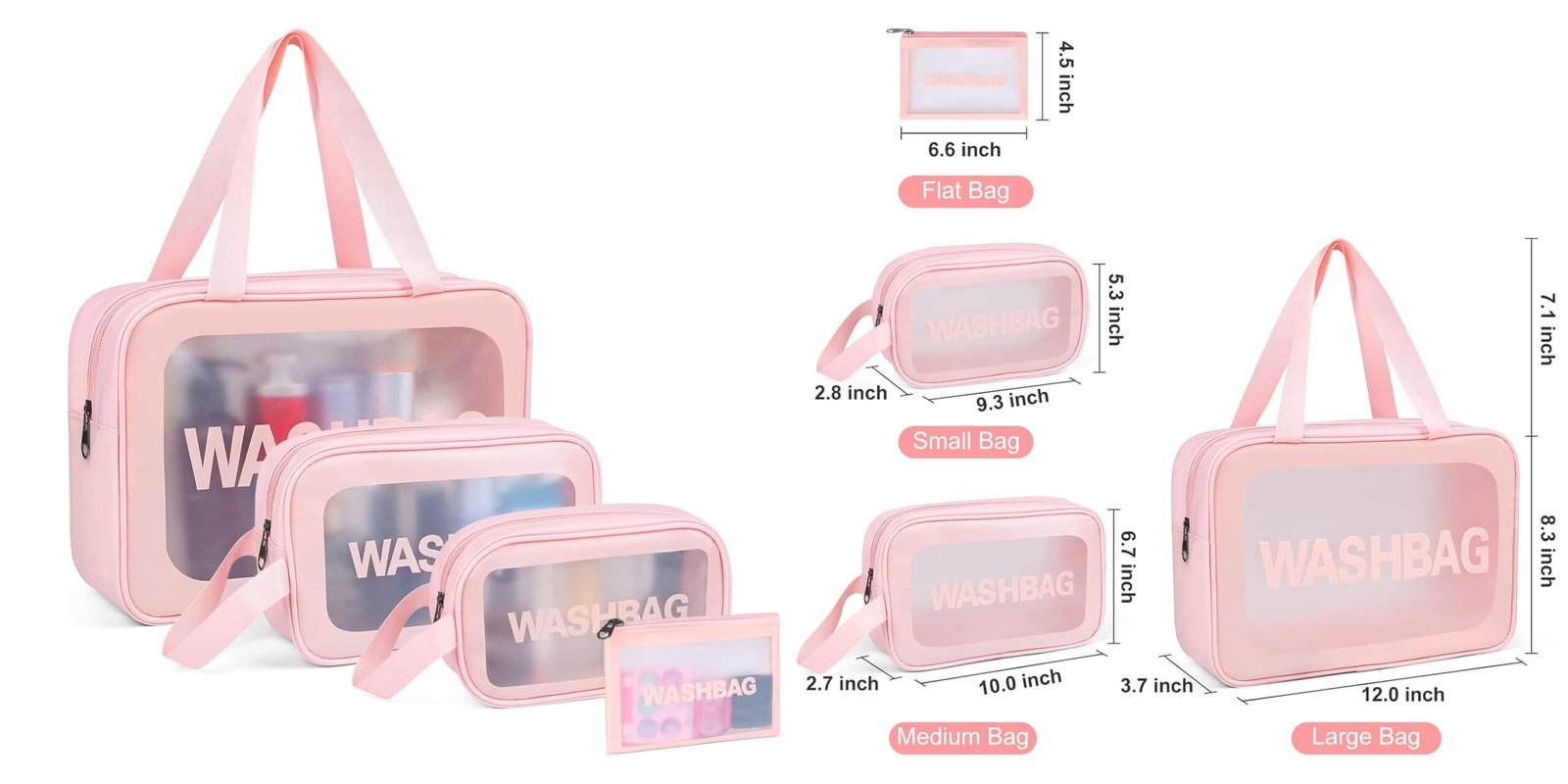
I match size with user habits and sales channel
I do not believe one size works for every buyer. A small pouch may fit handbags and gift sets. A medium organizer may work for weekend travel. A large hanging toiletry bag may work for family trips or long holidays. Each size has a different cost, packing volume, and shelf position.
I often ask buyers what products the end user will store. A skincare user needs height for bottles. A makeup user may need flat space for palettes. A brush user needs length and protection. A toiletry user may need leak-control sections and a hook.
| User need | I suggest this size idea | I check this production point |
|---|---|---|
| Daily makeup | Compact or medium pouch | I check pocket balance |
| Skincare bottles | Taller organizer | I check standing stability |
| Brushes | Long inner section or elastic loops | I check bristle protection |
| Toiletries | Larger waterproof lining design | I check leakage-prone areas |
| Gift set | Small to medium set bag | I check logo and packing look |
Size also affects landed cost. A bigger bag uses more fabric, stronger support, bigger cartons, and more shipping space.10 A buyer may think only about unit price, but freight cost can change the final margin. I suggest buyers test the size with real items before final approval. I also suggest that they check carton quantity and compressed packing effect. A bag that looks good on the table may become too bulky in a container or too soft after being packed flat. Size is a sourcing decision, not only a design choice.
Many brands want a premium look. The issue is that expensive trims can push the product above the target retail price.
I add premium value through smart details such as better zipper pullers, clean binding, contrast lining, quilted panels, metal-look parts, and neat packaging, while I control the base cost.
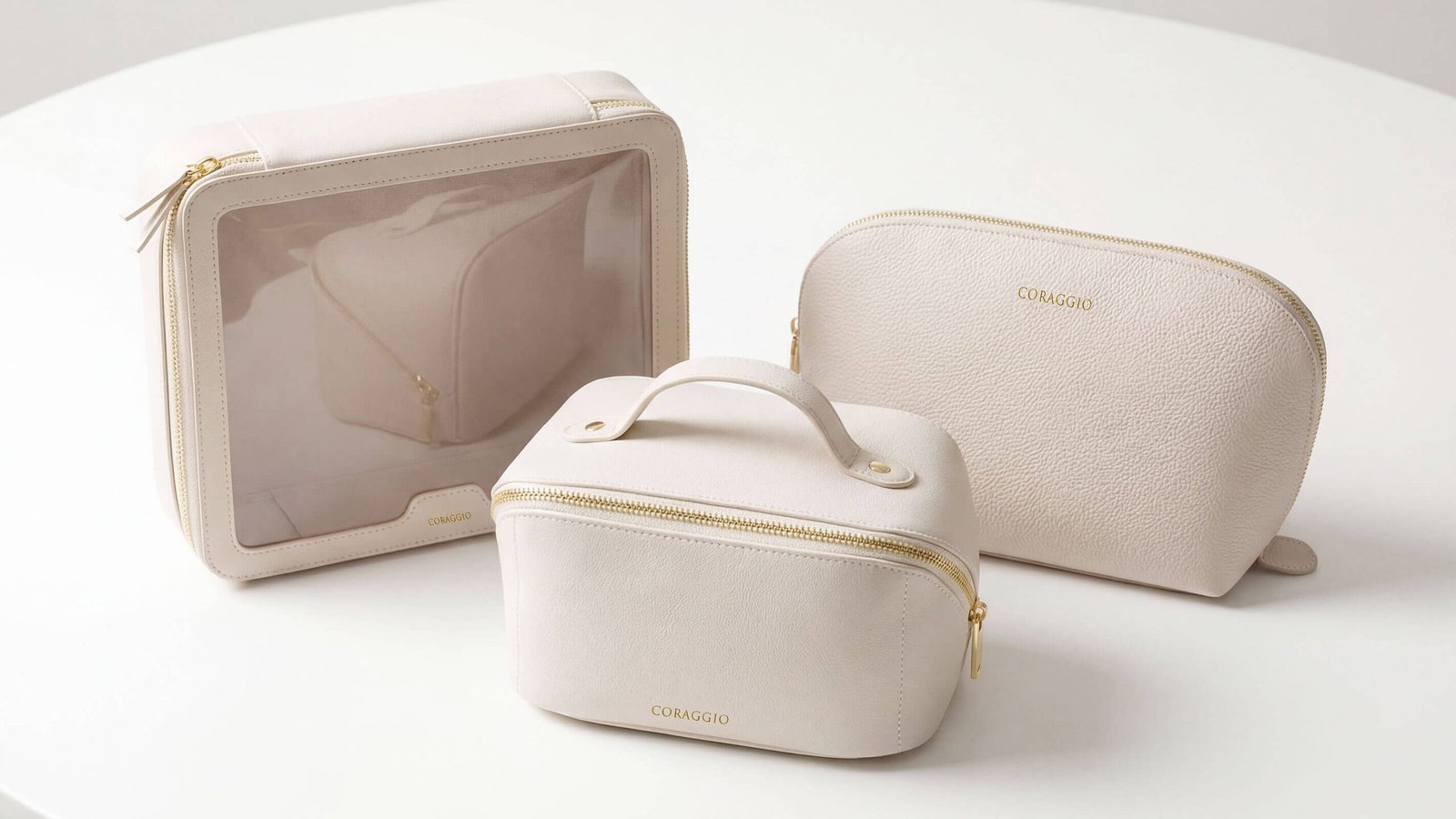
I place money where the customer can feel it
A travel makeup bag does not need every expensive feature. It needs a few details that the user can see and touch. A better zipper puller can make the bag feel more valuable.11 A clean inner lining can make the bag feel safer for cosmetics. A firm handle can make the bag feel more durable. A small logo patch can make the brand look more complete.
I often help buyers decide where not to spend. A hidden part may not need a costly material if it does not affect use. A complex shape may not be worth the extra labor if it creates QC risk. A premium detail should increase value, not create production problems.
| Premium detail | I like it because | I control this risk |
|---|---|---|
| Custom zipper puller | I feel better touch value | I check MOQ and mold cost |
| Contrast lining | I create a stronger visual effect | I check color bleeding risk |
| Quilted panel | I add texture and softness | I check stitching consistency |
| Woven label | I add brand identity at low cost | I check placement accuracy |
| Better packaging | I improve retail presentation | I check packing labor and carton space |
Low cost does not mean weak quality. It means clear priorities. If a buyer lowers cost by reducing zipper grade, lining thickness, or stitching time, the product may look cheaper after a few uses. The hidden cost may show up as bad reviews, claims, or weak reorder interest. I prefer to protect core function first. After that, I add one or two visible details that match the brand level.
What logo options work best on cosmetic bags?
A logo can build brand value, but the wrong method can peel, fade, or look poorly placed on the bag.
I choose logo methods by material, order quantity, brand look, and budget. Common options include screen printing, heat transfer, woven label, rubber patch, embroidery, and metal plate.
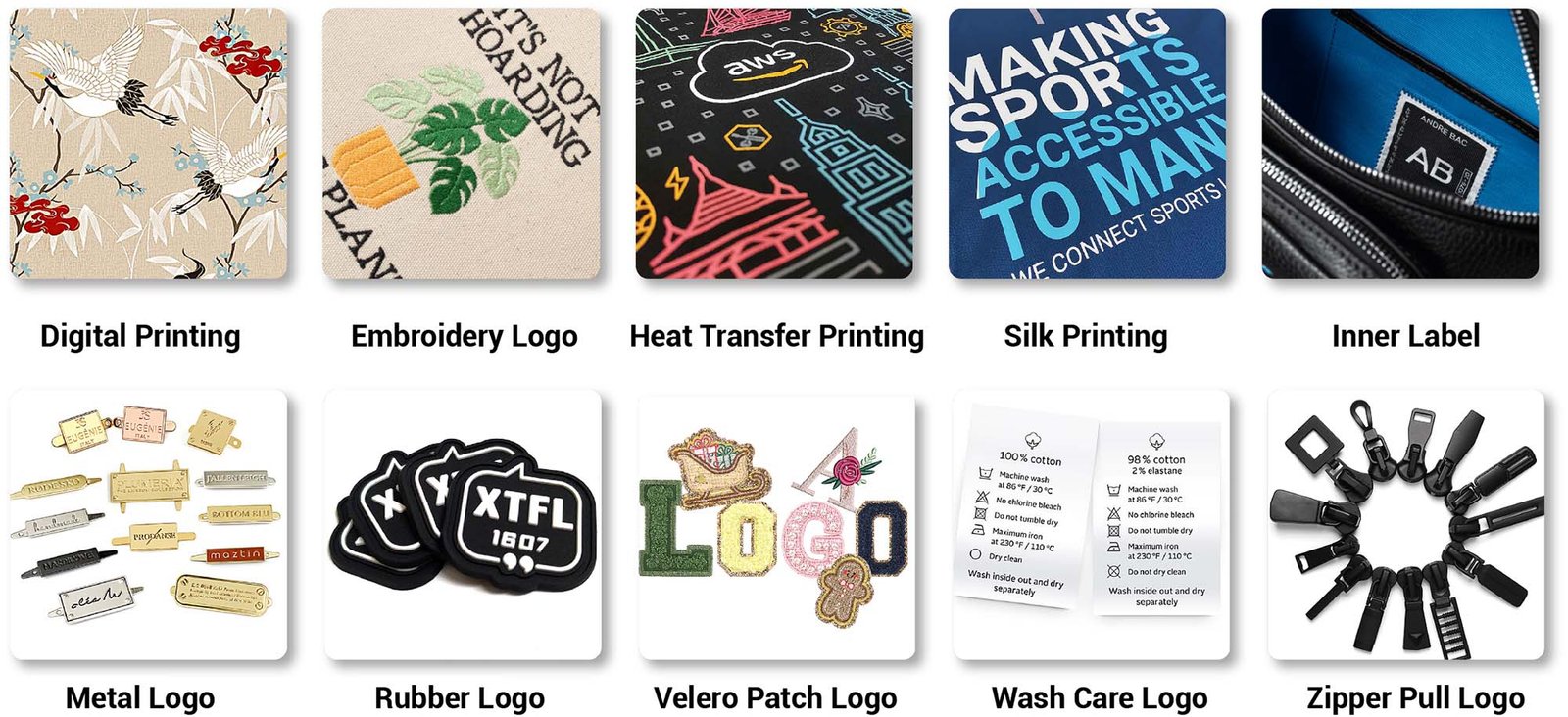
I match logo method with fabric and brand position
I do not recommend one logo method for every cosmetic bag. The best option depends on the surface. A smooth coated fabric may accept printing well. A soft fabric may work better with embroidery or a woven label. A clear TPU or PVC panel may need special care because heat and pressure can affect the surface.12
Logo size also matters. A large logo can be bold, but it can also show defects more easily. A small logo can look premium, but it may lose visibility on busy colors. I always check the artwork, color, placement, and expected use before I suggest a method.
| Logo method | I use it when | I check this before bulk |
|---|---|---|
| Screen printing | I need simple and low-cost branding | I check adhesion and color accuracy |
| Heat transfer | I need clean artwork and gradients | I check heat effect on fabric |
| Woven label | I need stable and classic branding | I check edge finish and sewing |
| Rubber patch | I need a sporty or modern feel | I check mold cost and MOQ |
| Embroidery | I need a textured premium look | I check fabric thickness |
| Metal plate | I need a higher-end look | I check weight, rust risk, and attachment |
For B2B buyers, logo control is part of quality control. The approved sample must show the real logo method, not only a mockup. Bulk goods should follow the same position, color, size, and attachment method. I also suggest that buyers confirm packaging with the logo. A nice logo can lose impact if the bag is folded badly or packed in a way that creases the front panel. Branding and packing should work together.
Conclusion
In 2026, I would choose travel makeup bags by function, material, structure, logo method, and bulk control, not by trend photos alone.
"Liquids, Aerosols, and Gels Rule - Security Screening - TSA", https://www.tsa.gov/travel/security-screening/liquids-aerosols-gels-rule. Official aviation-security guidance, such as the U.S. Transportation Security Administration's 3-1-1 liquids rule, documents that liquids, gels, creams, and pastes in carry-on baggage are subject to container-size and bagging requirements, supporting the need for travel cosmetic storage to account for airport screening. Evidence role: general_support; source type: government. Supports: Official aviation-security rules restrict liquids, gels, creams, and pastes in carry-on baggage, making cosmetic storage relevant to airport screening.. Scope note: The rules support the airport-security context but do not specify an ideal makeup-bag design. ↩
"ISO 9001 in manufacturing: learn how to transform your process", https://www.ideagen.com/thought-leadership/blog/iso-9001-manufacturing. Quality-management standards such as ISO 9001 describe process control, verification, and documented requirements as methods for maintaining product conformity, providing contextual support for the claim that uncontrolled fabric, cutting, sewing, and packing can cause bulk goods to deviate from an approved sample. Evidence role: expert_consensus; source type: institution. Supports: Quality-management standards emphasize controlled production processes, verification, and inspection to maintain conformity between specifications and finished goods.. Scope note: ISO 9001 is a general quality-management framework and does not directly test travel makeup bags. ↩
"TM127 Test Method for Water Resistance: Hydrostatic Pressure", https://members.aatcc.org/store/tm127/535/. Textile standards such as ISO 811 and AATCC water-resistance test methods define water performance through controlled tests, supporting the point that a general 'waterproof' claim can have different meanings in production and consumer use. Evidence role: definition; source type: institution. Supports: Textile water resistance and water penetration are measured through specific test methods, meaning claims depend on defined testing conditions rather than informal wording.. Scope note: These standards define testing approaches; they do not determine whether a specific cosmetic bag is waterproof unless that product is tested. ↩
"Effect of PU and PVC Coating on Different Fabrics for ...", https://www.academia.edu/14208500/Effect_of_PU_and_PVC_Coating_on_Different_Fabrics_for_Technical_Textile_Application. Materials and textile references describe TPU, PVC, polyurethane coatings, and coated polyester or nylon as flexible coated materials commonly used to improve water resistance and surface cleanability, supporting their inclusion as candidate materials for travel cosmetic bags. Evidence role: general_support; source type: education. Supports: Educational or materials references describe TPU, PVC, PU coatings, and coated polyester or nylon as polymer-coated materials used where flexibility, water resistance, and surface cleanability are needed.. Scope note: The source would support material suitability in general; performance still depends on formulation, thickness, seams, and finishing. ↩
"[PDF] Optimization of Sewing Parameters for Improving the Waterproof ...", https://jtatm.textiles.ncsu.edu/index.php/JTATM/article/download/20809/9744/76358. Technical literature on waterproof textile construction identifies stitch holes, seams, and closures as potential paths for water penetration, supporting the article's explanation that stitched seams, zipper gaps, and fabric edges may compromise a water-resistant material. Evidence role: mechanism; source type: research. Supports: Research and technical literature on waterproof textiles describe seams, stitch holes, and closures as common water-entry points unless sealed or specially constructed.. Scope note: The evidence is based on textile construction generally and would not prove leakage in a particular makeup-bag model without product testing. ↩
"Phthalates Business Guidance | CPSC.gov", https://www.cpsc.gov/Business--Manufacturing/Business-Education/Business-Guidance/Phthalates. Regulatory materials under frameworks such as EU REACH and U.S. consumer-product chemical rules document restrictions on certain phthalates in plasticized consumer articles, supporting the article's point that PVC-containing bags may require market-specific compliance checks. Evidence role: general_support; source type: government. Supports: Government regulations restrict certain chemicals commonly associated with plasticized PVC consumer products, supporting the need to review market-specific rules.. Scope note: The regulatory relevance depends on the exact PVC formulation, additives, intended market, and product category. ↩
"Multi-Regional Natural Aging Behaviors and Degradation ... - PMC", https://pmc.ncbi.nlm.nih.gov/articles/PMC12527080/. Studies of polymer-coated textiles report that heat, humidity, flexing, and aging can contribute to coating degradation, cracking, hydrolysis, or delamination, supporting the claim that a thin coating may appear acceptable visually yet fail during folding or storage. Evidence role: mechanism; source type: paper. Supports: Studies on coated textiles and polymer coatings show that flexing, heat, humidity, and aging can reduce coating integrity through cracking, hydrolysis, delamination, or loss of adhesion.. Scope note: The evidence is material-level support; failure risk for a specific bag depends on coating chemistry, thickness, substrate, and storage conditions. ↩
"A review of visual memory capacity: Beyond individual items ... - PMC", https://pmc.ncbi.nlm.nih.gov/articles/PMC3405498/. Human-factors research on visual search indicates that greater object visibility can reduce search effort and improve item identification, providing contextual support for the claim that clear compartments help users find cosmetics quickly. Evidence role: mechanism; source type: paper. Supports: Human-factors and visual-search research can support the mechanism that visibility reduces search effort when locating objects.. Scope note: The evidence supports the visibility mechanism generally and may not directly study travel makeup bags. ↩
"Vinistar Scratch Resistant - Transparent PVC Film - wendt-europe.com", https://www.achilles-wendt.com/en/products/pvc-film/vinistar-scratch-resistant. Materials research on transparent polymer films evaluates abrasion resistance, scratch resistance, flexibility, and deformation behavior, supporting the article's caution that clear plastic panels may scratch or crease depending on composition and thickness. Evidence role: mechanism; source type: research. Supports: Material references on transparent polymer films discuss abrasion, scratch resistance, flexibility, and deformation, which are relevant to clear bag panels.. Scope note: The source would support material behavior generally; actual scratch or crease resistance requires testing the selected film and construction. ↩
"[PDF] Universal Postal Convention", https://www.upu.int/UPU/media/upu/files/aboutUpu/acts/03-actsConventionAndFinalProtocol/conventionAndFinalProtocolAdoptedAtAbidjanEn.pdf. Freight-industry guidance on volumetric or dimensional weight explains that transport charges may be based on package volume as well as mass, supporting the article's point that larger bags and cartons can increase shipping-space requirements and landed cost. Evidence role: mechanism; source type: institution. Supports: Freight systems often price shipments by dimensional or volumetric weight, so larger cartons and greater shipping volume can affect landed cost.. Scope note: This supports the logistics-cost mechanism; it does not quantify the cost impact for any particular order. ↩
"Hand-Feel Touch Cues and Their Influences on Consumer ... - PMC", https://pmc.ncbi.nlm.nih.gov/articles/PMC6678767/. Consumer research on haptic product evaluation finds that tactile cues can affect perceived quality and value, providing contextual support for the claim that an improved zipper puller may make a bag feel more valuable. Evidence role: mechanism; source type: paper. Supports: Consumer-behavior research shows that tactile cues can influence product evaluation, perceived quality, and value judgments.. Scope note: The evidence concerns tactile perception broadly and may not isolate zipper pullers in cosmetic bags. ↩
"Heat sealing evaluation and runnability issues of flexible paper ...", https://bioresources.cnr.ncsu.edu/resources/heat-sealing-evaluation-and-runnability-issues-of-flexible-paper-materials-in-a-vertical-form-fill-seal-packaging-machine/. Reference materials describe polyvinyl chloride and thermoplastic polyurethane as thermoplastics whose behavior changes with heat, supporting the article's caution that clear TPU or PVC panels may require care when exposed to heat and pressure during decoration. Evidence role: definition; source type: encyclopedia. Supports: Reference sources describe TPU and PVC as thermoplastics, meaning they can soften or be reshaped under heat, which is relevant to heat-transfer or pressure-based logo methods.. Scope note: The source supports the material principle; exact processing limits depend on the grade, film thickness, additives, and applied temperature and pressure. ↩