Many buyers choose too fast. They compare only liters and price. Then they face slow sales, complaints, and samples that do not match real users.
Gym duffle bags are better for quick gear access, gym training, and short trips. Sports backpacks are better for commuting, longer carrying, and hands-free use. I choose by target user, channel, price band, and needed compartments, not by style alone.
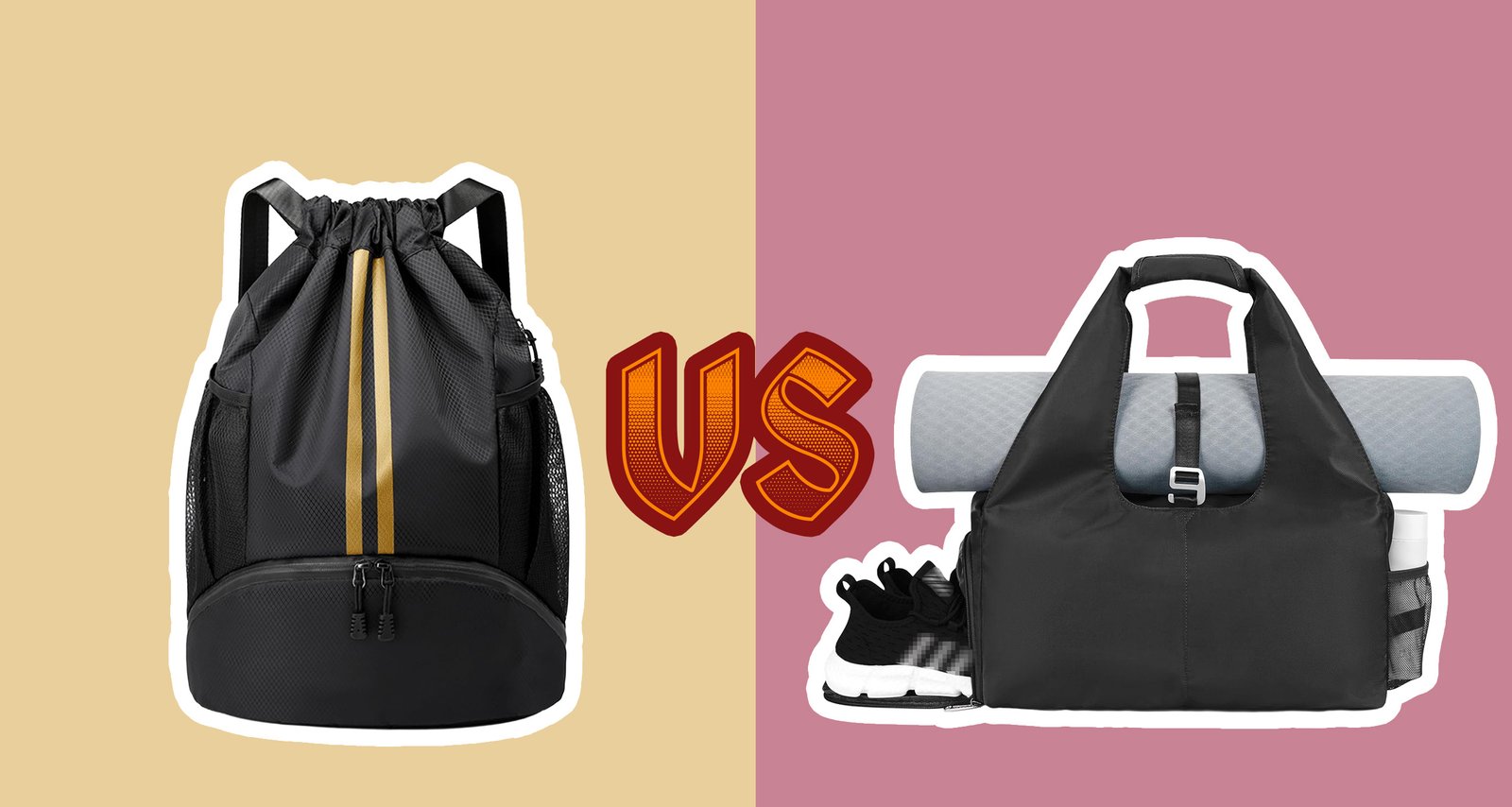
I have produced both gym duffle bags and sports backpacks for B2B buyers. I do not see one style as always better. I see a sourcing question. I ask who will use the bag, where it will be sold, how much the buyer wants to pay, and what complaints the buyer wants to avoid.
A 30L duffle bag and a 30L backpack do not work the same. The duffle bag can open wide. The user can see shoes, towel, clothes, and shaker bottle at once. The backpack spreads weight better on the shoulders.1 The user can ride a bike, walk to work, or carry a laptop with less trouble.2 The real risk is not choosing the wrong “winner.” The real risk is choosing a bag that does not fit the sales channel. I have seen promotional buyers need simple bags with big logos. I have seen private-label buyers need better compartments and stronger stitching. The better product is the one that reduces risk before bulk production starts.
Are gym duffle bags or backpacks better for employees?
Many employee gift programs fail quietly. Staff receive a bag that looks fine. Then they stop using it because it does not fit their daily routine.
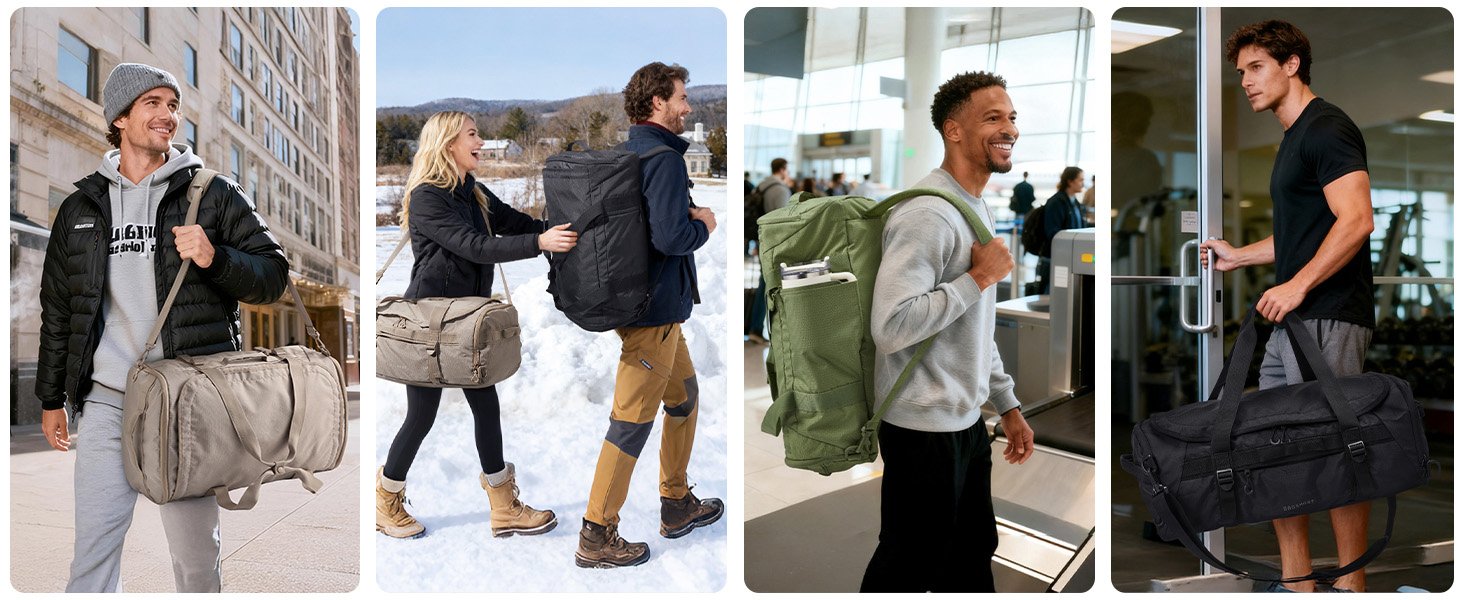
Gym duffle bags suit employees who drive, train after work, or carry shoes and clothes. Sports backpacks suit employees who commute, walk, cycle, or need hands-free carry with office items.3
I first define the employee use case
I do not start with style. I start with movement. If employees drive to the gym, I often suggest a duffle bag. The wide opening helps them pack quickly. The side shoe compartment also makes sense. If employees take public transport, I often suggest a backpack. The bag sits close to the body. The user can hold a phone, coffee, or umbrella at the same time.
| Employee situation | I usually consider | Main reason |
|---|---|---|
| Drives to gym after work | Gym duffle bag | Easy loading and fast access |
| Takes subway or bus | Sports backpack | Hands-free and easier to carry |
| Carries laptop and gym clothes | Sports backpack | Better office and fitness mix |
| Needs team gift with logo | Either style | Logo area and budget decide |
| Uses locker at gym | Compact duffle or backpack | Size control matters |
I also look at company culture. A tech company may prefer a clean backpack with a laptop section. A fitness chain may prefer a duffle with bold branding. A supermarket promotion may need a lower unit price and easy display. I have learned that employee bags must feel useful, not only nice in a product photo. If the user carries the bag every week, the buyer gains brand exposure. If the user stores it in a closet, the project loses value.
What compartments matter for shoes, wet clothes and bottles?
Many samples look good outside. Then the buyer opens them and finds mixed shoes, wet towels, and leaking bottles in the same main space.
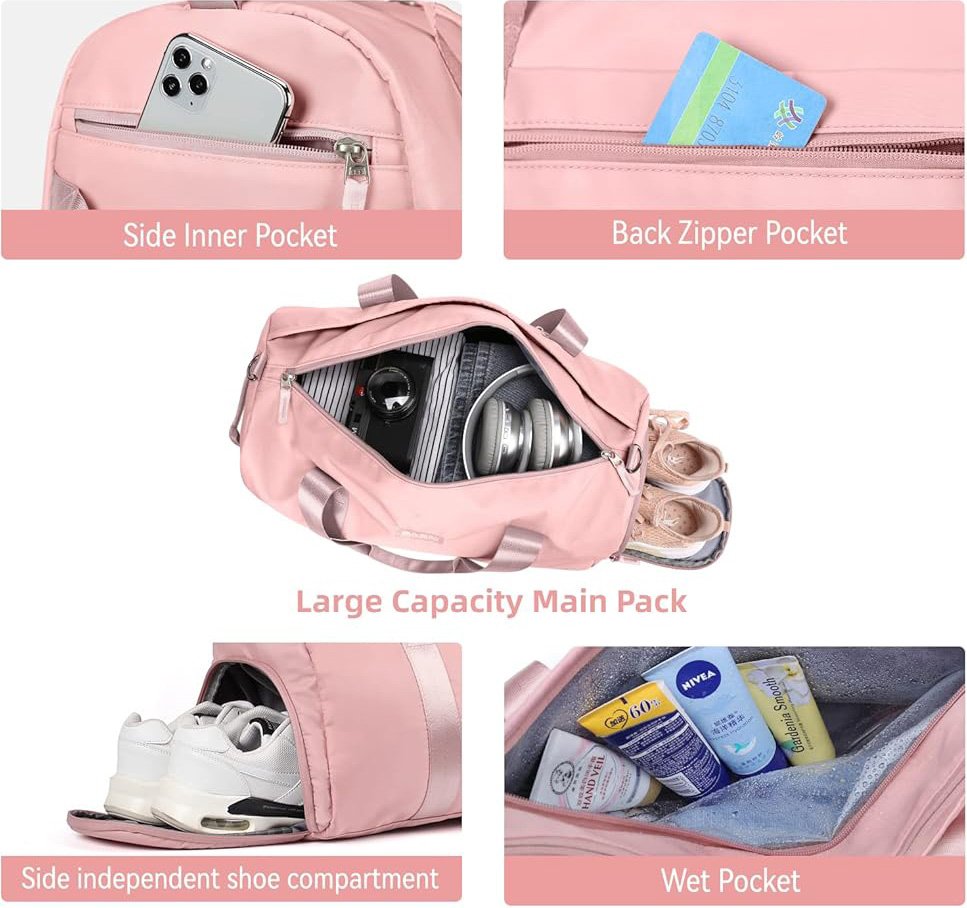
The most useful gym bag compartments are a shoe section, a wet pocket, a bottle pocket, a small valuables pocket, and a main space with easy access. I match each compartment to use, cost, and sewing difficulty.
I separate “nice to have” from “must have”
I often tell buyers that every compartment adds cost and risk. More panels need more cutting. More zippers need more sewing. More lining means more material use.4 A complex bag can be good, but only when the target user will pay for it. A basic promotional gym bag may not need five pockets. A private-label fitness bag may need them because the end user compares details.
| Compartment | User benefit | Manufacturing point I check |
|---|---|---|
| Shoe compartment | Keeps shoes away from clothes | Side panel strength and ventilation |
| Wet pocket | Holds towel or sweaty clothes | Lining seam and zipper position |
| Bottle pocket | Reduces spill risk | Elastic strength or mesh quality |
| Valuables pocket | Stores keys, cards, earbuds | Zipper size and easy reach |
| Laptop sleeve | Supports work-to-gym use | Padding and back panel support |
I also explain that a waterproof fabric does not make the whole bag waterproof5. Water can enter through zippers, seams, and needle holes.6 If a buyer needs better water resistance, I discuss coated fabric, zipper flaps, seam design, and inner lining. I keep the claim clear because over-promising creates after-sales issues. In my sample meetings, I like to pack real items into the bag. I use shoes, a towel, a bottle, and a hoodie. This simple test shows more than a flat measurement sheet. It helps the buyer see whether the layout feels natural.
What size gym bag fits lockers and daily commuting?
Many buyers choose a large capacity because it sounds more valuable. Then users find the bag too bulky for lockers, trains, cars, or office desks.
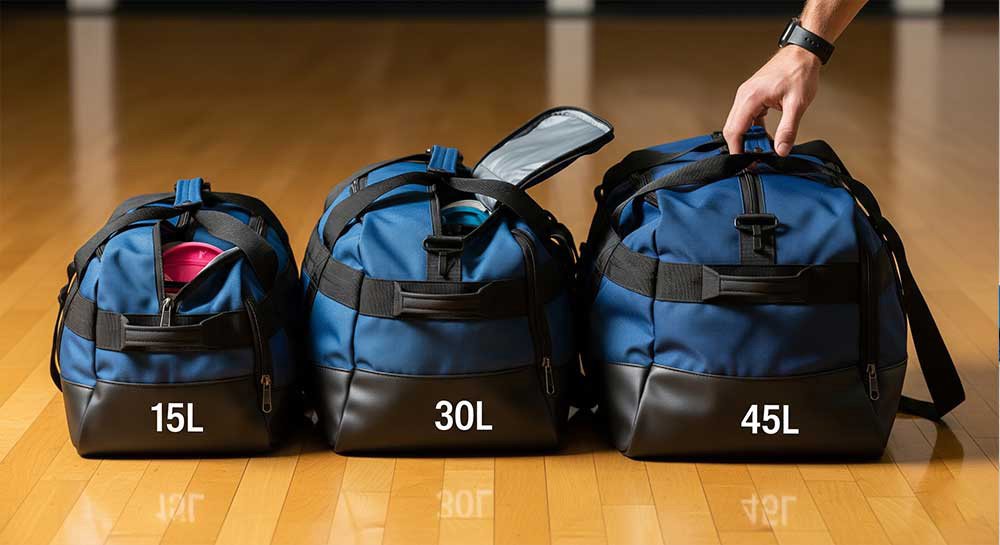
A practical gym bag size often sits between 20L and 40L.7 I choose smaller backpacks for commuting, medium duffles for gym use, and larger duffles only when users need travel or team gear space.
I compare volume with real space
I never treat liters as the only answer. A 30L duffle can feel larger than a 30L backpack because it opens like a box. A 30L backpack can feel taller and narrower. The same capacity can create different user feelings. For lockers, the bag shape matters a lot. A soft duffle can compress.8 A structured backpack may not compress as much if it has thick padding.
| Size range | Common use | Buyer risk if wrong |
|---|---|---|
| 15L-20L | Light gym, towel, bottle | Too small for shoes |
| 20L-30L | Daily commute and gym | Needs smart compartments |
| 30L-40L | Gym gear and short trip | May feel bulky in transit |
| 40L+ | Team sports or travel | May not fit lockers |
I ask buyers about the sales channel before I suggest size. A supermarket buyer may need a size that looks good on shelf and hits a price point. A private-label brand may need a size that matches online photos and user reviews. A corporate gift buyer may need a middle size because employees have different habits. I also check carton packing. A larger bag can increase freight cost. A bag with hard parts may reduce carton efficiency. The end price is not only fabric and labor. The packed volume also matters. I have seen buyers save cost on unit price but lose it on shipping. I prefer to check size, foldability, carton quantity, and user function together.
Which materials are easy to clean after workouts?
Many buyers ask for a strong fabric only. Then users complain about smell, stains, sweat marks, and linings that are hard to wipe.
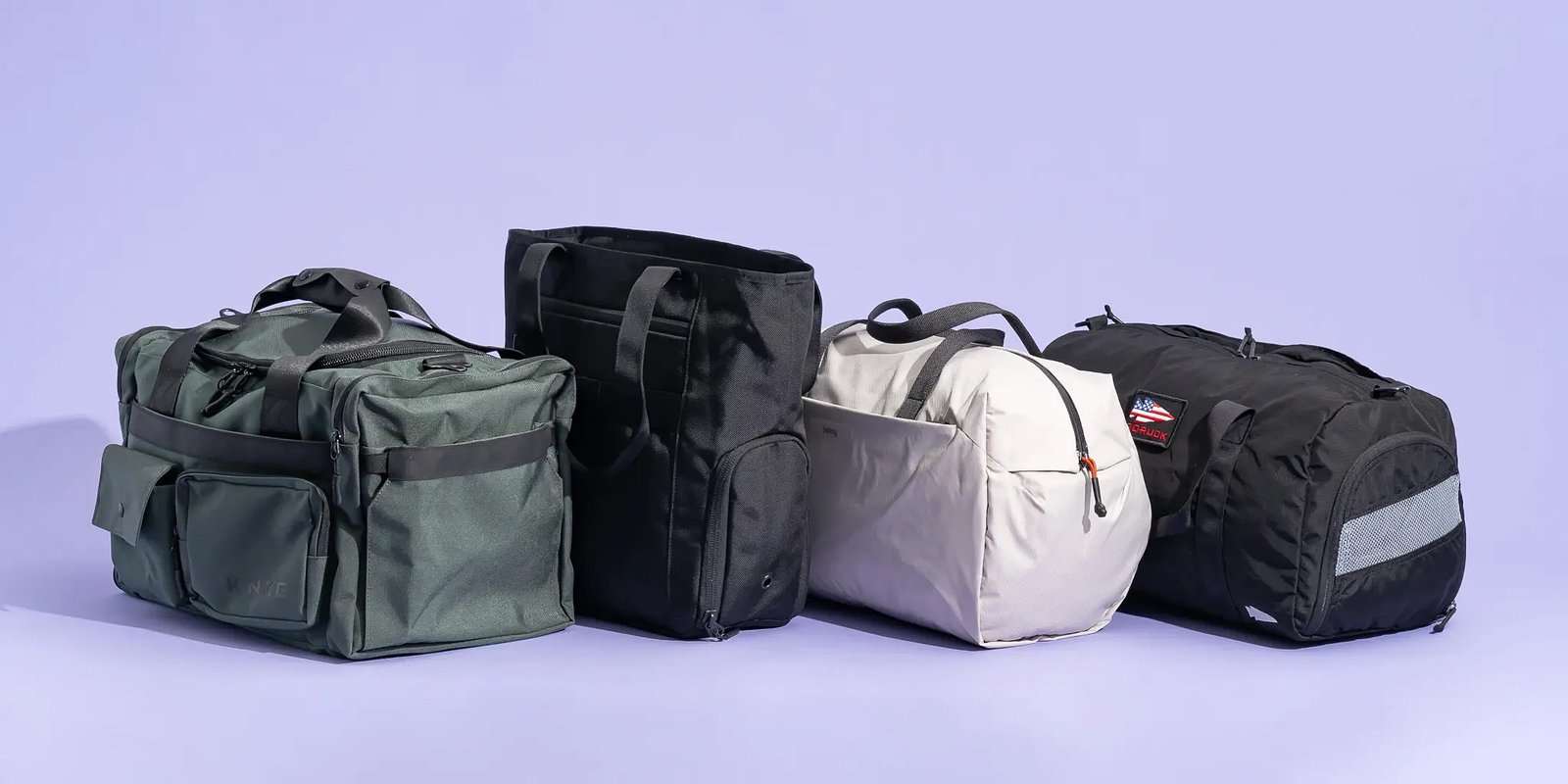
Easy-clean gym bags often use polyester, nylon, PU-coated fabric, or laminated materials. I choose materials by wipe-clean surface, weight, cost, printing method, durability, and the buyer’s target price.
I match material to cleaning and price
I see fabric choice as a business decision, not only a technical decision. Polyester is common because it balances cost and performance.9 Nylon can feel softer or stronger, but it often costs more.10 PU-coated fabric can be easier to wipe, but coating quality must be stable. Some eco-friendly materials are good for brand stories, but I still check strength, color fastness, and bulk consistency.
| Material choice | Cleaning benefit | Buyer point I explain |
|---|---|---|
| Polyester | Common and cost friendly | Many weights and finishes exist |
| Nylon | Strong and smooth feel | Cost may be higher |
| PU-coated fabric | Easier to wipe | Coating can affect sewing |
| Recycled polyester | Good sustainability angle | Certification and MOQ may matter |
| Mesh parts | Helps airflow | Can snag if quality is poor |
I also look inside the bag. A dark lining can hide stains better than a light lining. A smooth lining can be easier to wipe than a rough one. A wet pocket needs a suitable inner material, but the seam still needs attention. I do not say a normal gym bag is fully waterproof unless the design supports that claim. I know that buyers need clear wording for packaging and online listings. Wrong claims can create returns. For logos, I also check material surface. Screen printing may work well on some polyester. Heat transfer may suit smooth surfaces. Embroidery can look premium, but it may create needle holes and extra cost.11 The best material is the one that supports use, cleaning, branding, price, and production stability at the same time.
How should brands place logos on fitness bags?
Many brands place logos where they look large in artwork. Then the logo bends, hides, rubs, or becomes uneven after sewing.
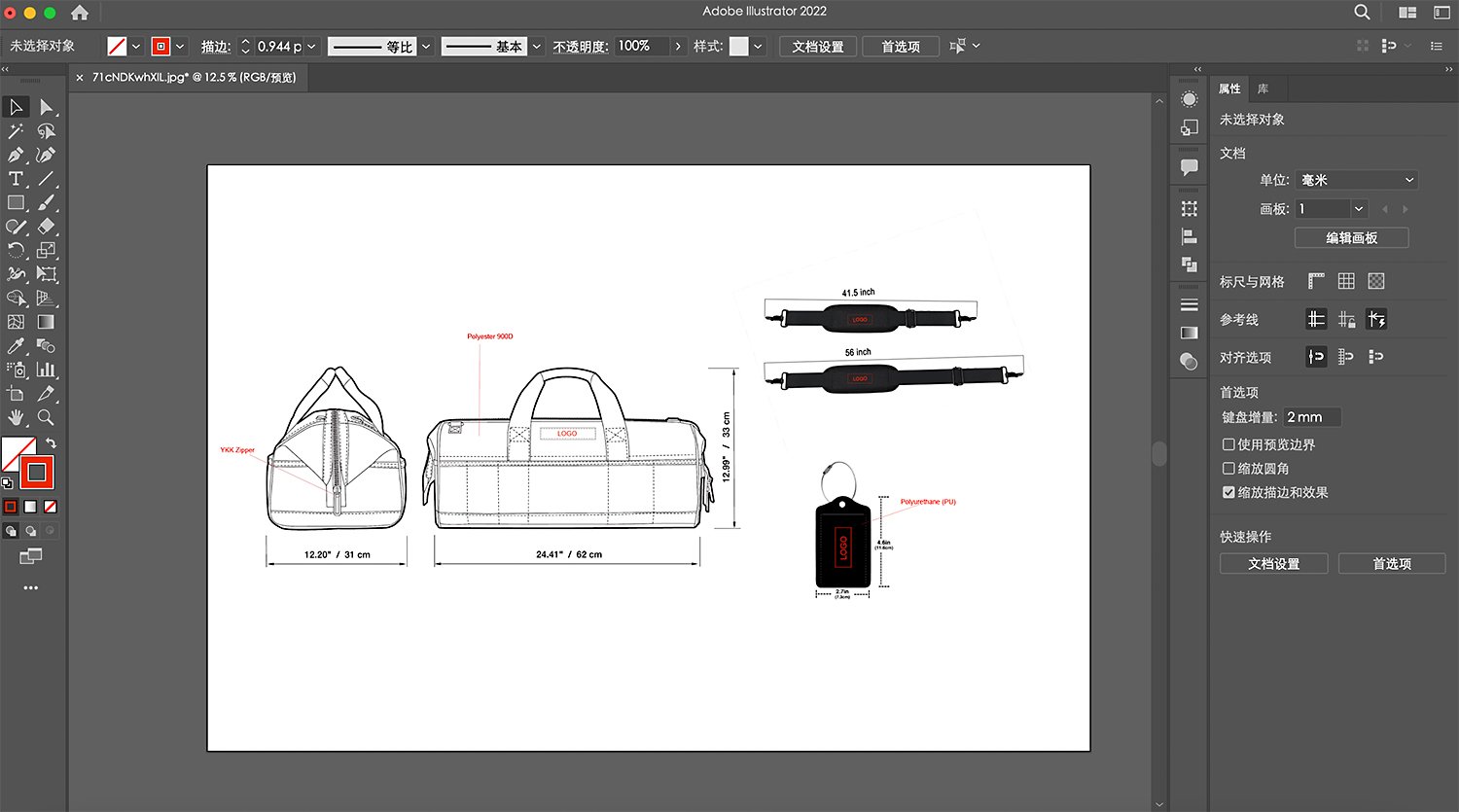
Brands should place logos on flat, visible, low-stress areas. I usually check the front panel, side panel, strap, zipper puller, patch, and packaging before confirming the final logo method.
I design logo placement around production reality
I always ask for the logo file early. A logo is not only a decoration. It affects fabric choice, panel cutting, sewing order, and sample approval. If a logo sits across a curved pocket, the print may distort. If a logo sits near a seam, the stitching may cut through it. If a logo sits on a high-rub area, it may wear faster. I prefer a clean area with enough margin.
| Logo position | Good for | Risk I check |
|---|---|---|
| Front panel | Strong brand display | Curved surface or pocket seam |
| Side panel | Duffle bag visibility | Shoe compartment may interrupt |
| Shoulder strap | Subtle branding | Small size and rubbing |
| Rubber patch | Premium feel | Mold cost and MOQ |
| Zipper puller | Detail branding | Small logo clarity |
| Inner label | Private label identity | Less outside exposure |
I also match logo method with price band. Screen printing is cost friendly for simple logos. Heat transfer can show more detail. Embroidery feels higher value, but it adds time and cost. Woven labels and rubber patches are useful for private-label brands. For promotional orders, I often keep the logo method simple and stable. For retail orders, I pay more attention to brand feel and repeat sales. I also ask buyers where the product will be sold. A gym merchandise bag may need a bold logo. A corporate employee gift may need a quiet logo. A retail fitness brand may need a logo that looks premium in photos. Good logo placement protects the brand and reduces sample changes.
What should buyers test before approving samples?
Many buyers approve samples by photo. Then bulk production starts. Later they discover weak handles, tight shoe pockets, rough zippers, or poor packing shape.
Buyers should test loading, carrying comfort, zipper movement, stitching stress points, compartment fit, logo quality, cleaning, color, carton packing, and final user scenario before sample approval.
I use a simple pre-production test list
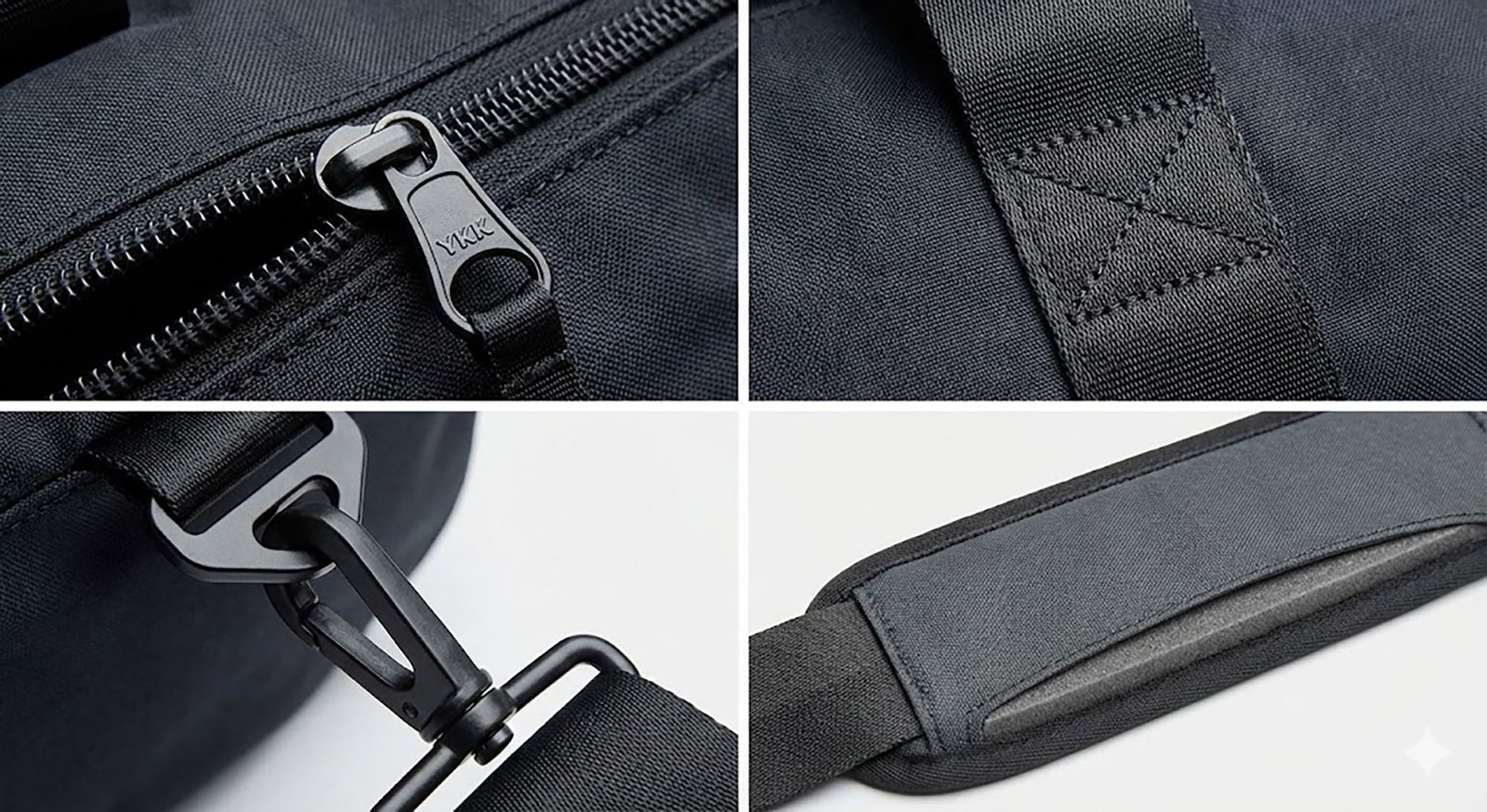
I like sample testing because it prevents expensive problems. I do not only check whether the sample looks like the design. I check whether the sample works like the user expects. I load the bag with weight. I pull the handles. I open and close zippers many times by hand. I put shoes into the shoe compartment. I place a bottle in the pocket. I check whether the user can reach the small pocket easily.
| Test item | What I check | Why it matters |
|---|---|---|
| Load test | Handles, straps, seams | Weak points fail first |
| Zipper test | Smooth movement and alignment | Bad zippers create quick complaints |
| Compartment test | Shoes, wet towel, bottle | Real items reveal layout problems |
| Carry test | Shoulder comfort and balance | Users notice pain fast |
| Logo test | Position, color, peeling risk | Branding must stay clean |
| Packing test | Folding, carton count, shape | Freight and shelf look matter |
I also ask buyers to confirm the price band before adding more features. A reinforced handle is useful, but it adds material and labor. A better zipper improves feel, but it changes cost. A separate wet pocket is practical, but it may increase sewing time. I prefer open discussion before sample revision. This saves time for both sides. I also suggest checking bulk tolerance. A handmade sewn product will have small variation.12 The buyer should define what is acceptable before mass production. I have found that clear sample approval notes reduce disputes. Photos, measurements, material cards, logo standards, and packing instructions should be saved together. A good approval process is not slow. It is protection.
Conclusion
I choose gym duffle bags or sports backpacks by user, channel, cost, and function. The better bag is the one that lowers sourcing risk.
"Impact of Backpacks on Ergonomics: Biomechanical and ... - PMC", https://pmc.ncbi.nlm.nih.gov/articles/PMC9180465/. Ergonomics research on carried loads reports that backpacks distribute weight across both shoulders and generally reduce asymmetric trunk and shoulder loading relative to one-sided bags, supporting the claim that backpacks spread weight better during carrying. Evidence role: mechanism; source type: paper. Supports: That backpacks are designed to distribute loads across both shoulders and can reduce asymmetric loading compared with one-shoulder carry styles.. ↩
"5 Best, Expert-Tested Bike Commuter Backpacks to Buy in 2023", https://www.carryology.com/reviews-2/field-testing-5-awesome-backpacks-for-bike-commuting/. Guidance from ergonomics and campus transportation sources commonly notes that backpacks allow hands-free movement and are better suited to walking or cycling while carrying everyday items such as books or laptops; this supports the commuting rationale, though it is contextual rather than a direct comparison with duffle bags in all settings. Evidence role: general_support; source type: education. Supports: That hands-free backpack designs are commonly preferred for walking or cycling commutes and mixed office carry.. Scope note: Support is contextual rather than a direct proof comparing backpacks and duffle bags across all use cases. ↩
"Integrating more walking into public transit commuting - PMC", https://pmc.ncbi.nlm.nih.gov/articles/PMC12574145/. Transportation and ergonomics literature commonly describes backpacks as a hands-free carrying format used for walking, public transit, and mixed daily loads, which supports their suitability for commuting and office-related items. Evidence role: general_support; source type: research. Supports: That backpack-style bags are commonly associated with hands-free commuting and mixed work/personal carry.. ↩
"A Case Study from an Apparel Manufacturing Industry of Pakistan", https://www.academia.edu/72388357/Productivity_Improvement_Through_Time_Study_Approach_A_Case_Study_from_an_Apparel_Manufacturing_Industry_of_Pakistan. Sewn-product manufacturing references explain that additional pattern pieces, linings, and closures increase cutting operations, sewing steps, and material consumption, supporting the statement that added compartments raise cost and production complexity. Evidence role: mechanism; source type: education. Supports: That greater pattern-piece count and added closures or linings increase labor operations and material use in sewn-product manufacturing.. ↩
"The final seam... one last look at water resistant seams before I lose ...", https://www.reddit.com/r/myog/comments/sb1v4b/the_final_seam_one_last_look_at_water_resistant/. Textile and outdoor-equipment technical sources note that overall waterproof performance depends not only on the face fabric but also on seam construction, needle perforations, and zipper or closure design, so a waterproof fabric alone does not make the finished bag fully waterproof. Evidence role: mechanism; source type: research. Supports: That water resistance of a finished bag depends on seams, stitch holes, and closures in addition to the base fabric.. ↩
"[PDF] Optimization of Sewing Parameters for Improving the Waterproof ...", https://jtatm.textiles.ncsu.edu/index.php/JTATM/article/download/20809/9744/76358. Textile engineering studies and technical references describe seams, stitch perforations, and zipper assemblies as common weak points for water penetration in sewn products, supporting the explanation of where leakage can occur. Evidence role: mechanism; source type: paper. Supports: That seams, stitch holes, and zippers can compromise water resistance in sewn textile products.. ↩
"Duffel bag - Wikipedia", https://en.wikipedia.org/wiki/Duffel_bag. Product-category references and market listings commonly place everyday gym and training bags in an approximate 20–40 liter capacity range, which supports this sizing guideline as a market norm rather than a universal standard. Evidence role: general_support; source type: other. Supports: That many gym and small sports bags are marketed within an approximate 20L to 40L capacity range.. Scope note: This support is descriptive of common market ranges, not a formal rule for all users or sports. ↩
"Combined Use of a Ramped Position Pillow and Bean Bag in ... - PMC", https://pmc.ncbi.nlm.nih.gov/articles/PMC13093261/. Luggage and product-design references commonly distinguish soft-sided constructions as more compressible than structured or padded forms, which supports the observation that a soft duffle can fit constrained spaces more easily than a rigid backpack. Evidence role: mechanism; source type: other. Supports: That soft-sided bags compress more readily than rigid or heavily padded bag constructions.. Scope note: The support is based on general product-construction principles rather than gym-bag-specific testing. ↩
"Polyester - Wikipedia", https://en.wikipedia.org/wiki/Polyester. Standard textile references describe polyester as a widely used synthetic fiber because of its durability, resistance to stretching and shrinking, and comparatively low cost, supporting its common use where cost-performance balance matters. Evidence role: general_support; source type: encyclopedia. Supports: That polyester is a widely used synthetic textile valued for durability, dimensional stability, and relatively low cost.. ↩
"Unraveling the Differences: Nylon and Polyester Explained", https://lenzip.com/unraveling-the-differences-nylon-and-polyester-explained/. Textile education sources commonly note that nylon can provide a different hand feel and high abrasion resistance and is often more expensive than polyester in comparable applications, supporting this material comparison. Evidence role: general_support; source type: education. Supports: That nylon and polyester differ in feel and mechanical properties, and nylon is often priced higher depending on grade and market conditions.. Scope note: Price differences vary by denier, finish, supplier, and market conditions, so the cost claim is general rather than absolute. ↩
"why do I keep getting these larger holes in the fabric?? : r/Embroidery", https://www.reddit.com/r/Embroidery/comments/1gngjb6/new_to_embroidery_why_do_i_keep_getting_these/. Production and textile-construction sources indicate that embroidery adds stitching time and punctures the base fabric with needle penetrations, supporting the statement that it can raise cost and introduce needle holes; any claim about a more premium appearance, however, is mainly a market-perception judgment. Evidence role: mechanism; source type: research. Supports: That embroidery requires additional stitching operations and punctures the base fabric, which can affect construction and cost.. Scope note: The aesthetic value of embroidery is contextual and not a universally measurable outcome. ↩
"It is important to be aware of stitching tolerances when custom ...", https://www.instagram.com/reel/DPehVwBjEMN/. Apparel and sewn-product quality-control references recognize that manual cutting, sewing, and assembly introduce normal dimensional and cosmetic tolerances in finished goods, supporting the statement that handmade sewn products will show small variation. Evidence role: expert_consensus; source type: education. Supports: That manual and semi-manual sewing operations commonly produce small tolerances and variations in finished textile goods.. ↩