Many buyers ask about EU DPP too late. Then they find missing material data, weak supplier answers, and rising delivery risk right before orders move1.
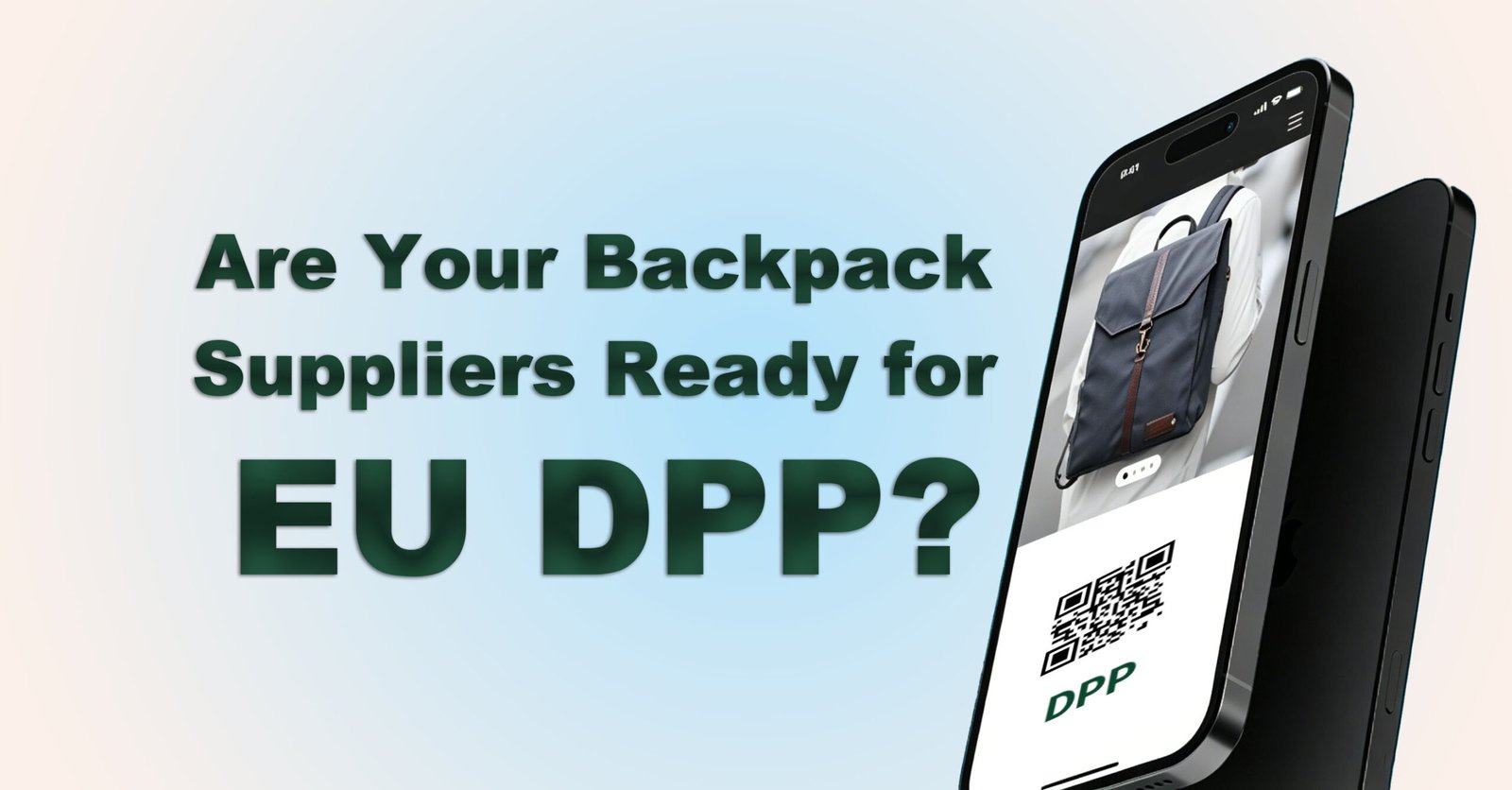
EU DPP readiness for backpacks is not one certificate or one QR code2. It is a supplier’s real ability to keep tracing fabrics, linings, zippers, trims, and upstream sources with stable records when buyers ask.
I have seen this question come up more often in buyer calls and email threads. At first, many people ask for a simple yes or no answer. Yet the real issue is much deeper. A backpack factory may send neat finished-product files. Still, if it cannot explain where the shell fabric came from, what the lining contains, or how the zipper supplier supports its claims, the risk stays there. I think this is where many sourcing teams can save time and avoid future pressure. If you check practical traceability now, you will usually make better supplier decisions later.
What Is the EU Digital Product Passport and Why Should Backpack Buyers Care?
Many buyers hear “DPP” and think it is a later paperwork task. Then they discover it may affect supplier choice, document flow, and order timing much earlier.
For backpack buyers, EU DPP readiness is a sourcing risk issue. It matters because weak traceability in materials and components can cause delays, data gaps, and low credibility when compliance questions become more specific.
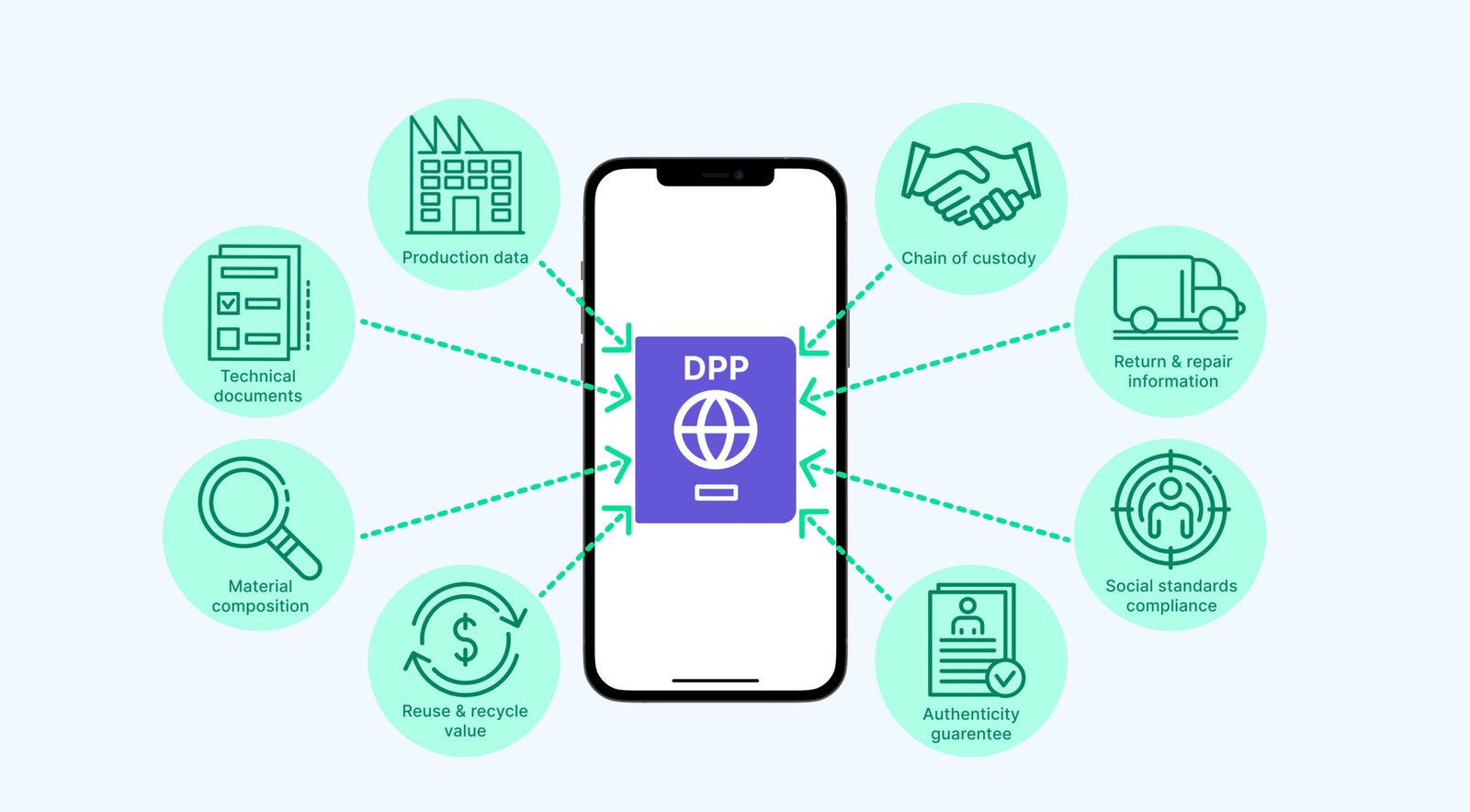
When I speak with European buyers, I notice a common pattern. They often start with a document question. They ask, “Do you have the file?” or “Can you support DPP?” I understand why. Buyers need a fast screening method. Still, based on buyer inquiries I have seen, this question alone does not tell much. A factory may be good at sending final test reports, product specs, and packing details. That does not always mean it can support deeper traceability across the supply chain.
In backpack projects, the hard part is often upstream3. The shell fabric mill, lining supplier, zipper vendor, buckle maker, webbing source, and logo trim supplier may all hold part of the story4. If even one link is weak, the factory cannot build a strong data chain.
I would frame buyer concern like this:
| Buyer question | Weak answer | Better readiness indicator |
|---|---|---|
| Do you support DPP? | “Yes, no problem” | Supplier explains what data it can collect today |
| Do you have documents? | Sends only final product file | Shares material-level and component-level support |
| Can you trace materials? | “We will check later” | Names upstream suppliers and normal records kept |
| Can this be updated over time? | One-time file only | Process exists for ongoing data collection |
I am not presenting legal advice here. Product-specific rules may still need verification. But from a sourcing view, buyers should care now because readiness is about whether the supplier can keep giving usable data again and again, not just once during sampling.
Which Backpack Materials and Components Should Be Documented First?
Some teams try to document everything at once. Then the work becomes slow, messy, and hard to maintain across suppliers.
Buyers should start with the highest-risk backpack items first: shell fabric, lining, padding, zipper, webbing, buckle, label, print, and packaging. These items usually carry the main traceability and composition questions.
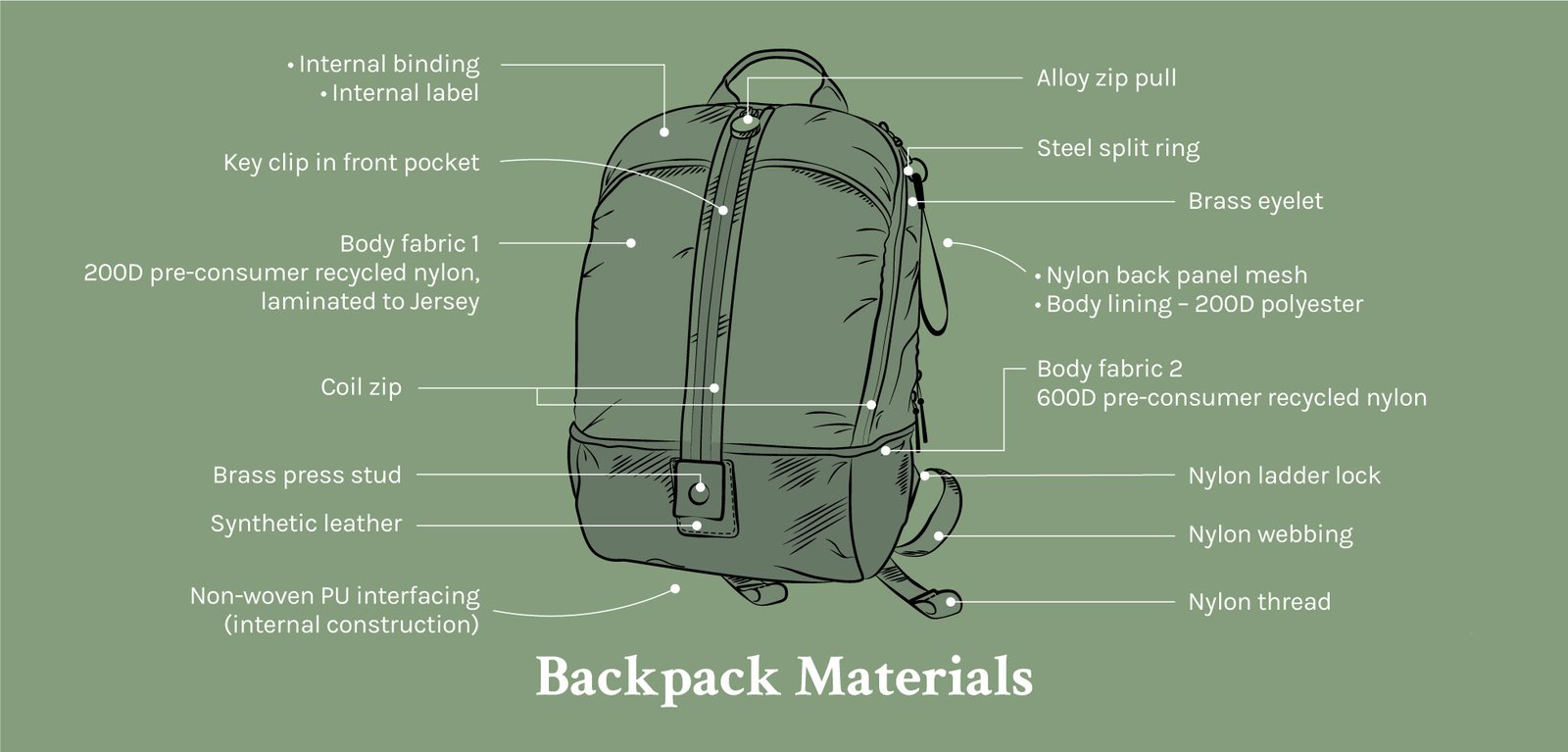
I like to start with the parts that buyers ask about most often and the parts that are hardest to patch later. In backpack projects, shell fabric comes first. It affects composition, finish, coating, recycled-content claims, and sometimes treatment details5. Lining is next. Many teams forget it, but buyers often ask for it.6 Zippers and trims also matter because accessory suppliers are often where data becomes thin7.
I have seen factories prepare a nice product overview and still get stuck when the buyer asks basic follow-up questions about buckles, webbing, or foam. That is why I suggest building the file from the main bill of materials, not from the final product photo sheet.
A simple priority map helps:
| Priority | Item | Why start here | Typical weak point |
|---|---|---|---|
| 1 | Shell fabric | Main material and claim carrier | Mill data not complete |
| 2 | Lining | Often missed but important | No stable composition proof |
| 3 | Zipper | Brand, composition, origin questions | Trader involvement |
| 4 | Webbing/straps | High volume and visible use | Mixed sources |
| 5 | Buckles/trims | Accessory traceability gaps | Small vendors lack records |
| 6 | Padding/foam | Material details may be unclear | Limited upstream support |
| 7 | Labels/prints | Claim consistency issue | Artwork and material mismatch |
| 8 | Packaging | Buyer asks more often now | Supplier changes late |
I would tell buyers to ask suppliers which of these items they can trace today with supporting records, not promises. That answer gives a stronger readiness indicator than a broad claim of compliance.
How Can Buyers Organize Supplier Information Before Rules Become Product-Specific?
Many sourcing teams wait for final detailed rules. Then they rush to collect data from suppliers who never built a system for it.
Buyers can organize supplier information now by creating a simple material-and-component data list, assigning document owners, and checking update frequency before product-specific requests become urgent.

I think this step is where practical progress happens. You do not need to wait for every product-specific requirement to be finalized before improving supplier control. In my own work, the best results usually come when the buyer and factory agree early on what data should be collected, who provides it, and how often it needs to be refreshed.
I would not start with a huge compliance database. I would start with a working sheet that follows the backpack BOM. Each line should show the item name, supplier name, material description, claimed composition, origin if available, supporting file type, file date, and missing points. That already reveals a lot.
Here is a simple way to organize it:
| Field | Purpose |
|---|---|
| Component name | Keeps tracking tied to the real BOM |
| Supplier name | Shows who owns the data |
| Material description | Avoids vague terms like “fabric” only |
| Claimed composition | Makes later checks easier |
| Origin or source note | Helps trace upstream route |
| Supporting document | Shows whether evidence exists |
| Last update date | Prevents old files from being reused blindly |
| Open gap | Makes weak points visible early |
I have seen buyers gain a clear advantage with this simple method. They can compare suppliers in a practical way. One supplier may speak confidently but provide little upstream support. Another may be less polished but have cleaner records and faster follow-up from mills and accessory vendors. In real sourcing, the second supplier is often safer.
What Is the Difference Between Traceability Data and Marketing Claims?
Suppliers often mix claims with proof. Then buyers receive attractive language but still cannot verify the material story behind the backpack.
Traceability data shows what a material is, where it came from, and what records support it. Marketing claims are sales statements. Claims without linked supplier records are not the same as traceable evidence.
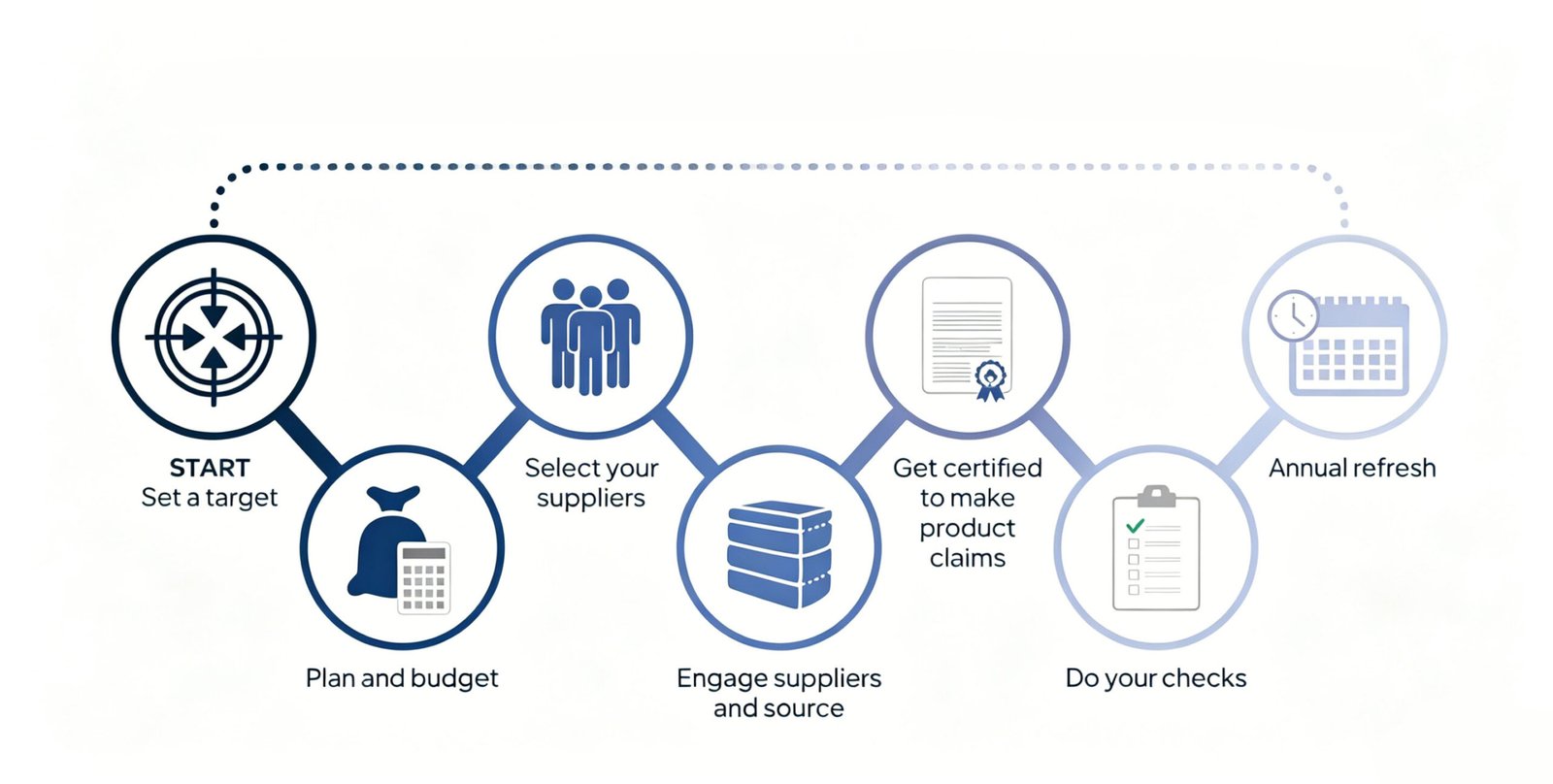
This difference is very important. I have read many supplier presentations that say “eco-friendly,” “recycled,” “sustainable,” or “premium quality.” Those phrases may be useful in sales. But they do not answer a buyer’s real sourcing question. If the buyer asks for supporting material records, composition details, or upstream supplier information, the marketing language becomes very thin very fast.
In backpack projects, this confusion often appears in recycled fabric discussions. A supplier may say the bag uses recycled polyester8. That is a claim. The next question is whether the factory can connect that statement to the actual fabric supplier, actual material spec, and actual support file used for that order or article. If not, the claim is not enough for risk control.
I use a simple distinction:
| Type | Example | Use | Limitation |
|---|---|---|---|
| Marketing claim | “Made with eco materials” | Sales communication | Too broad for verification |
| Product statement | “Shell uses recycled polyester” | Better, but still basic | Needs support |
| Traceability data | Supplier, composition, lot or source record, support file | Practical sourcing control | Requires upkeep |
I think buyers should train teams to ask one more question after every claim: “What is the supporting path behind this statement?” That question often separates a polished vendor from a prepared one.
Which Questions Should European Buyers Add to Their RFQ?
Many RFQs still focus on price, MOQ, and lead time. Then buyers learn too late that supplier traceability support is weak.
European buyers should add RFQ questions about material source, component supplier mapping, document ownership, update timing, and missing-data handling. These questions reveal whether a backpack supplier can support future traceability demands.

I believe the RFQ stage is the best place to test readiness. At this point, suppliers are still trying to win the project. Their response speed and detail tell you a lot. If they cannot answer basic traceability questions during quotation, they usually will not become better under shipment pressure.
I would not make the RFQ too legal or too abstract. I would make it operational. Ask questions that force the supplier to show its document flow and upstream coordination ability.
Here are useful RFQ questions:
| RFQ question | What it reveals |
|---|---|
| Can you list the main material and component suppliers for this backpack? | Supply chain visibility |
| Can you provide composition support for shell, lining, webbing, and zipper? | Material-level control |
| Who keeps the records: your factory, a trader, or upstream suppliers? | Data ownership |
| How often do you update these files? | Maintenance discipline |
| What parts of the BOM are hardest for you to trace today? | Honesty and real weak points |
| If we change a component, how do you update the file set? | Change management |
| Can you separate claims from verified support? | Quality of communication |
I have found that one honest answer about weak points is often more valuable than ten broad promises. A supplier that says, “We can trace shell fabric well, but buckle data is still being improved,” gives me something real to evaluate. That is much better than hearing, “Everything is fully compliant,” without proof.
How Can Suppliers Prepare Without Overpromising Compliance?
Some suppliers promise full readiness too early. Then buyer trust drops when upstream records turn out to be incomplete.
Suppliers should prepare by mapping current data, fixing weak upstream links, and stating clearly what they can support now and what still needs verification. Honest readiness is better than broad compliance claims.

I feel strongly about this point because overpromising creates avoidable damage. In sourcing, trust is hard to build and easy to lose. If a factory claims complete readiness and later fails to explain fabric origin or trim support, the buyer starts to doubt everything else too. That includes quality, planning, and delivery.
From an OEM/ODM factory view, I think the right approach is simple. First, map the current BOM data you can really collect. Second, identify the weak suppliers. In many cases, these are not the final assembly lines. They are the smaller upstream material and accessory vendors. Third, improve your request process with those suppliers. Fourth, communicate in bounded language. Say what is available now. Say what is being built. Say what still needs verification.
A practical preparation path looks like this:
| Step | Action | Benefit |
|---|---|---|
| 1 | Review top backpack BOM items | Finds the main exposure first |
| 2 | Check upstream supplier support | Shows where readiness breaks |
| 3 | Standardize data request forms | Improves consistency |
| 4 | Save files by component and supplier | Makes retrieval faster |
| 5 | Mark unsupported claims | Reduces credibility risk |
| 6 | Train sales and merch teams | Prevents careless promises |
Based on cases I have seen, the best suppliers are not always the ones with the best presentation deck. They are the ones who can answer follow-up questions with calm, specific, and updated information. That is a far better readiness indicator than a broad statement about compliance.
Conclusion
EU DPP readiness for backpacks starts with traceable supply chain data, not slogans. Buyers who test real document flow early will reduce sourcing risk, delays, and weak supplier surprises.
"Risk factors in the assessment of suppliers - PMC - NIH", https://pmc.ncbi.nlm.nih.gov/articles/PMC9342744/. Supply chain research indicates that late-stage compliance verification—particularly material and component traceability gaps—correlates with order delays, increased fulfillment costs, and elevated supplier risk during production phases. Evidence role: statistic; source type: research. Supports: Late-stage discovery of supplier documentation gaps increases delivery risk and order delays. Scope note: General supply chain finding; specific quantification for backpack/textile sector not confirmed ↩
"EU Digital Product Passport - Wikipedia", https://en.wikipedia.org/wiki/EU_Digital_Product_Passport. The EU Digital Product Passport framework mandates supply chain transparency across material and component sources, requiring manufacturers to maintain traceable records at multiple supply chain levels rather than relying on single compliance certificates. Evidence role: definition; source type: government. Supports: EU DPP requires multi-tier material and component traceability rather than single certification. Scope note: Support is contextual to backpack/textile products; specific product category rules may vary by implementation timeline ↩
"[PDF] Fashion's Supply Chain Challenge | UNFCCC", https://unfccc.int/sites/default/files/resource/Fashion%20supply%20chain%20challenge_white%20paper%202025.pdf. Supply chain research on apparel and textile manufacturing indicates that upstream supplier coordination—particularly for material mills and specialized component vendors—presents greater documentation and communication challenges than factory-level processes. Evidence role: general_support; source type: research. Supports: Upstream material and component supplier coordination presents greater documentation and traceability challenges than factory-level finished product documentation. Scope note: Support is general to apparel supply chain complexity; specific quantification of upstream vs. factory-level difficulty in backpack manufacturing may be limited ↩
"How to Choose the Best Backpack Manufacturer for Your Brand", https://omaska.com/backpack-manufacturer-selection-guide/. Apparel and accessory manufacturing supply chain analysis identifies multiple specialized supplier categories—material mills, component manufacturers, and trim vendors—as typical in complex product assembly. Evidence role: general_support; source type: research. Supports: Backpack manufacturing involves multiple specialized supplier tiers including material mills, component vendors, and accessory makers. Scope note: Support is general to apparel manufacturing; specific backpack supply chain tier count may vary by product design ↩
"[PDF] A Guide to United States Apparel and Household Textiles ...", https://www.cpsc.gov/s3fs-public/Guide-to-US-Apparel-and-Household-Textiles.pdf. Textile product transparency research identifies outer shell materials as primary documentation focus due to their role in carrying composition, performance, and environmental claims. Evidence role: general_support; source type: research. Supports: Shell fabric is a primary material requiring comprehensive traceability documentation due to its role in product composition, performance, and sustainability claims. Scope note: Support is contextual to apparel transparency frameworks; specific DPP product category rules may refine material prioritization ↩
"Threading Your Way Through the Labeling Requirements Under the ...", https://www.ftc.gov/business-guidance/resources/threading-your-way-through-labeling-requirements-under-textile-wool-acts. Supply chain compliance research indicates that interior material documentation—including lining composition and origin—is increasingly requested by buyers but remains underrepresented in supplier traceability systems. Evidence role: expert_consensus; source type: research. Supports: Lining materials are frequently subject to buyer documentation requests despite being commonly overlooked in supplier traceability systems. Scope note: Support is contextual to general compliance trends; specific data on lining documentation request frequency may be limited ↩
"Supply Chain Due Diligence - Hohenstein", https://www.hohenstein.us/en-us/textile-testing/sustainability/due-diligence. Supply chain research on small and specialized suppliers indicates that accessory vendors—including fastening and trim manufacturers—often maintain less comprehensive documentation systems than primary material suppliers. Evidence role: general_support; source type: research. Supports: Accessory and component suppliers typically maintain lower levels of traceability documentation compared to primary material suppliers. Scope note: Support is general to small supplier documentation practices; specific data on accessory supplier compliance rates may vary by region and product category ↩
"Changes in Mechanical Properties of Fabrics Made of ... - PMC", https://pmc.ncbi.nlm.nih.gov/articles/PMC10708220/. Textile industry standards define recycled polyester by recycled content percentage and require documentation of material source and processing chain to substantiate composition claims. Evidence role: definition; source type: institution. Supports: Recycled polyester is a material composition claim that requires documented verification of recycled content percentage and source. Scope note: Definition is general; specific recycled content thresholds and verification methods may vary by certification scheme or regulation ↩