Hotel buyers often start with logo, color, and extra pockets. That looks easy. But the wrong material or weak waterproof build can turn a neat bag into a repeat complaint.
Hotel buyers should customize material, waterproof construction, internal layout, and hardware first. These points affect cleaning, leak control, durability, and replacement cost far more than branding details in repeated-use hotel settings.1
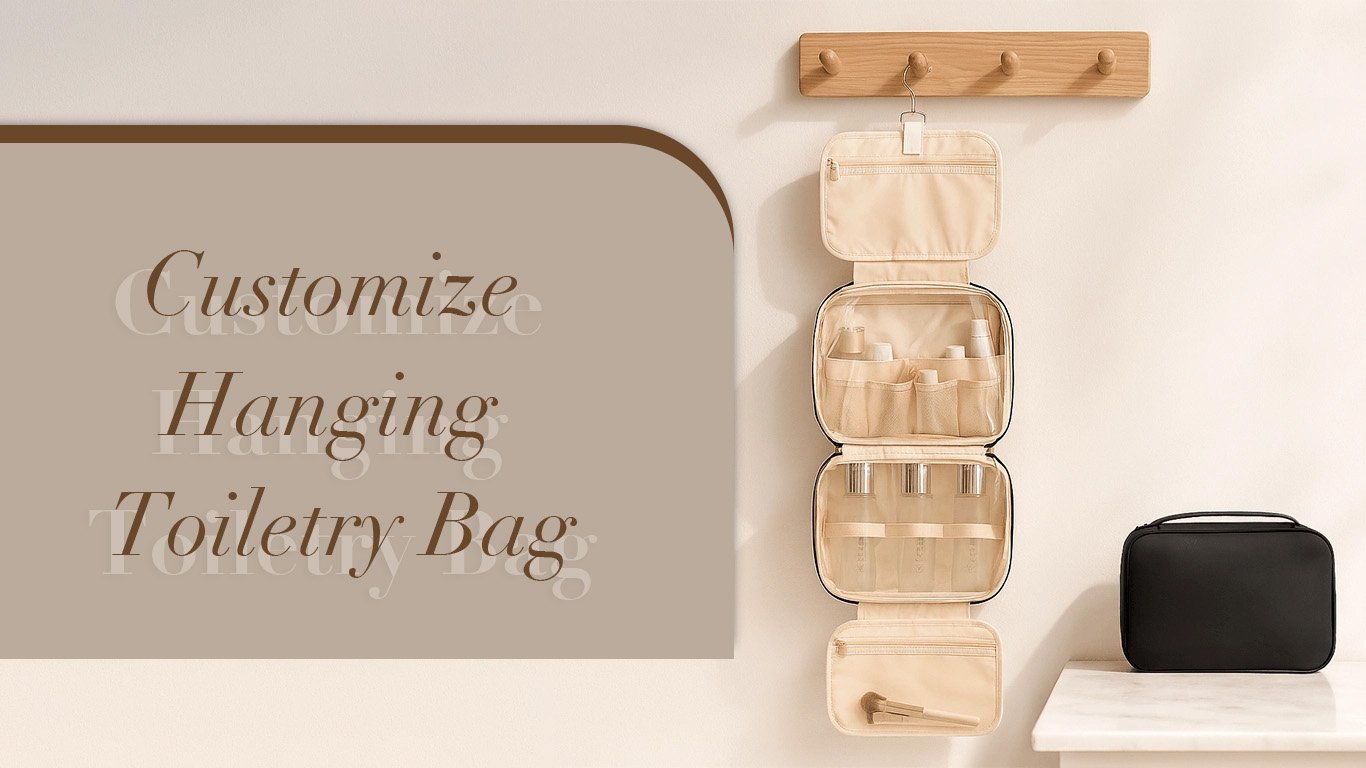
I have seen this question come up many times in sourcing talks. A bag can look fine in a photo and still fail in real use. That is why I always pull the discussion back to use, cleaning, and weak points. When I review samples, I do not start by asking if the logo is centered. I start by asking what happens after the first spill, the first zipper pull, and the first month of repeated handling.
What Is a Hanging Toiletry Organizer Bag?
A standard pouch may look enough at first. But in hotel use, poor access and wet counters can quickly make a simple bag feel messy and hard to maintain.
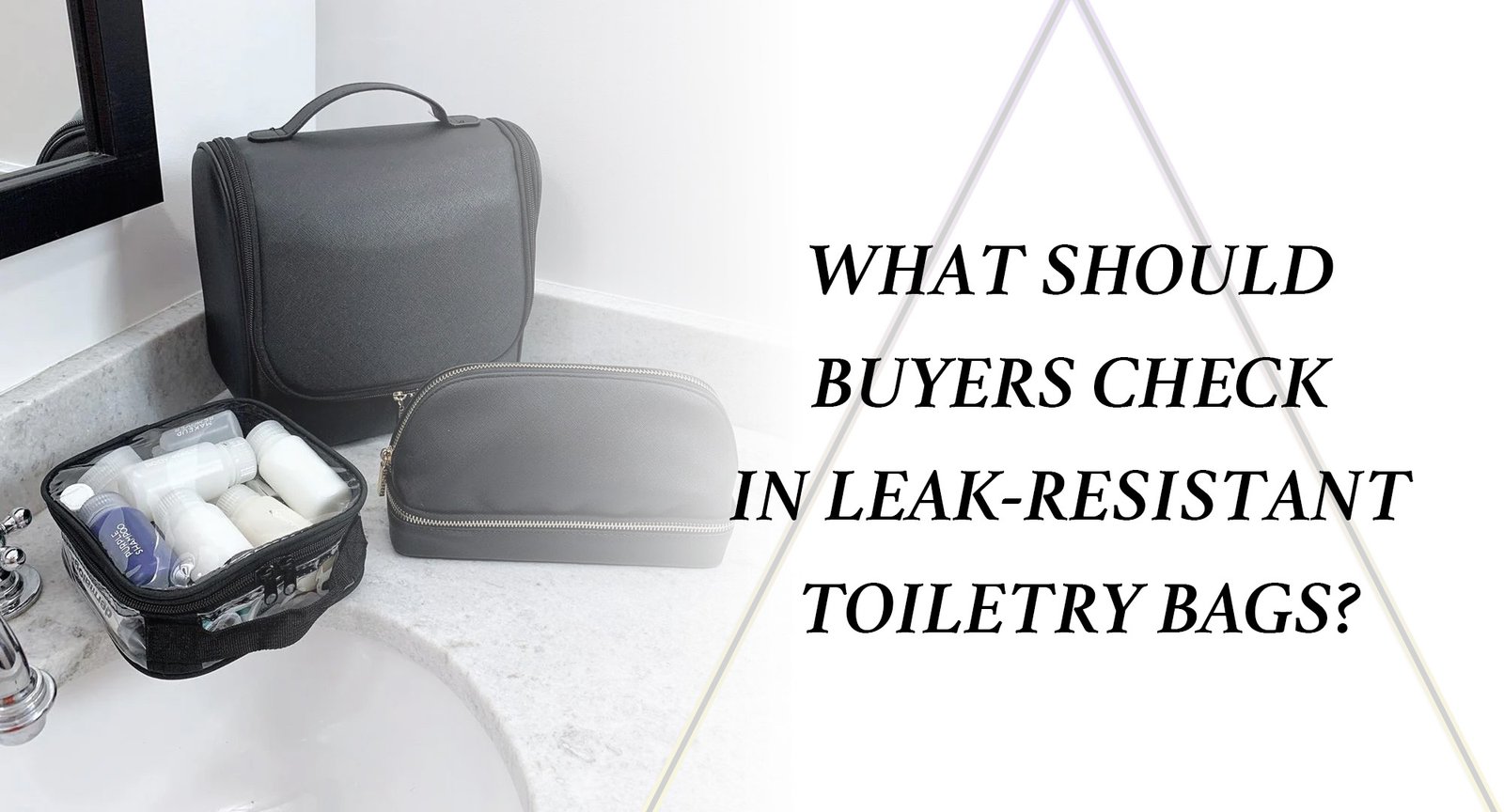
A hanging toiletry organizer bag is a toiletry bag with a hook or hanging point, so users can suspend it on a rail, hook, or bar for easier access, better organization, and less contact with wet surfaces2.
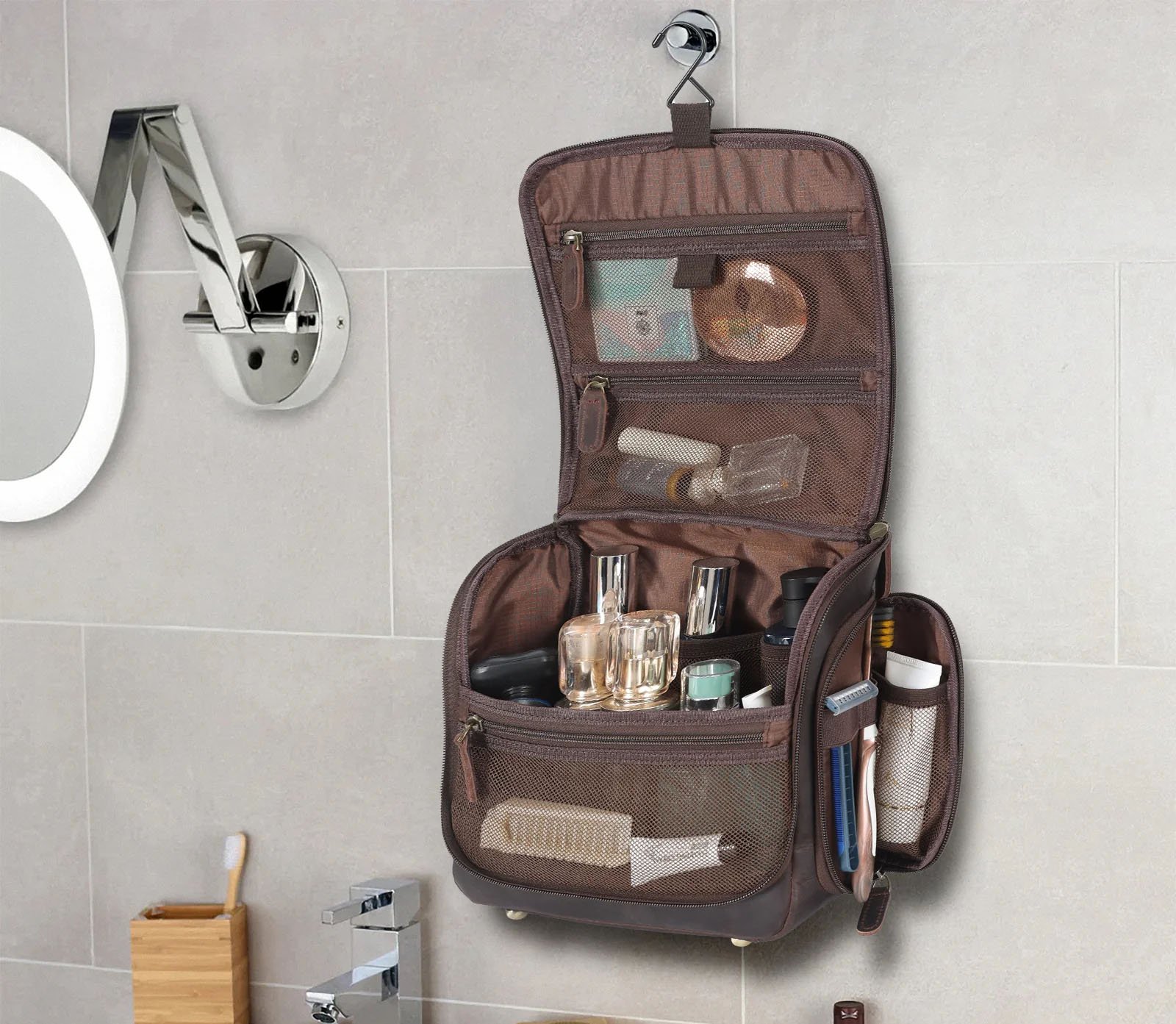
When buyers ask me about this product, I usually explain it in a very practical way. This is not just a nice travel accessory. In many hotel or hospitality supply cases, it is a utility item. The hanging function matters because it changes how the bag is used in a bathroom. A guest does not need to spread items across a wet vanity. Housekeeping also faces fewer messy setups when the bag has a clear structure.3
Based on buyer inquiries and sampling discussions we’ve seen, the value of this bag is not the hook alone. The value is the full combination of access, containment, and easier cleaning. I have seen buyers focus too much on the front appearance. But the real question is whether the bag stays usable after repeat opening, wiping, and packing.
| Point | Why it matters in hotel use | What I usually check |
|---|---|---|
| Hanging hook | Keeps bag off wet surfaces | Hook strength, stitch area, shape |
| Opening structure | Helps guests find items fast | Full opening angle, panel support |
| Internal visibility | Cuts clutter and misuse | Mesh, clear pockets, depth |
| Outer surface | Affects cleaning speed | Wipeability, texture, stain hold |
| Folded size | Impacts storage and packing | Bulk, shape retention, neatness |
I think buyers should define the bag first as an operational product. After that, branding choices become easier and safer.
Which Compartments Matter for Travel Toiletry Bags?
It is easy to add more pockets in development. But too many sections can make the bag bulky, confusing, and costly4 without improving actual hotel use.
The most useful compartments are the ones that match real amenity size and guest habits: one main cavity, one leak-prone section, and one or two visible small-item pockets are often enough5.
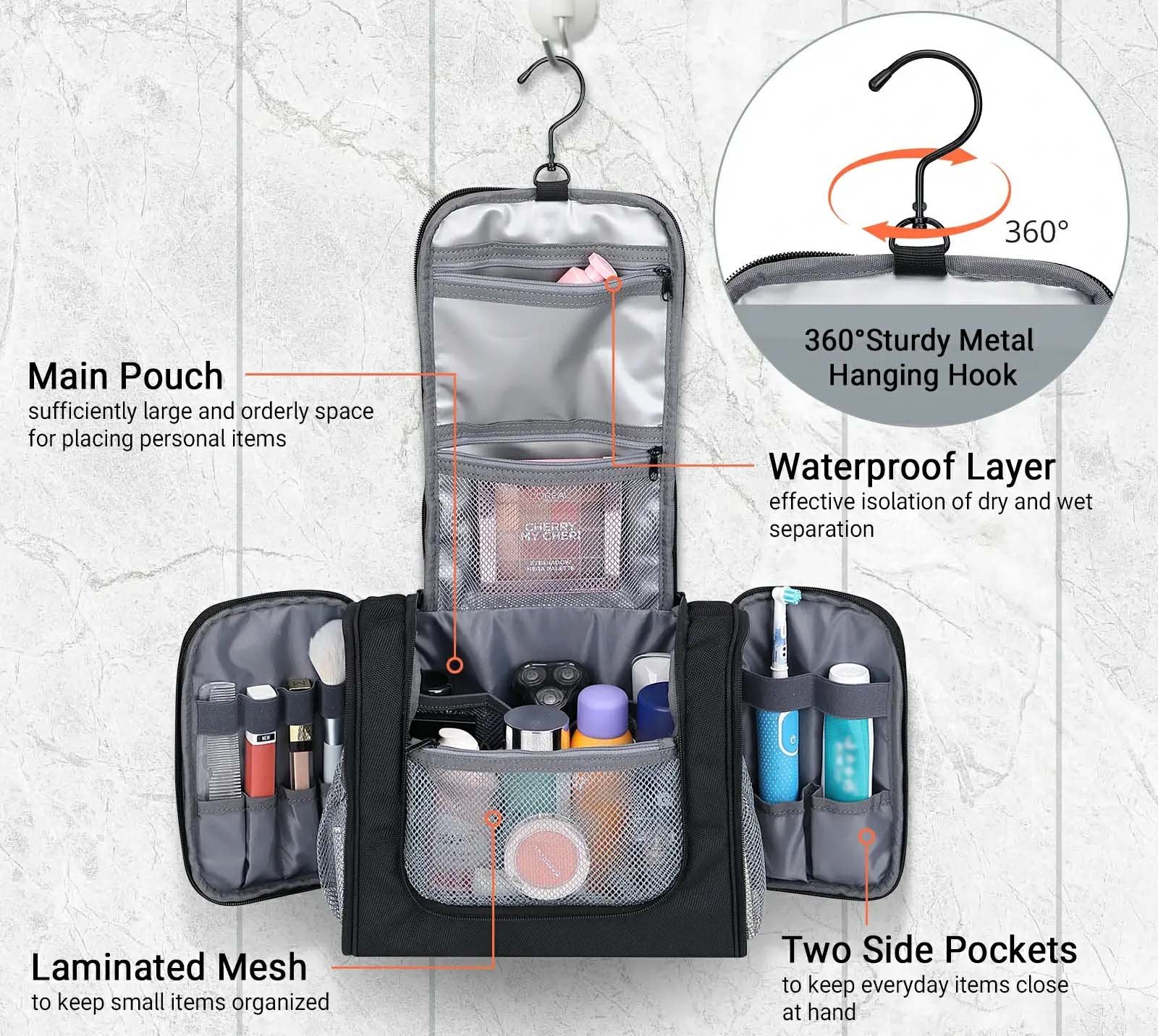
I often tell buyers that layout should follow use, not imagination. In sourcing conversations, these are the points buyers tend to revisit after seeing samples. They first ask for more pockets. Then they realize some pockets are too shallow, some are hard to clean, and some make the bag look overbuilt for the target price.
For hotel projects, I do not think “more function” means “better product.” A repeated-use bag should be easy to understand. Guests should open it and know where things go. Housekeeping or refill staff should also be able to check the bag fast. That is why I prefer simple, visible, and easy-to-wipe layouts.
A good layout starts with what will actually go inside. Small bottles? Razor? Tooth kit? Cosmetic items? A wet toothbrush case? If the buyer cannot define this clearly, the factory may build feature-heavy structure that looks good in a presentation but performs poorly later.
| Compartment type | Best use | Risk if overused |
|---|---|---|
| Main compartment | Bottles and larger items | Loses shape if too large |
| Zipper mesh pocket | Visible small items | Mesh can snag if too fine |
| Waterproof pocket | Leak-prone products | Adds cost if not needed |
| Elastic loops | Tubes or brushes | Often ignored by users |
| Clear inner pocket | Quick item check | PVC choice affects feel and wipeability |
My own rule is simple. I ask which compartments help storage, which help cleaning, and which just add sewing steps. That usually tells me what should stay and what should go.
What Materials Help Prevent Leaks?
Many buyers worry about leaks only after sample review. By then, the project may already be locked into a material that is hard to clean and easy to complain about.
Materials that help prevent leak trouble usually combine a wipeable outer fabric, a water-resistant or waterproof inner layer, and seams or construction that reduce liquid penetration around stitch lines and corners6.
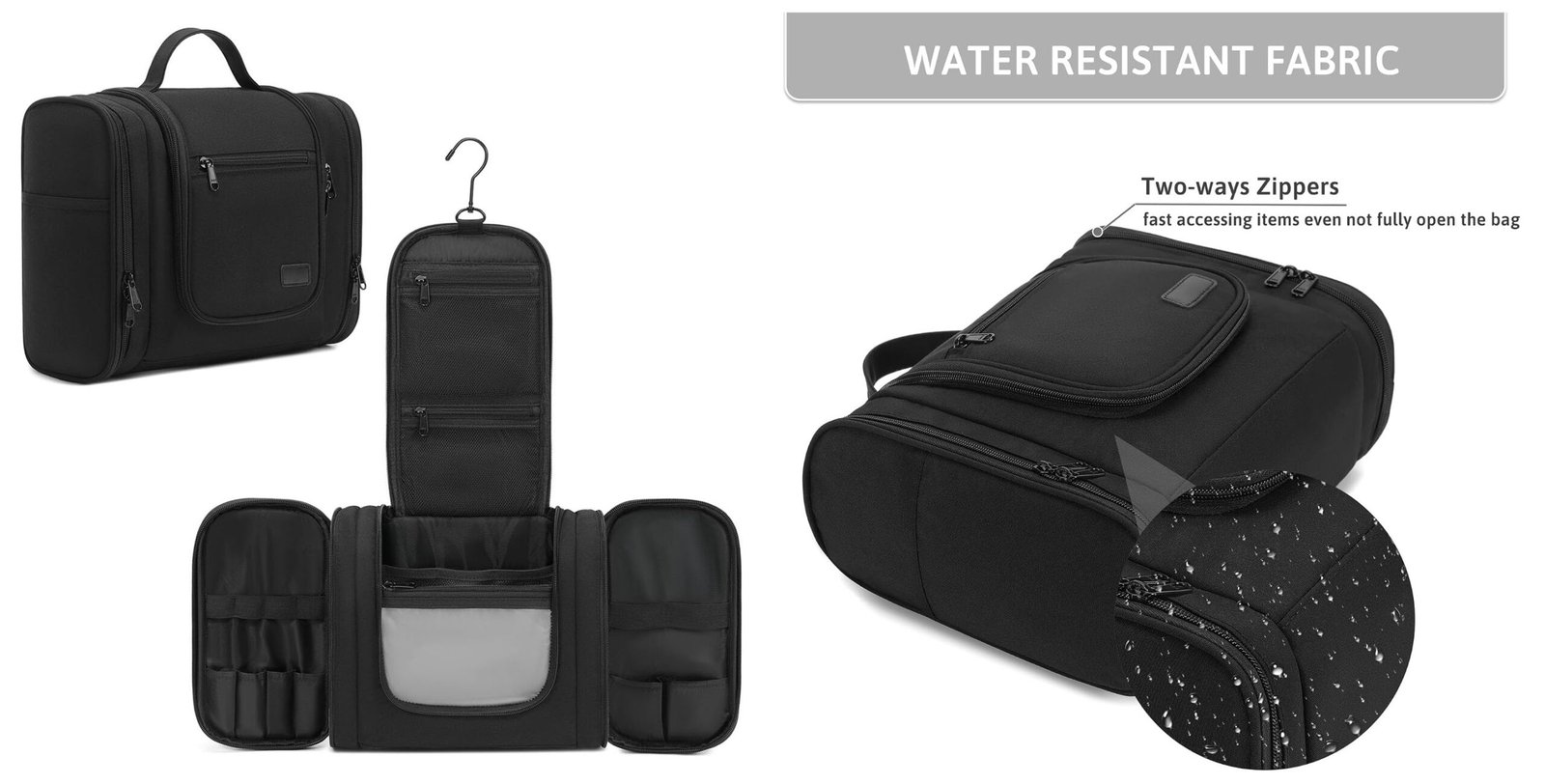
This is the part I care about most when I assess a sample. I am not speaking as a lab authority. I am speaking from product judgment and sourcing experience. Based on buyer inquiries and sampling discussions we’ve seen, the biggest long-term issue is not fashion. It is whether the bag stays acceptable after contact with splashes, lotion residue, and small spills.
I usually ask buyers to separate three things: water resistance, wipeability, and leak control. These are related, but they are not the same. A fabric may feel thick and premium, but still hold stains. A lining may resist splashes, but stitched seams may still let liquid creep into hidden areas.7 That is why material choice and construction method should be decided together.
Some common options work well in sourcing, depending on target cost and look. Polyester with a suitable backing is common.8 RPET can work if the surface and backing are chosen carefully. PU-coated or laminated interiors may improve wipeability. EVA or similar waterproof layers may help in some structures. But every option brings trade-offs in hand feel, price, smell, crease behavior, and sewing ease.
| Material area | Common option | Main benefit | Watch point |
|---|---|---|---|
| Outer fabric | Polyester / RPET | Cost control, printability | Texture may trap dirt |
| Inner lining | PU-coated lining | Easier wiping | Coating quality varies |
| Clear pocket | EVA / PVC-like clear layer | Visibility | Stiffness and cold crack need checking |
| Interlayer | Foam / reinforcement | Better shape | Can hold moisture if badly built |
| Seam area | Binding / turned seam | Cleaner finish | Needle holes remain a risk |
From my side, the best question is not “What is the most waterproof material?” The better question is “What material and build reduce daily cleaning trouble and early replacement risk at my target price?” That is where good sourcing starts.
How Can Hotels and Travel Brands Customize Toiletry Bags?
Many projects rush into logo placement and visual styling. But if the use case is unclear, those choices can distract from the features that actually affect service life.
Hotels should customize for repeated use, easy cleaning, and amenity fit. Travel brands may give more weight to retail look and branding.9 The right design depends on who will use, refill, clean, and replace the bag.

I think this is where buyers need to slow down. Hotels and travel brands may both buy hanging toiletry bags, but they do not always want the same thing. A hotel chain may care more about consistency, cleaning speed, and lower complaint risk. A travel brand may care more about shelf appeal, visual identity, and unboxing feel. A wholesaler may need a flexible spec that works for several customer tiers.
In sourcing conversations, these are the points buyers tend to revisit. They start from color cards and logo methods. Then they come back to ask about wipe marks, hook break risk, zipper smoothness, and whether the bag looks tired after repeat use. That is why I suggest a simple order of decisions: first use case, then material, then structure, then hardware, then branding.
Customization can still include logo, puller shape, print, patch, woven label, and packaging. I am not against those points. I just do not think they should lead the process. If the hook area tears or the zipper jams, a nice logo does not save the product.10
| Buyer type | Main priority | Custom focus |
|---|---|---|
| Hotel chain buyer | Repeat use and maintenance | Material, lining, hook, zipper, size |
| Hotel supplier/importer | Stable procurement and price | Build consistency, MOQ, replacement control |
| Travel brand | Look and user appeal | Shape, branding, pocket story, finish |
| Wholesaler | Broad market fit | Balanced spec, simple customization options |
I have seen basic-looking bags perform much better than stylish ones because the practical choices were right. In my view, that is the kind of customization that protects margins.
What Should Buyers Check in Pre-Production Samples?
A sample can look clean on the table and still hide weak points. If buyers only review color and logo, they may miss the issues that cause later returns11.
Buyers should check pre-production samples for material feel, wipeability, seam and binding quality, zipper action, hook attachment strength, pocket usability, and whether the bag still looks neat after repeated opening and folding.
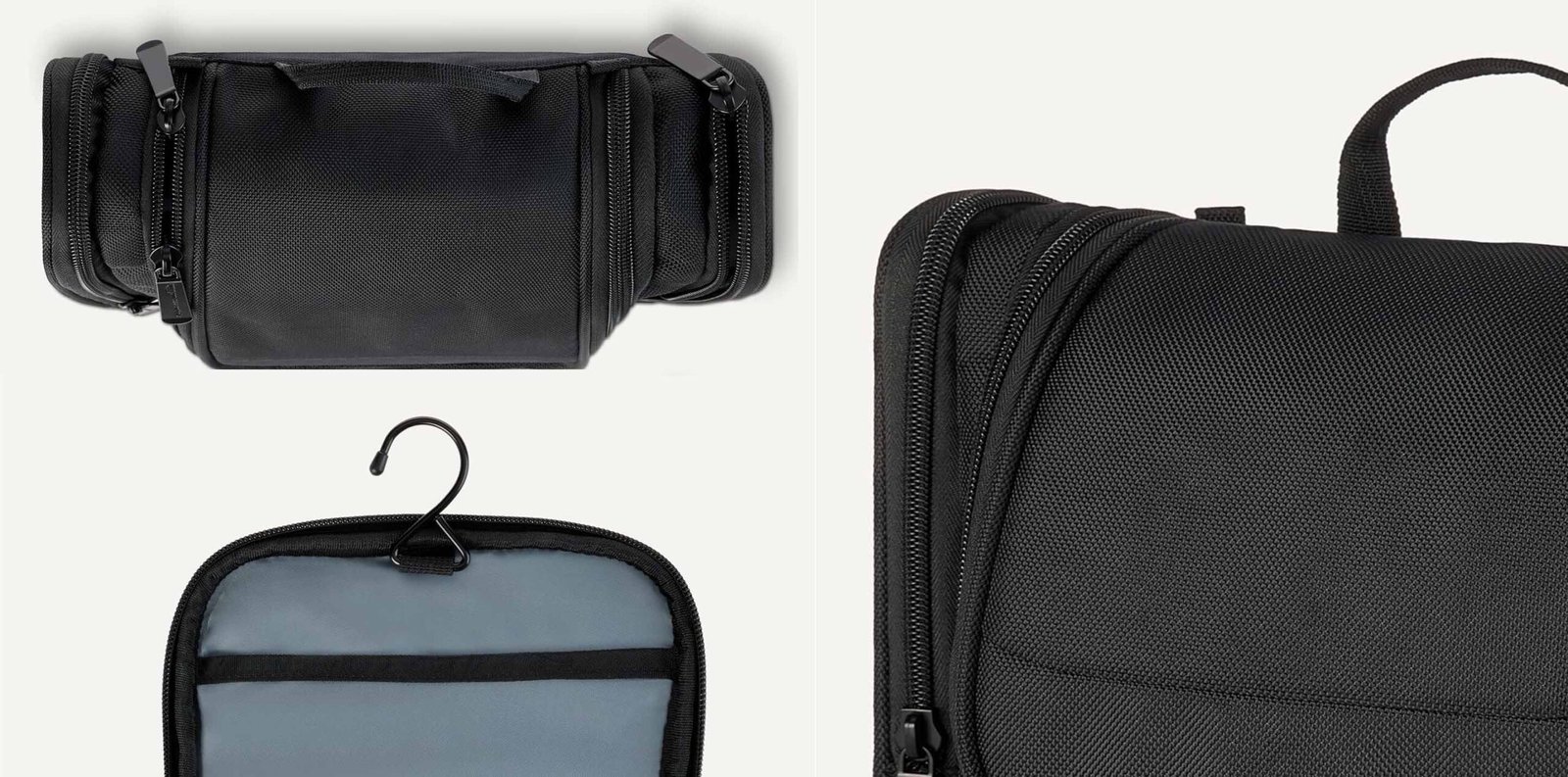
This stage matters a lot. I have had many sample discussions where the first reaction was positive. Then, after five more minutes of handling, the weak points started to show. The zipper caught at the curve. The hook webbing looked too narrow. The inner pocket was hard to access. The binding near the corner looked messy. These are small details, but they often become the first complaint source.
I usually review a pre-production sample with repeated simple actions. I open and close the zipper several times. I hang the bag and check how the weight pulls on the top panel. I wipe the lining. I check if corners trap dirt. I look at stitching density around stress points. I fold and unfold the bag again. This is not a lab test. It is a sourcing check based on likely use.
Buyers should also compare the sample against the real packing plan. Sometimes a bag looks good empty but becomes awkward when filled with normal-size bottles and amenity packs. That mismatch causes disappointment later.
| Check point | What to look for | Why it matters |
|---|---|---|
| Hook attachment | Reinforcement, stitch quality | Common stress point |
| Zipper path | Smooth opening at corners | Daily use issue |
| Inner lining | Wipeability, odor, finish | Cleaning and perception |
| Pocket depth | Fit for real items | Avoid fake function |
| Handle and webbing | Comfort and durability feel | Frequent handling point |
| Shape after folding | Neatness, recovery | Storage and presentation |
| Edge finishing | Clean binding or seam | Quality impression and wear risk |
If I had to choose one habit for buyers, it would be this: treat the sample like a working item, not a showroom item. That one change often leads to better decisions.
Conclusion
Hotel buyers should customize hanging toiletry bags from the inside out: material, waterproof build, layout, and hardware first, then branding, so the bag works well and lasts longer12.
"Sustainable Housekeeping programs in the hotel industry beneficial ...", https://scholarsarchive.jwu.edu/hosp_graduate/12/. Studies on product durability and life-cycle performance indicate that material properties and construction quality are principal determinants of maintenance needs and service life, which in turn shape replacement costs more directly than decorative branding elements. Evidence role: general_support; source type: research. Supports: Research should support that material selection and construction quality are major determinants of product durability, maintenance burden, and replacement frequency in repeated-use goods.. Scope note: Support is contextual because studies may address textiles or repeated-use consumer goods broadly rather than hotel toiletry bags specifically. ↩
"Toilet hygiene—review and research needs - PMC", https://pmc.ncbi.nlm.nih.gov/articles/PMC9292268/. Hygiene and human-factors literature notes that wet bathroom surfaces can retain contamination and that structured storage improves item visibility and access; by suspending the bag, the design reduces direct surface contact while aiding retrieval. Evidence role: mechanism; source type: research. Supports: Sources should support that keeping personal items off wet bathroom surfaces can reduce surface contact and that organized storage can improve accessibility.. Scope note: This evidence would explain the mechanism and context rather than directly test hanging toiletry bags as a product class. ↩
"Enhancing Operating Room Efficiency: The Impact of Computational ...", https://pmc.ncbi.nlm.nih.gov/articles/PMC11476208/. Operations research in hospitality and service work suggests that standardized, visible organization of items can reduce searching and handling inefficiencies, which is consistent with the claim that a clearer bag structure leads to fewer messy setups for housekeeping. Evidence role: general_support; source type: research. Supports: Research should support that standardized organization and visible item layouts can reduce time loss or disorder in housekeeping and service workflows.. Scope note: The support is indirect because studies may focus on service workflow organization rather than toiletry bags specifically. ↩
"Usability in product development practice; an exploratory ...", https://pubmed.ncbi.nlm.nih.gov/25480002/. Manufacturing and usability literature indicates that additional components and more complex layouts generally increase material and assembly costs while also raising the risk of user confusion, which supports the trade-off described here. Evidence role: mechanism; source type: research. Supports: Research should support that increased component count and design complexity tend to raise manufacturing cost and can reduce usability.. Scope note: The support is mechanistic and may come from product design research broadly rather than bag construction studies alone. ↩
"Museum Collections: Considering Access & Transparency ...", https://ummsp.rackham.umich.edu/gallery/videos/museum-collections-considering-access-transparency-through-visible-storage/. Usability and human-factors research commonly finds that simpler, more visible organizational systems reduce search time and user confusion, supporting the view that a limited number of well-defined compartments is often sufficient for routine personal-care storage. Evidence role: expert_consensus; source type: research. Supports: Sources should support the general design principle that simpler, more visible compartment systems can improve usability and reduce cognitive load compared with overly complex layouts.. Scope note: This would provide principle-level support rather than proving that the stated compartment count is optimal for all hotel applications. ↩
"Waterproof coating is made from upcycled textile waste", https://news.cornell.edu/stories/2024/10/waterproof-coating-made-upcycled-textile-waste. Textile engineering references explain that liquid resistance depends on both material barriers and seam construction, because stitched seams and corners can become pathways for penetration even when the base fabric is water resistant. Evidence role: mechanism; source type: education. Supports: Sources should explain that waterproof performance depends not only on fabric or coating but also on seam construction, since needle holes and seam geometry can permit water ingress.. ↩
"critical evaluation of wicking in performance fabrics", https://repository.gatech.edu/bitstreams/2ab3a6e9-97ed-4b04-92ce-11f96c34255f/download. Experimental textile studies report that sewn seams can reduce barrier performance because needle perforations and wicking along seam structures allow liquid migration, even where the lining material itself resists splashes. Evidence role: mechanism; source type: paper. Supports: A source should support that sewn seams can compromise barrier performance because needle perforations and wicking along fibers or seam structures can permit liquid migration.. ↩
"Polyester - Wikipedia", https://en.wikipedia.org/wiki/Polyester. Reference works on textile applications describe polyester as a widely used fiber in luggage and bag manufacturing owing to its durability, dimensional stability, and relatively low cost, supporting its characterization as a common base material. Evidence role: general_support; source type: encyclopedia. Supports: A neutral source should support that polyester is widely used in luggage, bags, and similar textile products because of durability and cost characteristics.. Scope note: The source may cover bags and luggage generally rather than hanging toiletry organizers as a separate subcategory. ↩
"The Impact of Visual Elements of Packaging Design on Purchase ...", https://pmc.ncbi.nlm.nih.gov/articles/PMC11851823/. Procurement and merchandising research commonly distinguishes institutional purchasing criteria such as durability, ease of maintenance, and operational fit from retail criteria such as visual presentation and brand expression, which aligns with the contrast drawn here. Evidence role: general_support; source type: research. Supports: Sources should support that institutional buyers often prioritize durability, maintenance, and fit-for-use, whereas retail-oriented brands place greater emphasis on presentation and branding.. Scope note: The support is sector-level and may not compare hotels and travel brands using toiletry bags specifically. ↩
"Relationship between product quality and customer satisfaction", https://scholarworks.waldenu.edu/cgi/viewcontent.cgi?article=2402&context=dissertations. Quality-management and consumer-satisfaction literature consistently finds that failures in core product functions have a disproportionate negative effect on user satisfaction and return or complaint risk, outweighing purely aesthetic attributes. Evidence role: expert_consensus; source type: research. Supports: Sources should support that product reliability and core functional performance are primary drivers of customer satisfaction and complaint behavior.. Scope note: The evidence would be general to product quality rather than specific to hotel toiletry bags. ↩
"ESSAYS ON PRODUCT RETURNS IN A CLOSED-LOOP ...", https://etda.libraries.psu.edu/files/final_submissions/15436. Manufacturing quality-control research shows that defects not identified during early inspection stages are more likely to reach end users, where they contribute to complaints, returns, and avoidable replacement costs. Evidence role: mechanism; source type: research. Supports: Sources should support that inadequate pre-production or pre-shipment quality review increases the risk of defects reaching users and contributing to returns or complaints.. Scope note: The relationship is general to quality assurance systems and may not isolate sample review for one bag category. ↩
"Linking product design and durability: A review and research ...", https://pmc.ncbi.nlm.nih.gov/articles/PMC9513616/. Design-for-reliability literature emphasizes that functional requirements, material selection, and critical component performance should be resolved early in development because these factors govern durability and serviceability more directly than later aesthetic treatments. Evidence role: expert_consensus; source type: paper. Supports: Sources should support the broader design principle that functional requirements, material selection, and component reliability should be established before secondary aesthetic treatments when longevity is a goal.. Scope note: This would support the design principle in general rather than validate the exact priority sequence for every hotel bag program. ↩