Pickleball demand is moving fast, and many buyers still choose bags by look alone. That leads to weak sell-through, high cost, and hard reorders.
Buyers should source pickleball bags now by choosing simple, scalable styles built for clear use cases: daily court carry, compact paddle storage, and sport-to-lifestyle use. The best bags balance pickleball-specific function, stable cost, and easy customization for repeat orders.
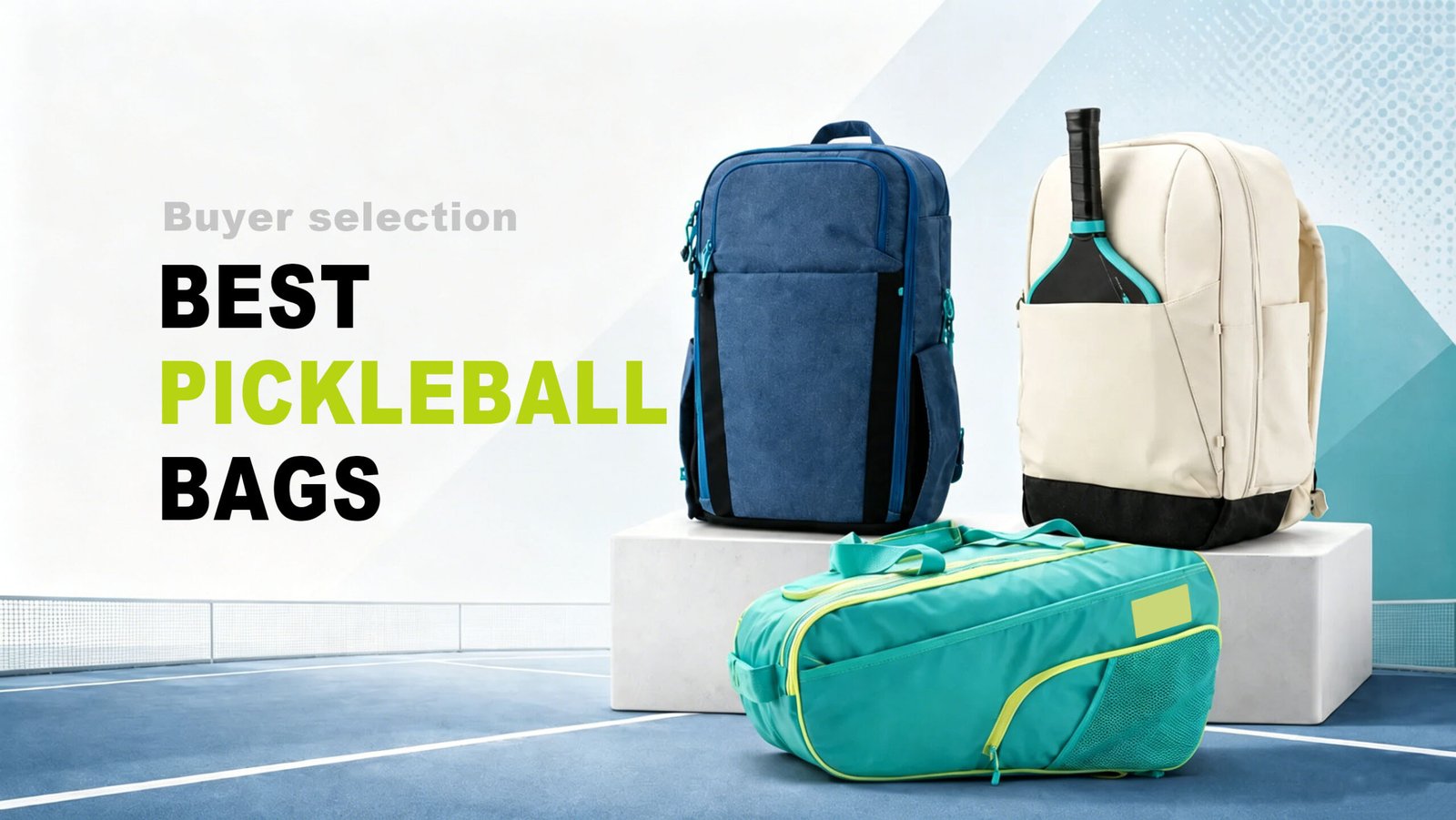
I have seen many bag ideas come in with strong visual appeal but weak product logic. I have also seen simple styles win because they matched how people actually go to the court. That is the real starting point for buyers now. A good pickleball bag is not the one with the most features. It is the one that solves the user’s job clearly, stays in a workable cost range, and can scale without trouble when the first reorder comes.
Is Pickleball Still a Good Product Category in 2026?
Many buyers worry that they are already late. They see more sellers, more similar products, and more price pressure. That can make the category look crowded.
Yes, pickleball is still a good product category in 20261, but buyers need tighter product selection. The safer path is to source proven core bag styles with broad use, stable cost, and easy branding instead of chasing novelty that may not reorder.
From what I have seen in inquiry and sampling work, the category still has room. The key is that the market is less forgiving now. Early growth let many average products sell. Now buyers need better judgment. I think the main question is not whether pickleball still sells. The better question is what kind of bag can keep selling after the first launch.
I usually break the opportunity into three practical lanes:
| Use case | Why it still works | Sourcing risk |
|---|---|---|
| Everyday court carry2 | Broad demand, easy to explain, easy to reorder | Low |
| Compact paddle-and-essentials | Good entry price, giftable, simple structure | Low |
| Sport/lifestyle crossover | Wider audience, longer selling season | Medium |
I do not suggest treating pickleball as just another sports keyword. I also do not suggest making it too niche. The sweet spot sits in the middle. A bag needs enough pickleball logic to support product positioning. It may include paddle sleeves, ball storage, fence hook, or a shoe section if the size allows. Still, it should not become overbuilt.
I have seen buyers ask for too many add-ons at once. They want cooler lining, laptop sleeve, wet pocket, anti-theft pocket, hidden phone pocket, thick insulation, and premium hardware in one bag. That often hurts the price, the lead time, and the sample revision cycle. It also does not always help retail performance. Many players just want a bag that carries paddles, balls, water, and small items in a clean way.3 That is why I still see this category as good in 2026, but only when the product logic is clear.
What Bag Features Do Serious Players Need?
Some buyers think serious players want every possible function. That idea often creates bulky bags, high prices, and weak user experience in real daily use.
Serious players usually need reliable paddle protection, easy access, stable carrying comfort, space for balls and water, and practical organization.4 They value function that helps repeated court use, not extra features that add cost without clear benefit.
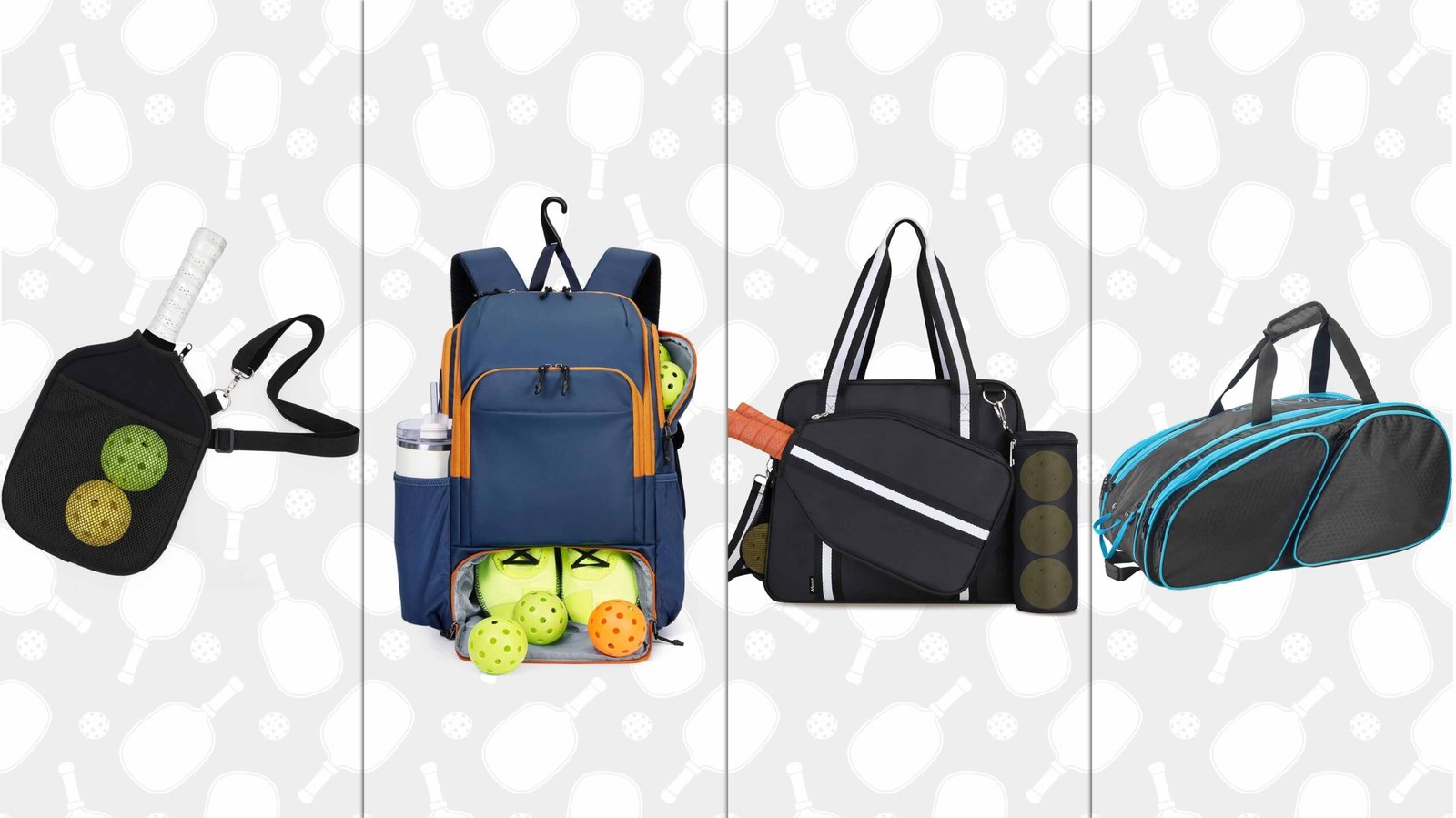
When I look at player-focused bag requests, I try to separate “real need” from “catalog noise.” Serious players do care about details, but they care about the right details. They notice whether the paddle compartment is shaped well. They notice if the zipper path is smooth. They notice if the bag tips over, feels hot on the back, or lacks a place for used gear.
Here is how I usually rank features:
| Feature | User value | Cost effect | My view |
|---|---|---|---|
| Paddle compartment | High | Low to medium | Core |
| Ball pocket | High | Low | Core |
| Water bottle holder | High | Low | Core |
| Fence hook | Medium to high | Low | Strong add-on |
| Shoe compartment | Medium | Medium | Good for larger styles |
| Thermal lining | Medium | Medium to high | Use carefully |
| Too many small pockets | Low to medium | Medium | Often overdone |
I believe the strongest feature set is simple. A serious player often needs to carry 2 to 4 paddles, balls, keys, phone, towel, bottle, and maybe shoes or a light layer. So the bag should support that exact habit. It should also hold shape and resist wear. Fabric choice matters here. A stable polyester or recycled fabric with good backing can do a lot more for product quality than adding three extra pockets.
I remember one sample discussion where the buyer wanted many technical pockets because a competitor had them. But when we mapped the actual end use, half of those pockets had no clear job. We removed them, improved the paddle section, adjusted front pocket depth, and kept a clean look. The result was easier to quote, easier to produce, and easier to sell. That is the kind of correction buyers should make early.
Should Brands Source Paddle Backpacks or Tote Bags?
Brands often get stuck between what looks sporty and what looks fashionable. If they choose only by trend, they may miss how people actually carry the bag.
Brands should source paddle backpacks when they want broader function, stronger unisex appeal, and higher daily-use value. They should source tote bags when they want lighter carry, lifestyle crossover, and easier style merchandising for women’s or casual collections.
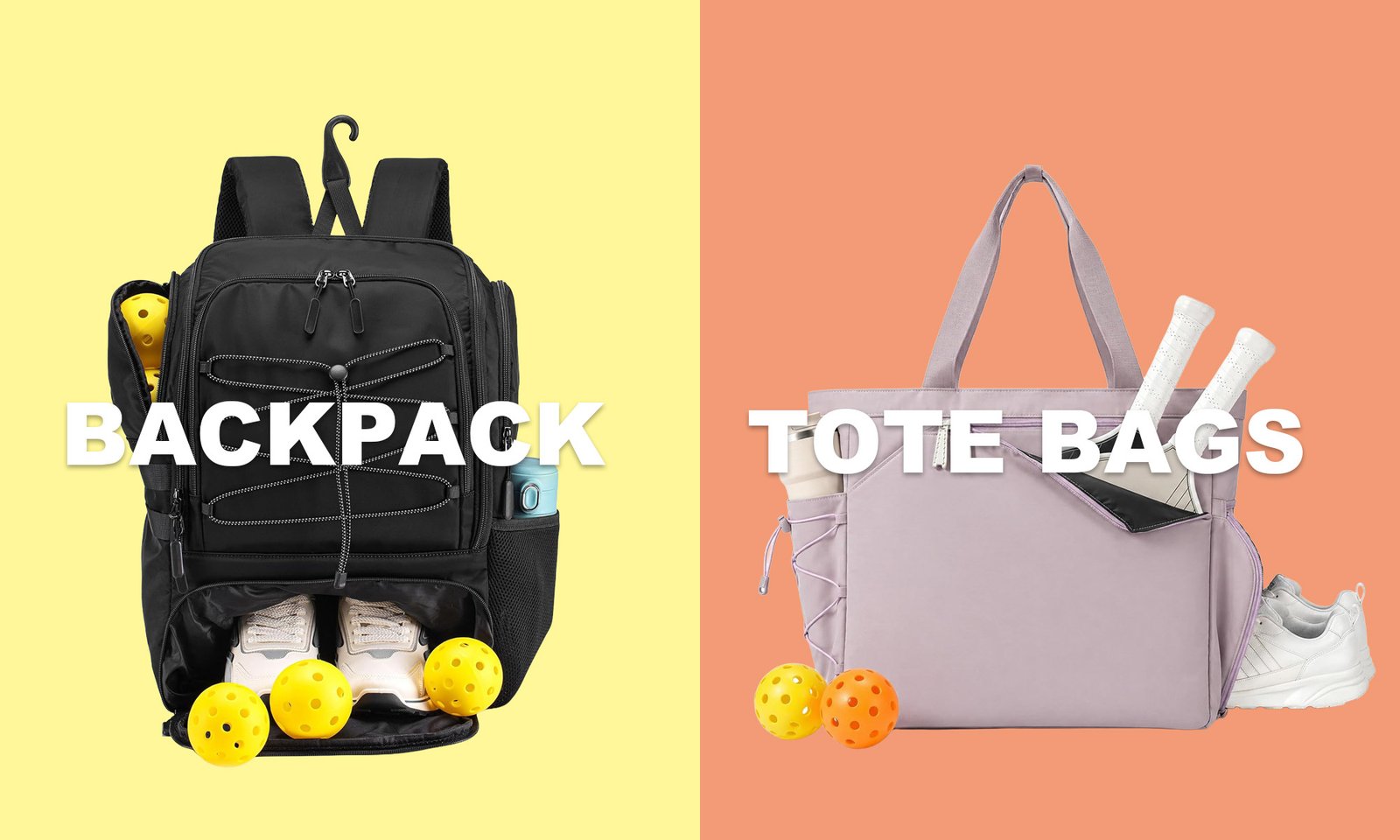
I do not think this is an either-or question for every buyer. I think it is a channel and customer question. Backpacks usually win on versatility.5 They are easier for cycling, walking, club play, and mixed-use days.6 They also support larger storage without feeling awkward. Tote bags, though, work very well when the brand wants a cleaner lifestyle angle. They can move beyond the court more easily if the shape and fabric are right.
I often compare them like this:
| Bag type | Best for | Price range control | Reorder stability |
|---|---|---|---|
| Paddle backpack | Club players, active users, wider age range | Good | Strong |
| Paddle tote | Lifestyle buyers, casual players, fashion-led lines | Good to medium | Good |
| Sling/compact bag | Entry level, travel light, promo programs | Strong | Strong |
From a factory view, backpacks usually give more room to build useful structure. That makes it easier to create visible value. Tote bags depend more on shape, handle comfort, fabric hand feel, and top opening design. If these details are weak, the whole product feels ordinary.
If a buyer asks me where to start, I usually suggest one core backpack and one clean tote. That creates range without too much complexity. It also helps test real sales behavior. In some markets, the backpack drives volume and the tote builds brand image. In other markets, a tote with paddle sleeves and a bottle pocket can surprise people because it feels more wearable in daily life. So I would not choose by trend board alone. I would choose by end user, sales channel, and reorder plan.
How Many Paddles Should a Pickleball Bag Hold?
Many product briefs ask for “large capacity” without defining actual use. That creates oversized bags that look useful but feel clumsy to carry and costly to ship.
Most pickleball bags should hold 2 to 4 paddles.7 That range fits the needs of most players, keeps the bag practical, and supports better cost, size, and everyday usability. Larger capacity should be reserved for club, coach, or tournament-focused products.8
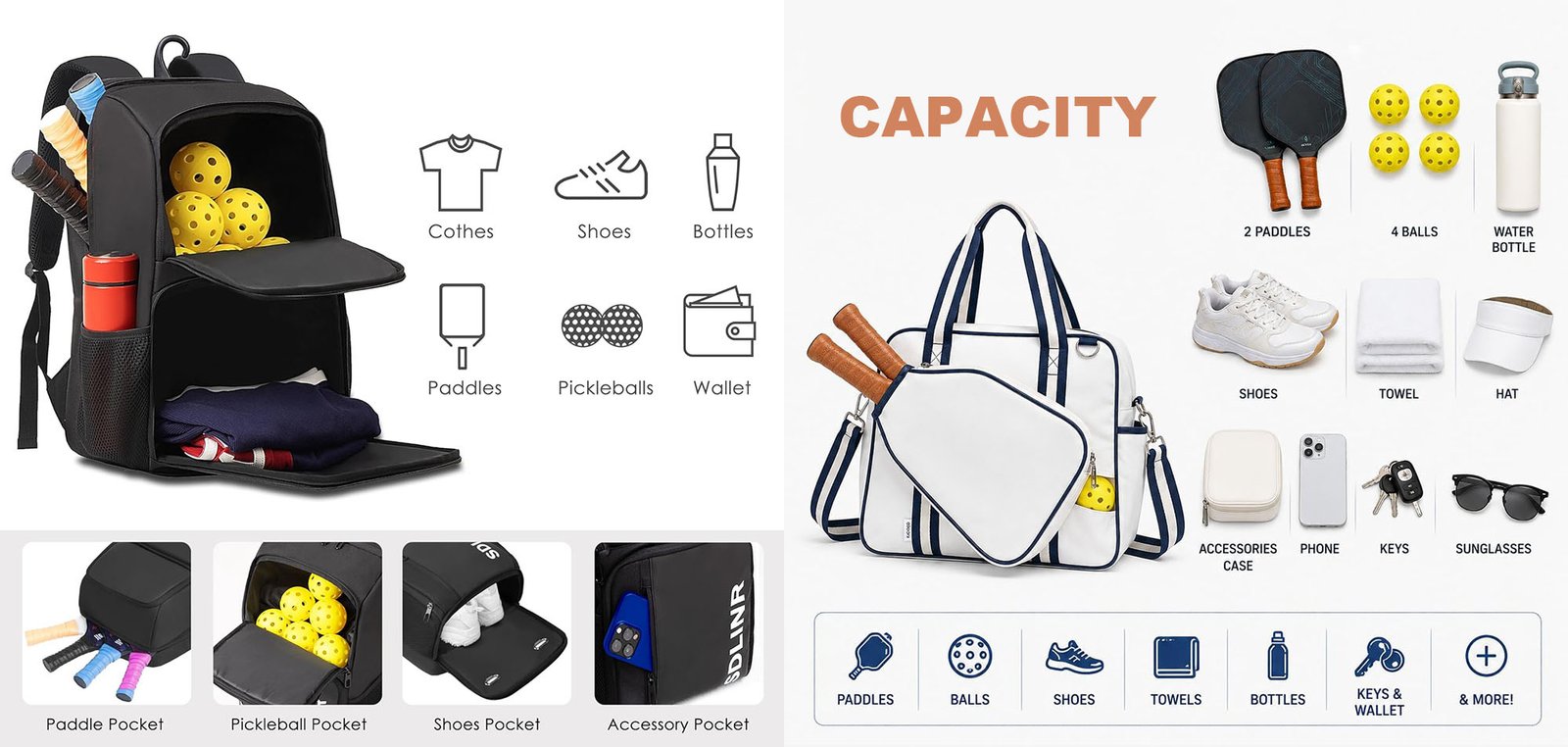
This is one of the clearest decisions buyers can make. Capacity sounds simple, but it drives pattern size, panel count, zipper length, carton efficiency, and final price. I often see bag concepts designed around the idea that more capacity means more value. In real use, that is not always true. A player who carries too much every day may stop using the bag because it feels bulky.
I usually frame paddle capacity like this:
| Paddle capacity | Best user | Product value |
|---|---|---|
| 1 to 2 paddles | Casual player, compact carry | Entry product, easy sell |
| 2 to 4 paddles | Mainstream player | Best all-around option |
| 4 to 6 paddles | Serious player, coach, team use | Niche but useful |
| 6+ paddles | Club and event needs | Specialized |
For most B2B buyers, the 2-to-4 paddle range is the safest center. It gives enough room for real use and still keeps the bag comfortable. It also allows room for balls, bottle, and personal items without becoming a travel bag. If the brand wants a premium line, then a larger model can be added later. I would not start there unless the customer base is already clear.
I once reviewed a sample that could hold many paddles, but it became wide, flat, and hard to balance. It looked impressive in photos. It felt less impressive on the shoulder. We reduced the paddle count target and improved the rest of the storage layout. The bag became more useful at once. That kind of editing is very important in this category.
What Logo Options Work for Club and Team Orders?
Many buyers want strong branding for clubs and teams, but some logo methods slow production, raise MOQ pressure, or look poor on certain fabrics.
The best logo options for club and team orders are screen print, embroidery, heat transfer, and rubber patch.9 The right choice depends on order size, fabric type, logo detail, and target price. Simple methods usually scale better and deliver faster.
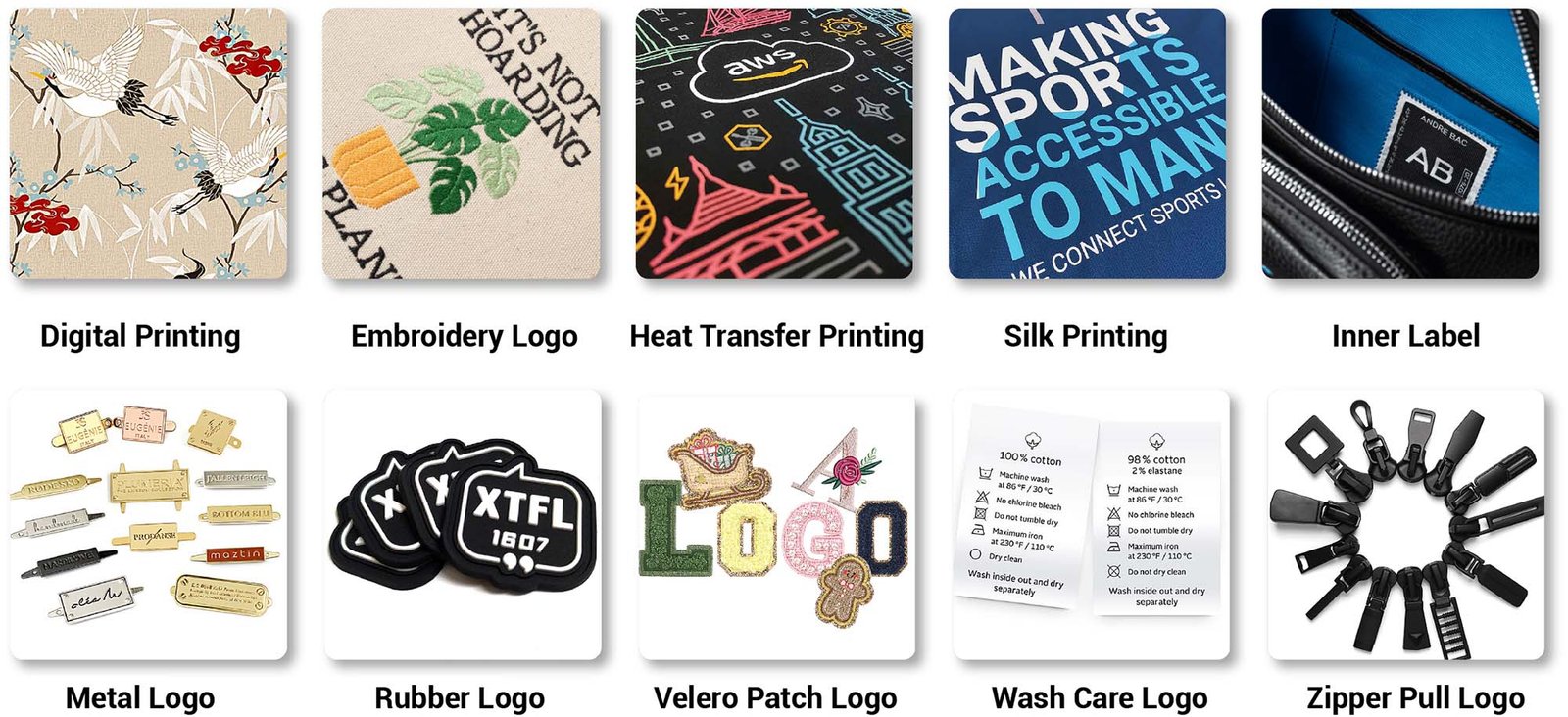
Logo choice matters more than many buyers expect. It affects sampling speed, production setup, unit price, and visual consistency. For team and club business, I usually recommend a logo method that matches the order structure, not just the artwork. If the order needs many names, short runs, or different colorways, some methods become much easier than others.
Here is a practical guide:
| Logo method | Best use | Pros | Limits |
|---|---|---|---|
| Screen print | Large runs, simple art | Low cost, fast | Less premium feel |
| Embroidery10 | Club look, durable branding | Premium look | Higher cost, stitch limits |
| Heat transfer | Fine detail, small runs | Sharp image, flexible | Heat and fabric fit matter |
| Rubber patch | Modern sports style | Strong brand feel | Extra mold/setup |
I like to keep logo options simple in the first launch. A good bag body with one reliable logo treatment often performs better than a complex branding package. For club and team programs, personalization is important, but too many custom steps can create delay and error risk. That is why I often suggest one main logo position, one optional name area, and one backup branding method in case artwork changes.
From a manufacturing side, logo placement should also respect bag structure. A logo that crosses seams, padding lines, or curved panels may look weaker in production than it does on a flat mockup. I always prefer a branding plan that looks clean, repeats well, and works across future styles. That helps buyers build a line, not just one order.
How Can Buyers Build a Pickleball Bag Line with Less Risk?
A new line can fail when buyers launch too many styles, too many features, and too many price points at once. That makes forecasting, sampling, and inventory harder.
Buyers can build a pickleball bag line with less risk by starting with 2 to 3 core styles, using shared materials, keeping features practical, and testing clear user segments. This lowers sampling waste, improves reorder speed, and keeps quality more consistent.11
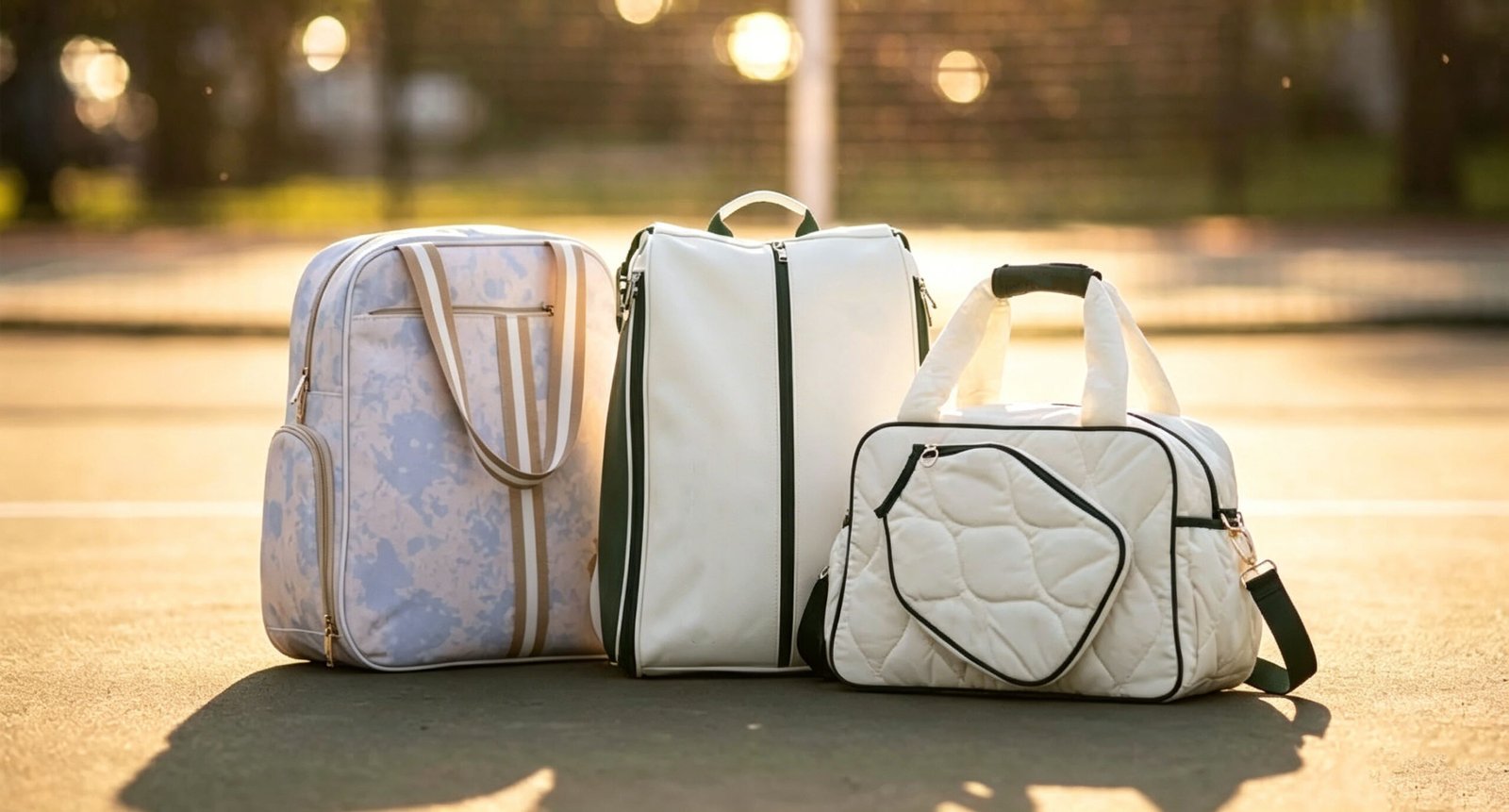
This is the part I care about most. I do not think bag lines become strong because they start big. I think they become strong because they start in a controlled way. If I were building a pickleball bag line for a buyer today, I would begin with a small range that covers the biggest use cases first.
My low-risk structure would look like this:
| Style | Role in line | Risk level |
|---|---|---|
| Core backpack | Main sales driver | Low |
| Compact sling or small backpack | Entry and promo option | Low |
| Clean tote | Lifestyle extension | Medium |
I would also keep materials shared where possible. The same main fabric, lining family, webbing color set, and zipper standard can reduce complexity. That helps costing, color control, and repeat production. I would avoid launching too many hardware finishes or hard-to-source trims in the first round.
I also think buyers should define good-better-best very carefully. “Better” should not mean “more pockets.” It should mean better shape, better comfort, better fabric hand feel, or cleaner branding. Those improvements are easier for the user to feel and easier for the factory to repeat.
In my own work, the safest projects usually have a short product brief with very clear use cases. The risky ones often have many inspiration photos and no clear customer story. So I would build the line around real use: daily club play, light carry, and sport/lifestyle crossover. Then I would test. Then I would expand. That is slower at the start, but it is much safer for margin, quality, and reorder confidence.
Conclusion
I would source pickleball bags now, but I would do it with simple, useful, scalable styles that match real player needs and keep sourcing risk under control.
"Pickleball - Wikipedia", https://en.wikipedia.org/wiki/Pickleball. Participation reports from sports industry associations and governing bodies document rapid recent growth in pickleball participation in the United States, supporting the article’s view that the category retains commercial relevance; however, participation growth is contextual evidence and does not by itself prove demand for any specific bag segment in 2026. Evidence role: general_support; source type: institution. Supports: Independent participation reports should support that pickleball has experienced sustained growth in player numbers, providing context for continued product demand.. Scope note: Participation growth is contextual evidence and does not directly prove future sales performance for a specific product line. ↩
"Association of Pickleball Participation With Decreased Perceived ...", https://pmc.ncbi.nlm.nih.gov/articles/PMC12553873/. Player participation and usage surveys indicating that many pickleball participants play regularly in local recreational settings would support the article’s classification of everyday court carry as a common use case; such evidence contextualizes likely bag needs but does not directly measure sourcing risk. Evidence role: general_support; source type: institution. Supports: Survey or participation data should support that a large share of pickleball play occurs in routine recreational or club settings, making everyday carry a common use case.. Scope note: Use-pattern surveys can suggest demand concentration but do not directly establish procurement risk or reorder stability. ↩
"Understanding Injury Patterns and Predictors in Pickleball Players", https://pmc.ncbi.nlm.nih.gov/articles/PMC12373573/. Neutral player surveys or observational guides documenting that players typically bring paddles, balls, hydration, and a small set of personal items would support the article’s claim that basic carry functions cover many users’ needs; this would describe common practice rather than prove a universal preference against more complex features. Evidence role: general_support; source type: other. Supports: User surveys or neutral observational sources should support that common court carry consists primarily of paddles, balls, water, and small personal items.. Scope note: Evidence of common items carried would be descriptive and not direct proof that simpler bag designs always perform better commercially. ↩
"USA Pickleball Approved Pickleball Paddles And Balls", https://equipment.usapickleball.org/. Equipment guidance from pickleball organizations and general sports-carry ergonomics sources would support the article’s identification of paddle protection, organization, hydration capacity, and carrying comfort as core functional requirements for frequent players; the support is inferential because such sources typically describe equipment needs rather than bag design specifications. Evidence role: general_support; source type: institution. Supports: Guidance from governing bodies or sports organizations should support the core equipment and practical court-access needs of active players.. Scope note: Most neutral sources address equipment or ergonomics broadly and may not directly specify ideal bag feature sets. ↩
"The Biomechanical Effects of Different Bag‐Carrying Styles ... - PMC", https://pmc.ncbi.nlm.nih.gov/articles/PMC9837261/. Ergonomic research on load carriage commonly finds that two-strap backpacks distribute weight more evenly than one-shoulder bags, which supports the article’s claim that backpacks are often more versatile for active transport; however, such evidence addresses carrying mechanics rather than pickleball-specific consumer preference. Evidence role: mechanism; source type: education. Supports: Ergonomics research should support that backpacks generally distribute load more evenly and are more practical for walking or cycling than one-shoulder carry formats.. Scope note: Ergonomic advantages do not directly prove that all customer segments will prefer backpacks over totes. ↩
"Impact of Backpacks on Ergonomics: Biomechanical and ... - PMC", https://pmc.ncbi.nlm.nih.gov/articles/PMC9180465/. Biomechanics and ergonomics studies indicating that backpack-style carriage improves load stability and comfort during activities such as walking would support the article’s statement that backpacks are easier for active and mixed-use days; support for cycling and club-play convenience would remain contextual rather than direct. Evidence role: mechanism; source type: research. Supports: Biomechanics or ergonomics studies should support that backpacks provide greater stability and comfort during active movement such as walking or cycling.. Scope note: Most available studies examine general load carriage and may not specifically test cycling or pickleball contexts. ↩
"What paddles do pickleball players carry and why? - Facebook", https://www.facebook.com/groups/1340630926008388/posts/4955276944543750/. Player guidance and usage evidence showing that many pickleball participants carry a primary paddle together with backups would support the article’s recommendation that a 2-4 paddle capacity serves mainstream use; this supports practical plausibility rather than establishing a single optimal specification for all customers. Evidence role: general_support; source type: institution. Supports: Neutral sources should support that many players carry one paddle plus backups, making 2-4 paddle capacity a practical mainstream range.. Scope note: User behavior varies by skill level, match format, and session length, so no single capacity range can be treated as universal. ↩
"A qualitative examination of the evolving role of sports technology in ...", https://pmc.ncbi.nlm.nih.gov/articles/PMC12434470/. Sources describing coaching, club, or tournament equipment needs would support the article’s claim that larger-capacity bags are most relevant for users who transport multiple paddles, balls, or shared gear; this is contextual support because actual carrying requirements differ widely across organizations and events. Evidence role: general_support; source type: other. Supports: Neutral descriptions of coaching, club, or tournament equipment needs should support that these users often carry more paddles and accessories than typical recreational players.. Scope note: Evidence may show that such users often carry more gear, but it may not establish a strict boundary between mainstream and specialized bag capacities. ↩
"Screen printing - Wikipedia", https://en.wikipedia.org/wiki/Screen_printing. Textile-decoration references describing screen printing, embroidery, heat transfer applications, and patch attachment as standard methods for branding fabric goods would support the article’s list of common logo options for bag orders; such sources define established methods but do not rank them as universally 'best' for every procurement scenario. Evidence role: definition; source type: education. Supports: Educational or encyclopedia sources should support that screen printing, embroidery, heat transfer, and patches are established decoration methods used on textile products.. Scope note: Neutral references can verify that these are common methods, but not that they are categorically optimal for all club and team orders. ↩
"Embroidery - Lasell University", https://www.lasell.edu/academics/schools-and-programs/school-of-fashion/lasell-fashion-collection/collections/the-lasell-catalogue-of-artistry-in-fashion/embroidery.html. Textile education sources describing embroidery as a stitched surface embellishment with good durability in repeated use would support the article’s characterization of embroidery as durable branding; the support is general because durability depends on fabric, stitch density, thread, and care conditions. Evidence role: mechanism; source type: education. Supports: Textile education sources should support that embroidery is a stitched decoration method known for durability in many fabric applications.. Scope note: Durability is conditional on construction and maintenance, so the evidence would be contextual rather than absolute. ↩
"Modeling Product Variety Induced Manufacturing Complexity for ...", https://hulab.engin.umich.edu/research/assembly-forming-weldingjoining/modeling-product-variety-induced-manufacturing-complexity-assembly-system-design/. Operations-management research on product variety and component commonality generally finds that lower complexity and greater standardization can improve process repeatability and reduce coordination burdens, which supports the article’s claim that a smaller, shared-material line can aid reorder speed and quality consistency; the effect on sampling waste is inferential rather than directly measured in all contexts. Evidence role: mechanism; source type: paper. Supports: Operations or manufacturing research should support that reducing product variety and increasing component commonality can lower complexity and improve repeatability.. Scope note: The literature typically addresses manufacturing systems broadly and may not directly study soft-goods sampling workflows. ↩