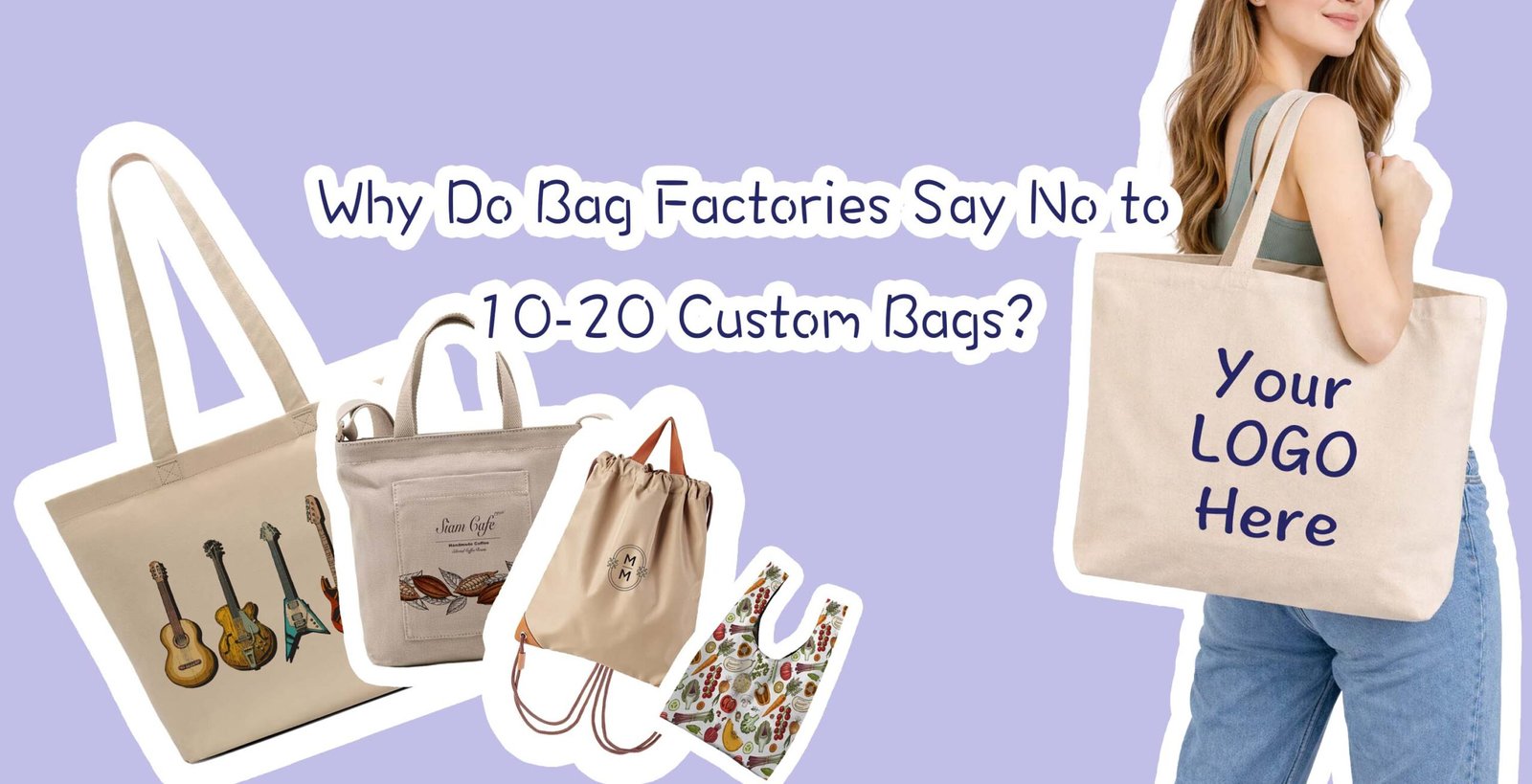
I often hear buyers feel confused when a factory refuses just 10-20 custom bags. The problem is not the idea itself. The problem is that tiny custom orders still need almost the same setup work1.
Most bag factories reject 10-20 custom bags because custom development has fixed costs like design, pattern making, material sourcing, sampling, communication, and quality control. Buyers who want to test a style usually get better results by making samples first or modifying an existing bag with color and logo changes.
When I talk with buyers, I find that many of them see quantity first, but factories see process first. A buyer may think 10 bags should be easy. I understand that logic. Still, from the factory side, custom work starts long before sewing begins. That is why this topic matters if you source bags from China or any low-cost country2.
What Is the Minimum Order Quantity for Custom Bags?
Many buyers ask for a custom bag and expect a small MOQ. The trouble starts when they learn the MOQ is higher than planned. That gap often slows the whole sourcing process.
The minimum order quantity for custom bags often depends on fabric, printing, hardware, and production complexity. For full custom development, many factories ask for hundreds or even thousands of pieces3, while simple logo or color changes on existing styles may allow much lower quantities.
When I explain MOQ to buyers, I do not treat it as just a sales rule. I treat it as a production rule. MOQ is tied to how a factory runs machines, buys materials, and plans labor4. If I need custom fabric, custom lining, custom zipper pullers, woven labels, hangtags, and special packaging, each item may have its own supplier MOQ5. That means the bag factory is not the only one setting the limit. The material chain also sets limits.
I have seen buyers confuse three different order types:
| Order type | Typical MOQ | Why it differs |
|---|---|---|
| Existing style with stock materials | 50-200 pcs | Less development work |
| Existing style with custom logo/color | 100-500 pcs | Some sourcing and setup needed |
| Fully custom bag development | 300-1000+ pcs | New pattern, materials, testing, and setup |
I usually tell buyers to ask one simple question first: “Am I buying a ready style with edits, or am I creating a new product?” That question changes everything. If the goal is to test a market, I often suggest using an existing shape and changing logo, fabric color, or packaging. That route is faster. It is also easier for a factory to accept. Once the market confirms the style, I can move to full custom production with a more workable MOQ and better unit cost.
Why Are Small Custom Bag Orders More Expensive?
Buyers often think fewer bags should mean lower spending. I understand that feeling. But in bag manufacturing, small custom orders usually raise the cost per bag, not lower it.
Small custom bag orders are more expensive because fixed costs like design, pattern making, sampling, sourcing, machine setup, and quality checks are spread over very few pieces6. The factory still does most of the same work7, so each bag carries a much higher share of those costs.
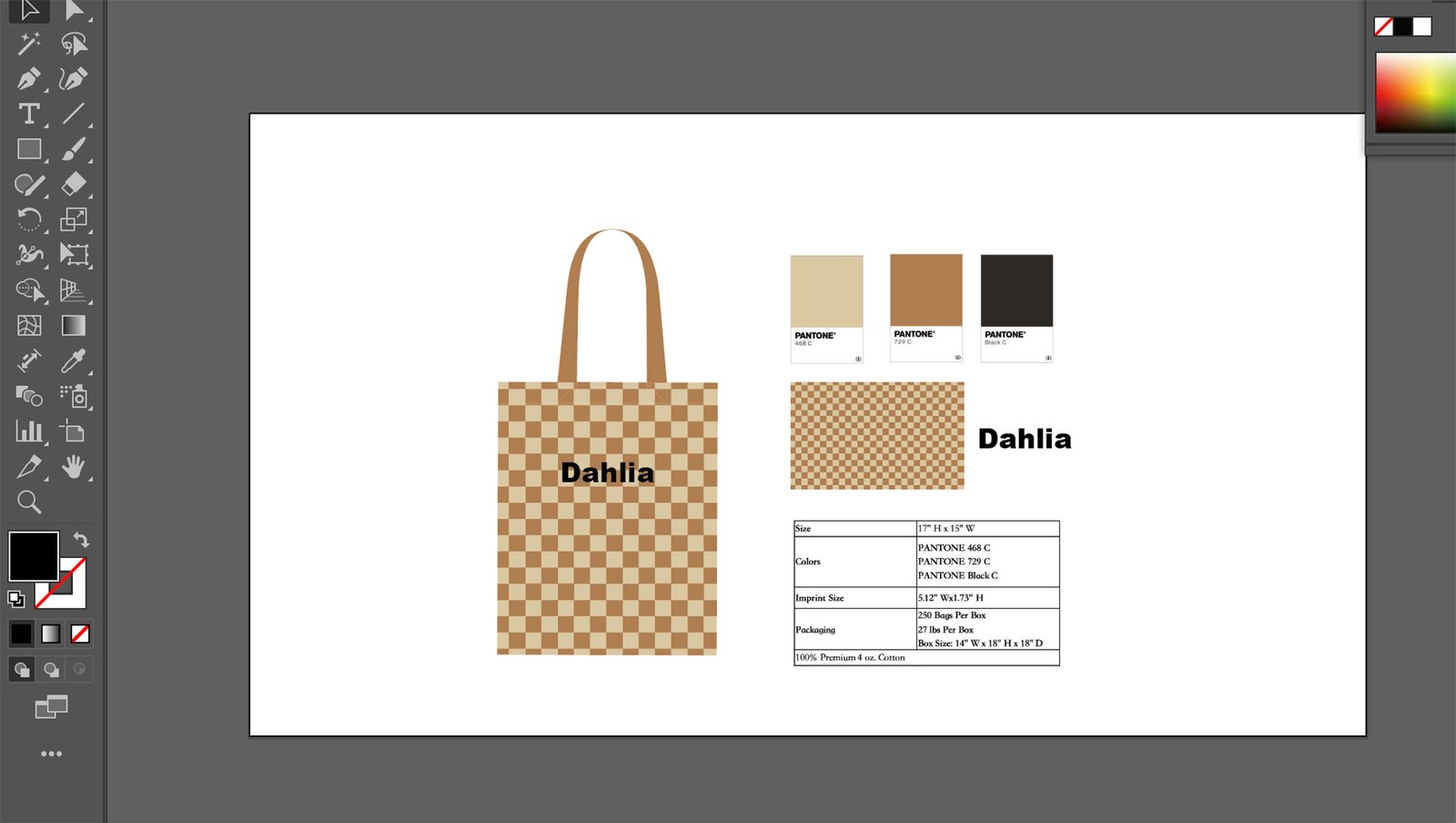
I once explained this to a buyer by using a simple example. If a factory spends time on one custom design, one paper pattern, one sample round, one logo proof, one material search, and one quality standard sheet, that setup work does not disappear just because the order is 20 pieces. The work is still there. The factory still pays staff. The factory still uses time slots that could have gone to larger orders.
Here is the cost logic in a clear way:
| Cost item | Exists for 20 pcs? | Exists for 2,000 pcs? | Effect on small order |
|---|---|---|---|
| Design communication | Yes | Yes | High cost per bag |
| Pattern making | Yes | Yes | High cost per bag |
| Sample making | Yes | Yes | High cost per bag |
| Material sourcing | Yes | Yes | High cost per bag |
| Production line setup | Yes | Yes | High cost per bag |
| Quality inspection | Yes | Yes | High cost per bag |
I often tell buyers that factories care about total effort, not just sewing minutes. A small order can be more troublesome than a big order if it uses special fabric, many revisions, and custom trims. In that case, the unit price rises fast. That is why some factories do not even quote. They know the price will look unreasonable to the buyer, and they want to avoid a long back-and-forth that goes nowhere.
Can a Bag Factory Make Only 10-20 Custom Bags?
Some buyers ask me this very directly. The honest answer is yes, a factory can make 10-20 custom bags. But that does not mean the factory wants to do it, or that the price will make sense.
A bag factory can make only 10-20 custom bags, but most factories do not want to8 because the order uses development time, material sourcing effort, and production resources without giving enough volume to recover those costs9.
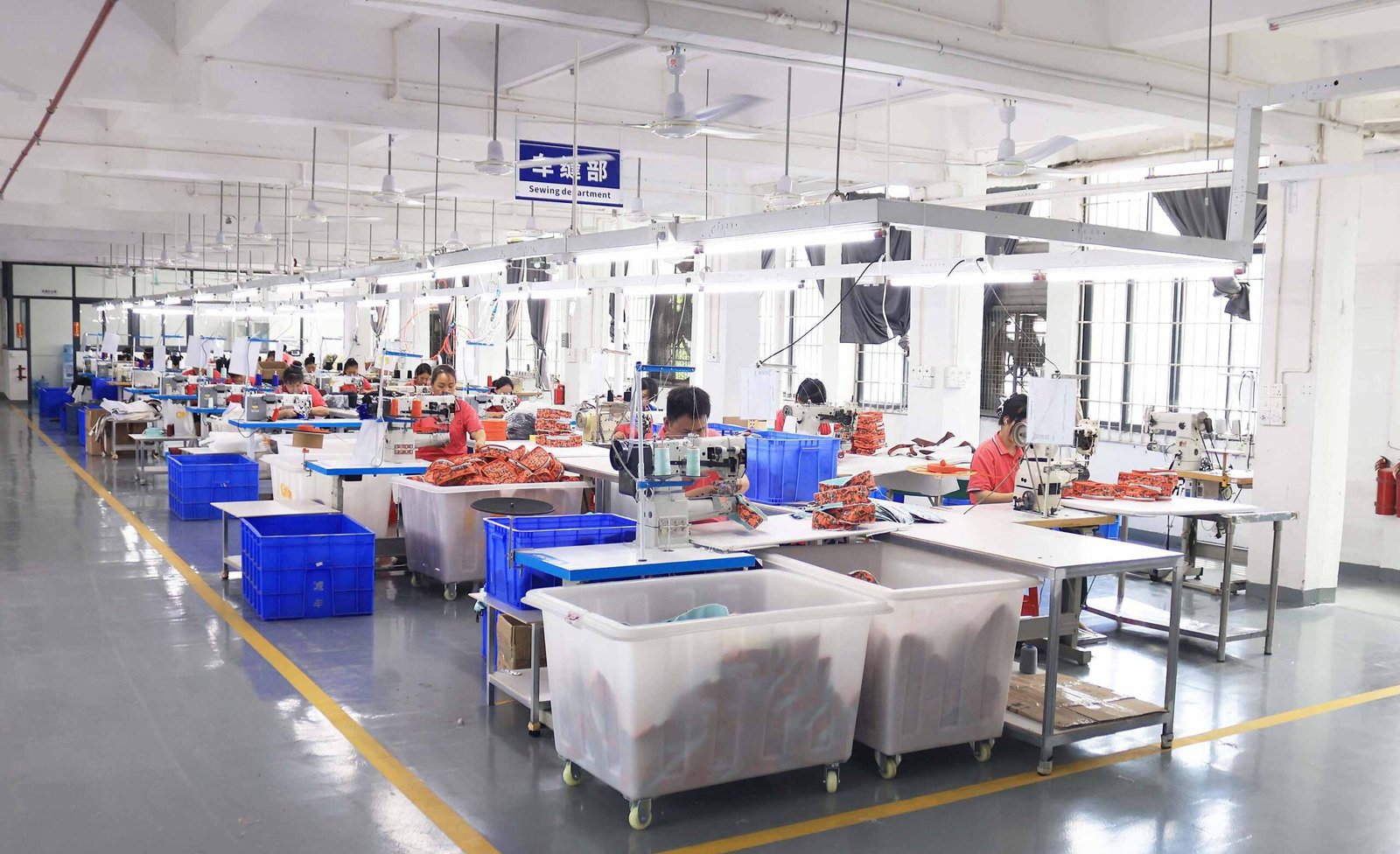
I think this is where many sourcing talks break down. “Can” and “will” are not the same thing. A factory with skilled workers can physically produce 10 or 20 custom bags. That part is possible. The real issue is commercial logic. If the order blocks designers, pattern makers, sample staff, and purchasing staff, then the factory needs enough return to justify it.
I usually see four cases where a factory may accept 10-20 pieces:
| Situation | Chance of acceptance | Reason |
|---|---|---|
| Existing bag, add logo only | High | Minimal extra work |
| Existing bag, change stock color | Medium | Depends on available material |
| New design with simple structure | Low | Still needs development |
| Fully custom with new trims and packaging | Very low | Too much setup for too few units |
From my experience, buyers get better results when they change the request. If I ask for “10-20 fully custom bags,” the answer is often no. If I ask for “1-3 development samples” or “20 pieces based on your existing mold with a custom print,” the answer may become yes. The difference is huge. One request sounds like a factory must build a new project. The other sounds like a practical test order.
That is why I always advise buyers to be clear about the real purpose. If the purpose is market testing, sample approval, or internal presentation, there are smarter ways than forcing a very small fully custom production run.
What Costs Are Involved in Custom Bag Production?
Many people see only the finished bag. I see a chain of work behind it. Once buyers understand the cost structure, factory MOQ and pricing make a lot more sense.
Custom bag production costs include design, pattern making, sample development, fabric and trim sourcing, logo process setup, cutting, sewing, quality control, packaging, and sometimes mold or printing plate fees10. These fixed and variable costs are why very small custom orders become expensive.
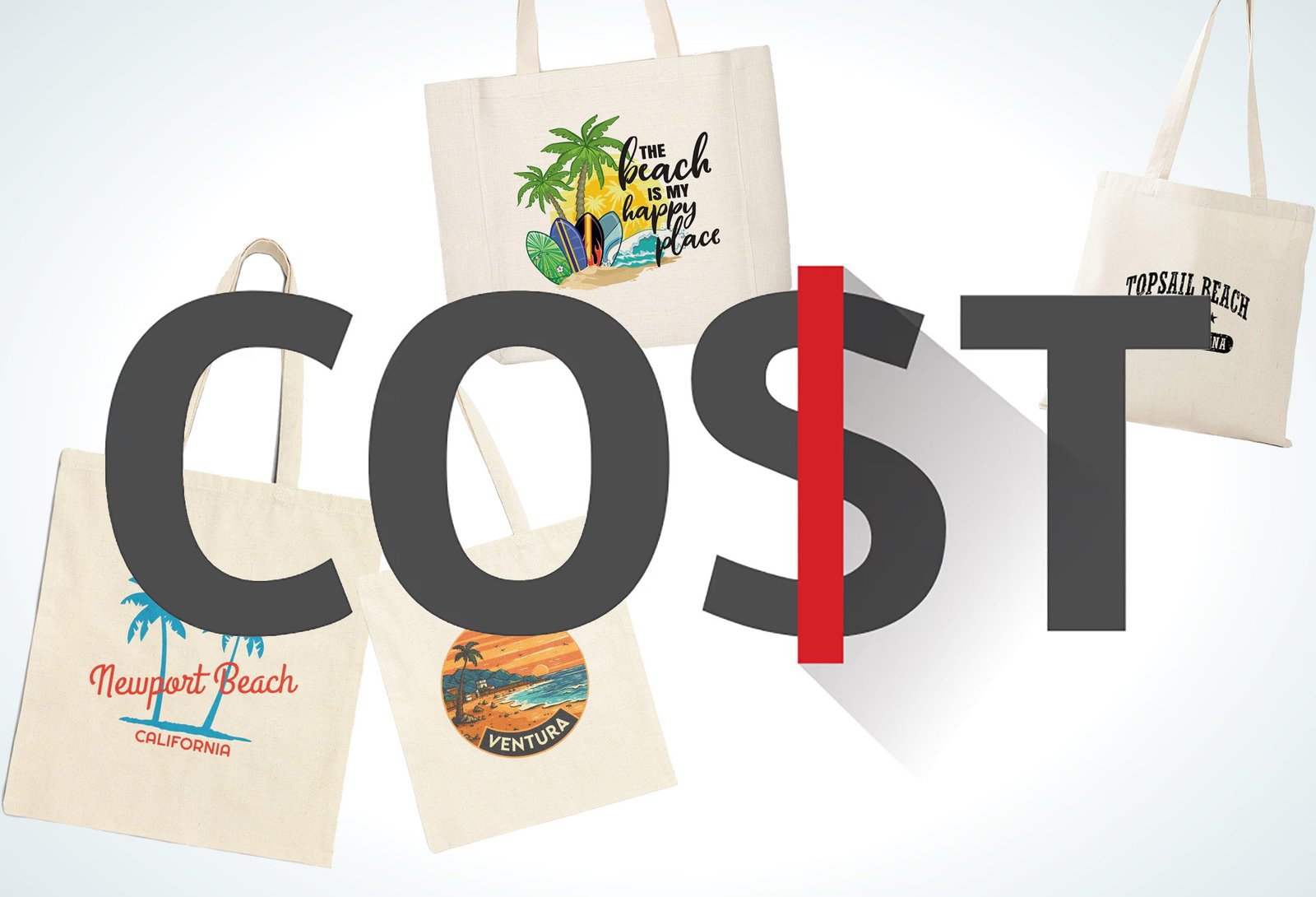
When I build a quotation, I do not start from the final bag. I start from the process steps. Each step has labor, time, and risk. Some buyers only look at raw material and sewing. That view is too narrow. A custom bag project often includes hidden costs before mass production even starts.
Here is a simple breakdown:
| Cost category | What it covers | Fixed or variable |
|---|---|---|
| Design and tech work | Sketch, specs, revisions | Fixed |
| Pattern making | Paper pattern, structure check | Fixed |
| Sampling | Trial sample, correction sample | Fixed |
| Material sourcing | Fabric, lining, foam, zipper, webbing | Mixed |
| Logo setup | Screen, embroidery file, metal mold | Fixed |
| Production labor | Cutting, sewing, finishing | Variable |
| Quality control | In-line and final inspection | Mixed |
| Packaging | Polybag, carton, custom labels | Variable |
I often explain it like this: if a buyer orders 20 pieces, the fixed costs do not become 1% of the project. They can become the biggest part of the project. A new metal logo mold alone can feel heavy on such a small quantity. A custom print plate can do the same. Even a simple label change needs proofing and confirmation.
I also remind buyers that factories carry risk. If special fabric is ordered for a 20-piece run, leftover stock may have no use later11. If a color turns out wrong, there is no large order to absorb the mistake. That risk is built into pricing and MOQ decisions. So when a factory gives a high quote or refuses the order, it is often trying to protect time, materials, and production stability.
How Can Buyers Test Custom Bag Designs Before Bulk Orders?
Buyers still need to test new products. I fully understand that. The good news is that testing does not always need a 10-20 piece full custom run. There are smarter and cheaper ways.
Buyers can test custom bag designs before bulk orders by making development samples, choosing existing factory styles with small changes, adding custom logos to stock materials, or ordering pre-production samples before confirming mass production12. This lowers risk and makes factory cooperation easier.
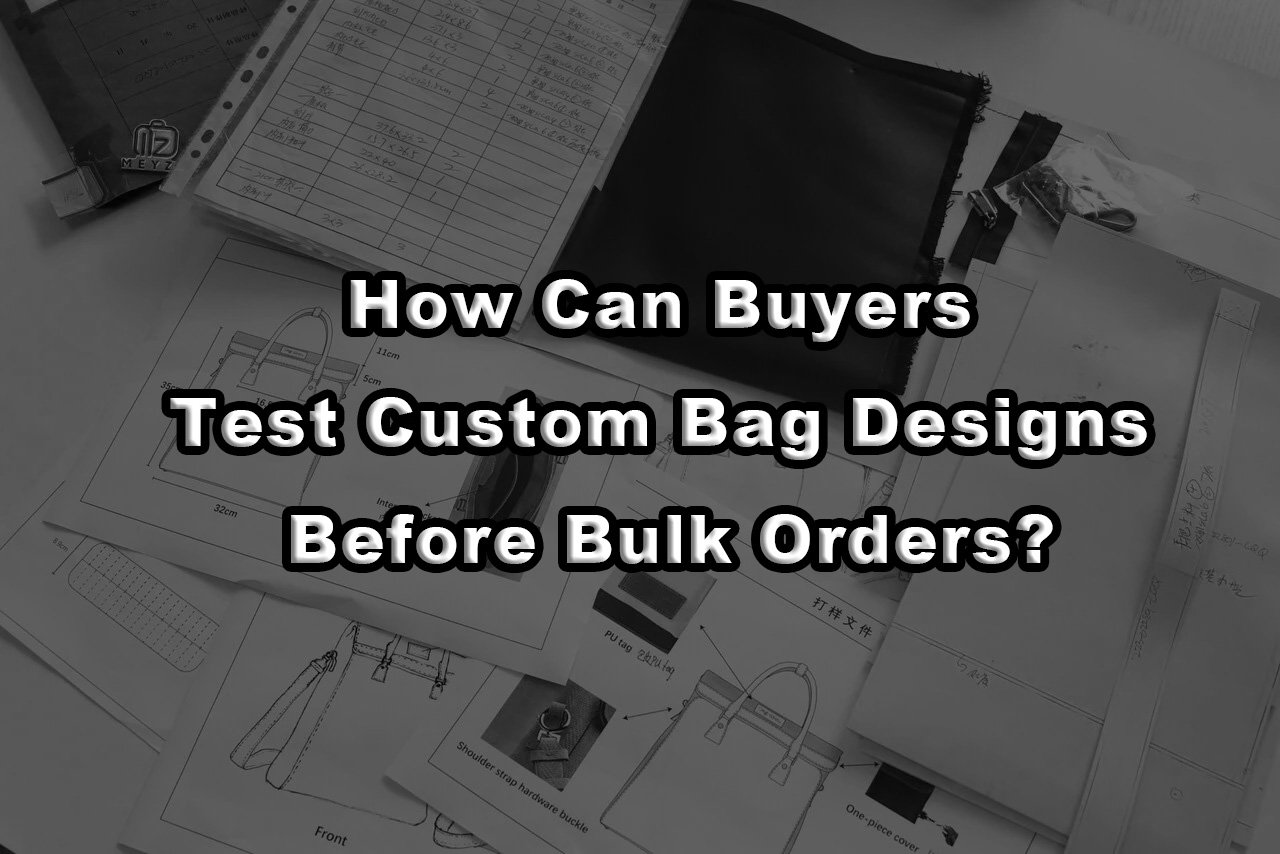
When I work with buyers who want to reduce risk, I usually suggest a step-by-step method. That method saves money and helps both sides move faster. A buyer does not need to jump from idea to full custom production at once. I think that is where many avoidable problems begin.
A simple testing path can look like this:
| Stage | What I suggest | Why it helps |
|---|---|---|
| 1 | Make 1-3 samples | Check size, function, and look |
| 2 | Revise details | Fix pockets, straps, logo placement |
| 3 | Use existing materials if possible | Lower sourcing risk |
| 4 | Test market with near-stock version | Save cost and time |
| 5 | Confirm bulk order | Get better unit price |
I often tell buyers to separate “design validation” from “mass production.” These are two different jobs. Design validation means I check whether the bag works, looks right, and fits the market. Mass production means I lock materials, cost, and lead time for volume. If I mix these steps together in a 10-20 piece fully custom order, the process becomes expensive and inefficient.
For large buyers, a very practical route is to use an existing style, change the fabric color, add a logo, adjust packaging, and test that version first. This approach is easier for the factory to accept. It also gives useful market feedback. After the style is confirmed, I can move to a formal bulk OEM or ODM order. At that point, the cost structure becomes healthier, the lead time becomes more predictable, and the supplier relationship becomes more stable. In my experience, that is how smart sourcing teams reduce risk without wasting time.
Conclusion
Most factories refuse 10-20 custom bags because fixed development costs stay the same. I always suggest samples first, then bulk production after the design is confirmed.
"Batch production - Wikipedia", https://en.wikipedia.org/wiki/Batch_production. Manufacturing cost literature explains that setup activities such as tooling preparation, planning, and changeover are largely fixed per production run rather than per unit, which makes very small batches comparatively expensive on a per-item basis. Evidence role: mechanism; source type: education. Supports: Manufacturing commonly involves fixed setup costs that are incurred regardless of lot size, so small batches bear a higher setup burden per unit.. ↩
"Manufacturing, value added (current US$) - China | Data", https://data.worldbank.org/indicator/NV.IND.MANF.CD?locations=CN. International trade and development sources describe China and other export-oriented manufacturing economies as major sourcing bases partly because of historically competitive labor and production costs, although cost advantages vary by product category, region, and time period. Evidence role: historical_context; source type: institution. Supports: International economic sources document why China and other developing manufacturing hubs have often been used for cost-sensitive sourcing.. Scope note: This would support the general sourcing context rather than proving that every bag factory in China is low-cost in the present market. ↩
"Wholesale Custom Tote Bag: Complete 2026 Buyer's Guide to Bulk ...", https://www.universepack.com/industry-news/wholesale-custom-tote-bag-complete-2026-buyers-guide-to-bulk-pricing-factory-process-profit-strategy/. Trade and manufacturing guidance commonly notes that minimum order quantities for custom goods are shaped by supplier batch economics, material minimums, and setup costs, which often make fully customized runs feasible only at substantially higher volumes than simple modifications of existing products. Evidence role: general_support; source type: institution. Supports: MOQs in contract manufacturing are often driven by material, tooling, and process constraints, which can push custom orders into higher volume ranges.. Scope note: A neutral source may support the MOQ mechanism and typical range logic without giving bag-specific global averages. ↩
"ECONOMIC ORDER QUANTITY (EOQ) MODEL", https://scm.ncsu.edu/scm-articles/article/economic-order-quantity-eoq-model-inventory-management-models-a-tutorial. Operations and supply-chain literature describes minimum order quantities as a consequence of batch production economics, supplier purchasing minimums, and the need to allocate labor and machine capacity efficiently across orders. Evidence role: mechanism; source type: education. Supports: MOQ decisions are influenced by production efficiency, supplier purchasing constraints, and labor allocation.. ↩
"Supplier - Wikipedia", https://en.wikipedia.org/wiki/Supplier. Supply-chain research notes that minimum order quantities are often set at multiple tiers of production, including raw materials and components, so a downstream manufacturer may inherit quantity constraints from fabric, trim, or packaging suppliers. Evidence role: mechanism; source type: paper. Supports: Upstream suppliers frequently impose their own minimum quantities for materials and components, affecting downstream manufacturers.. ↩
"Economies of scale - Wikipedia", https://en.wikipedia.org/wiki/Economies_of_scale. Standard treatments of economies of scale explain that when fixed design and setup costs are spread across a small number of units, average cost per unit remains high relative to larger production runs. Evidence role: definition; source type: encyclopedia. Supports: Standard economies-of-scale principles explain why fixed costs produce higher unit costs at low production volumes.. ↩
"Smaller Batches, Bigger Gains? Investigating the Impact of ... - arXiv", https://arxiv.org/html/2406.02294v1. Manufacturing research distinguishes unit-level costs from batch-level activities such as planning, setup, documentation, and inspection, indicating that many preparatory tasks must still be completed even for very small runs. Evidence role: mechanism; source type: research. Supports: Preproduction and batch-level activities are commonly required irrespective of total units produced.. ↩
"Challenges to competitive manufacturing in high-cost environments", https://pmc.ncbi.nlm.nih.gov/articles/PMC8126600/. Production economics literature recognizes that firms may be technically capable of manufacturing very small custom batches while still declining them because batch-level setup, coordination, and opportunity costs make such orders commercially inefficient. Evidence role: general_support; source type: paper. Supports: Small custom runs may be possible to produce while still being uneconomical for a manufacturer because of setup and coordination costs.. Scope note: This would support the general economic logic rather than proving the behavior of every bag factory. ↩
"[PDF] Overhead During Low-Volume Production - eGrove", https://egrove.olemiss.edu/cgi/viewcontent.cgi?article=1242&context=acct_inst. Cost-accounting frameworks such as activity-based costing identify development, sourcing, and setup as batch-level overheads that low-volume orders may be unable to absorb adequately, reducing or eliminating economic viability. Evidence role: mechanism; source type: education. Supports: Low-volume custom production may fail to absorb batch-level overhead and development costs.. ↩
"Printing - Procure to Pay - Cal Poly", https://afd.calpoly.edu/procure-to-pay/how-to-buy/printing/. Manufacturing and printing references note that custom decoration or hardware production may require nonrecurring setup charges, including tooling, molds, screens, or printing plates, before unit production begins. Evidence role: definition; source type: education. Supports: Certain custom processes require initial tooling or plate preparation fees separate from per-unit production cost.. ↩
"Raw Material Minimum Order Quantity Optimization", https://dspace.mit.edu/bitstream/handle/1721.1/121302/1240293813-MIT.pdf?sequence=1. Inventory and supply-chain studies report that supplier minimum order quantities can force buyers to procure more material than immediate demand requires, creating excess or obsolete stock when the material is highly customized. Evidence role: mechanism; source type: paper. Supports: Supplier minimums and custom-material purchasing can produce excess inventory that may not be reusable.. ↩
"[PDF] Textile quality assurance: A comparison between education and ...", https://dr.lib.iastate.edu/bitstreams/532d5995-3bc0-4d36-af3e-c8cc63c4cd55/download. Product development and apparel manufacturing guidance describes pre-production samples as a standard approval step used to confirm specifications, materials, appearance, and workmanship before authorizing mass production. Evidence role: expert_consensus; source type: education. Supports: Pre-production sampling is commonly used to verify design, materials, and workmanship before a larger run.. Scope note: This supports the general practice of pre-production sampling rather than demonstrating that it is always the cheapest option for every buyer. ↩