Back-to-school returns can eat margin fast. I have seen buyers blame factories first, but many return problems start much earlier, at the product definition stage.
Backpack buyers can cut returns by defining student use clearly before ordering, then matching price, materials, structure, and bulk checks to that use. Most return waves come from expectation gaps, not only factory defects.1

I have handled complaint cases where the sample looked fine, the order shipped on time, and the return rate still climbed. In many of those cases, the real problem was simple: the bag was approved for a target price, not for real school use. When I look back at those projects, the same pattern appears again and again. Buyers can lower return risk when they define use, stress, and durability before they lock details. That is where this article starts.
What Backpack Defects Cause the Most Returns?
A backpack can look good on arrival and still fail fast in student use. I have seen the biggest return waves come from a few repeat weak points.
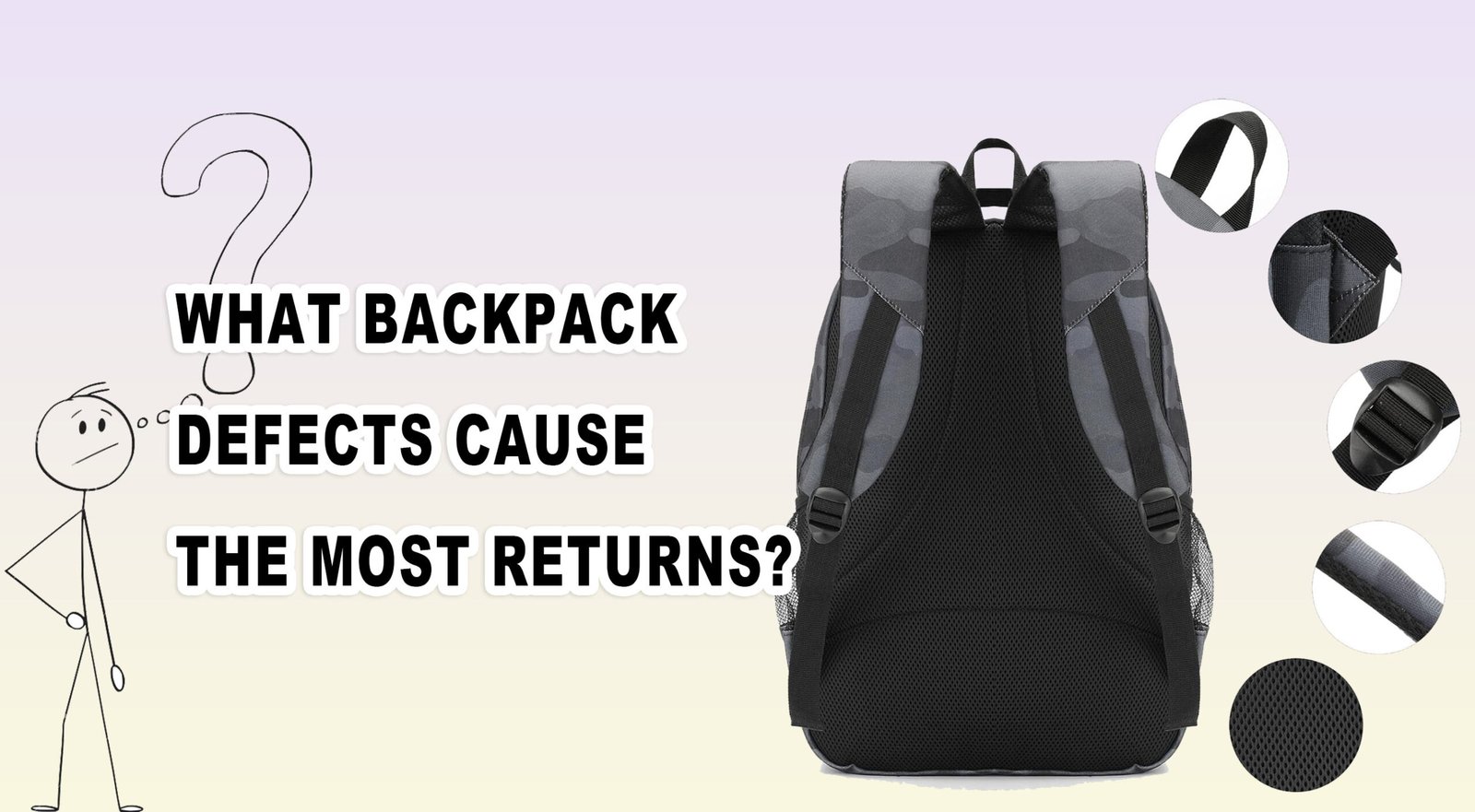
The backpack defects that cause the most returns are broken zippers, torn straps, split seams, poor shape support, and fabric wear that appears too early.2 These issues often reflect a mismatch between expected school use and actual construction.
In buyer complaint and rework discussions, we often find the issue started with unclear product definition. A buyer may approve a clean-looking sample for a low price point. Then the end user loads it with books, a bottle, lunch, and sometimes a laptop. The return does not happen because the bag was ugly. It happens because the bag felt weaker than expected.
From sample-to-bulk gaps, I have seen some repeat risk points. Zippers fail when the chain is too light, the slider is unstable, or the front curve puts stress on opening and closing. Straps fail when webbing is thin, bar-tack stitching is weak, or the strap base is too narrow for heavy daily use. Seams split when stitch density is poor or when reinforcement is missing at stress points. Fabric complaints rise when the material creases badly, scuffs fast, or feels too thin in hand.
Here is how I usually sort return-heavy defects:
| Defect area | What the customer notices | Root issue buyers often miss | Return risk |
|---|---|---|---|
| Zipper | Hard to pull, burst open, broken teeth | Wrong zipper level for load and curve | High |
| Strap | Tearing, loose stitching, painful carry | Strap build too light for books | High |
| Seams | Open corners, side split | Stress points not reinforced | High |
| Fabric | Thin feel, quick abrasion, poor shape | Fabric weight does not match use | Medium to High |
| Structure | Bag collapses, looks cheap after use | No support plan for daily load | Medium |
I always tell buyers to ask one plain question first: what will students really put inside this bag every day? That answer usually predicts the return pattern better than a sample photo ever can.
How Should Buyers Test Zippers, Straps, and Seams?
Many buyers review backpacks by eye only. That is not enough when returns usually come from moving parts and load-bearing points.
Buyers should test zippers, straps, and seams by repeating real-use actions: opening fully, loading weight, lifting by one strap, dragging lightly, and checking stress points after repeated cycles3. Practical use tests often reveal return risks early.4

I learned this the hard way through rework cases. A pre-production sample can pass a desk review because it looks neat. But school bags do not live on desks. Students pull them open quickly. They stuff corners. They lift one strap from the floor. They drop them under chairs. So I prefer simple use-based checks over a beautiful static review.
When I check zippers, I do not just open and close them once. I run them again and again, especially around curved openings and full-load conditions. If the slider catches, if the tape waves, or if the chain separates under pressure, I treat that as a warning. For straps, I load the bag and lift it by one strap, then by the top handle, then by both straps. I look at webbing width, stitch consistency, and the reinforcement patch size. For seams, I press corners, pull side panels lightly, and inspect the bottom join after loading.
A simple buyer test table helps:
| Part | Simple test | What I watch for | Why it matters |
|---|---|---|---|
| Main zipper | Open/close 50 times with load | Catching, tooth spread, slider looseness | Daily school use stresses this first |
| Front zipper | Test on curve and full pocket | Uneven pull, distortion | Curved areas fail early |
| Shoulder strap | Lift loaded bag by one strap | Stitch movement, webbing twist | Students often carry this way |
| Top handle | Hang and swing with load | Base tearing, seam strain | Common quick-carry point |
| Side seams | Press and pull after loading | Gapping, loose thread | Stress rises when bag is overfilled |
| Bottom panel | Set down repeatedly with load | Shape loss, seam stress | Bottom takes impact daily |
I am not claiming these checks replace lab testing. I am saying they catch practical weakness before bulk production. That can save a season.
What Fabric Weight Works for Daily School Use?
Fabric decisions often start with price. That sounds normal, but it can create hidden return risk when school use is tougher than the fabric can support.
For daily school use, buyers should choose fabric weight based on load, age group, and carry frequency, not price alone.5 A fabric that looks acceptable in sample review may still feel too thin, wear fast, or lose shape in real use.6

This is one of the most common expectation gaps I see. A buyer wants a sharp target price. The factory offers a lighter fabric option that still looks good in the sample room. Everyone feels comfortable. Then the market reacts badly because the bag feels flat, wrinkles too much, or shows abrasion after a short time. Technically, the bag may not be “defective.” Commercially, it still comes back.
I prefer to frame fabric weight as a use decision. Younger students often carry bulky but not always very heavy loads. Older students may carry books, electronics, chargers, and sports gear. A low-use promotional backpack can survive with a lighter setup. A daily school backpack sold in large retail channels usually needs better body, better hand feel, and better resistance to shape loss.
Here is the way I discuss fabric choice with buyers:
| Use case | Typical stress level | Fabric concern | Buying note |
|---|---|---|---|
| Light occasional use | Low | Feel and price | Can accept lighter body |
| Primary school daily use | Medium | Abrasion, shape, seam support | Do not go too thin |
| Teen school use with books | Medium to High | Load support, bottom wear | Need stronger balance |
| School + laptop use | High | Structure, lining, foam support | Fabric must work with construction |
I do not like using fabric weight as a stand-alone answer. Coating, weave, backing, lining, and panel construction also matter. Still, fabric weight gives buyers an early signal. If the target user is rough on bags, a very light shell often brings later regret. I would rather adjust feature scope early than approve a bag that will feel underbuilt in store and in use.
Should Retailers Add Laptop Protection to Student Backpacks?
Many student backpacks now carry devices.7 Still, not every school bag needs the same laptop setup, and adding features without a clear use case can raise cost without reducing returns.
Retailers should add laptop protection when the target student is likely to carry a device often. The right level depends on device size, carry habits, and price point.8 Too little protection raises complaints, but unnecessary features can hurt value.
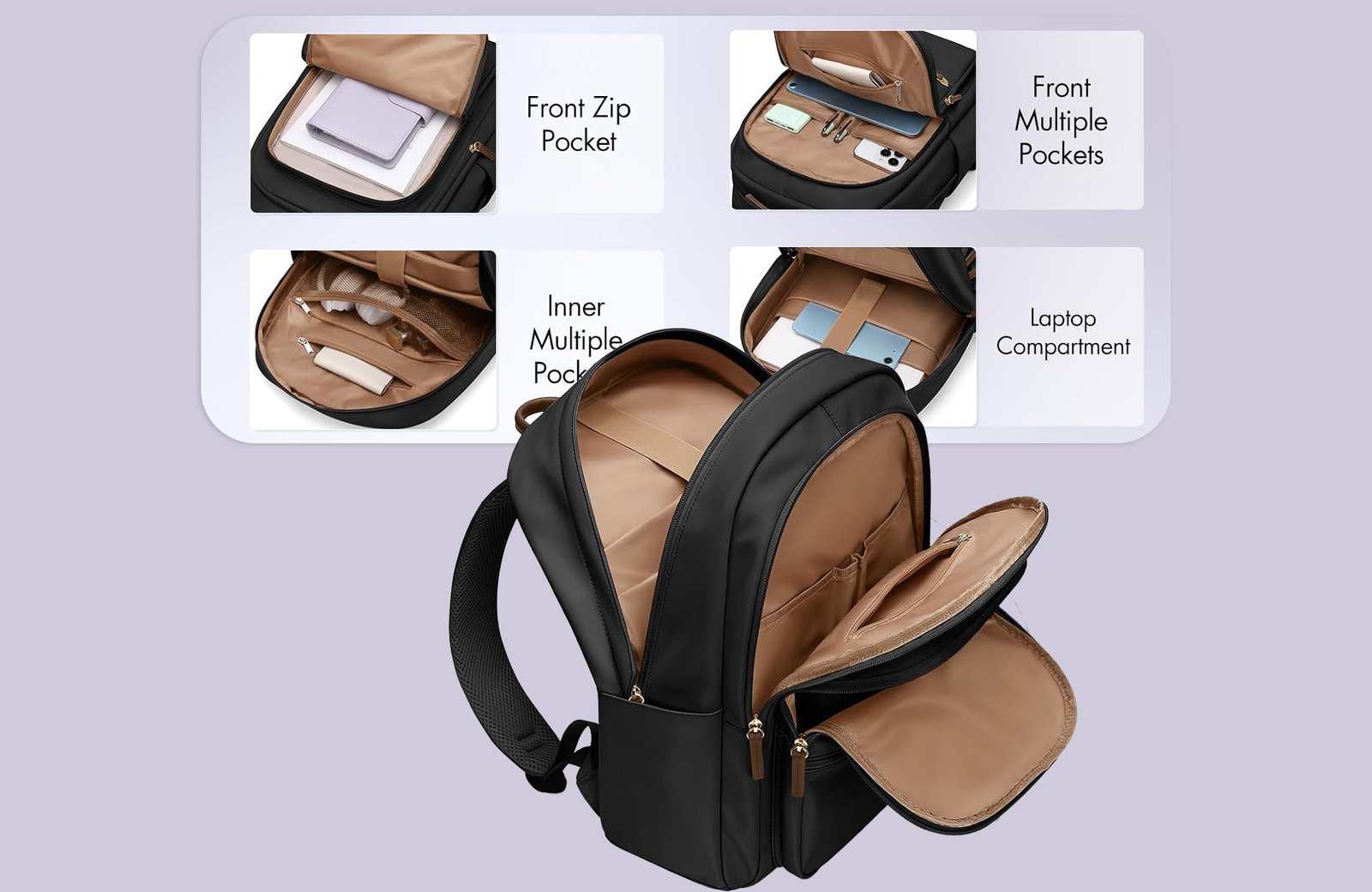
I have seen two mistakes here. The first is leaving laptop protection out when the market clearly expects it. The second is adding a “laptop compartment” in name only, with almost no real protection. That second case is dangerous because it creates a promise the product cannot support.
When I review student backpack plans, I ask whether the device is occasional or daily. I ask if the bag is aimed at middle school, high school, or college channels. I ask whether the retailer wants protection from impact, from scratch, or just from mixed storage with books. These are different goals. A divider sleeve alone may help organization, but it does not give the same result as padded protection with a raised bottom design.9
This is how I think about it:
| Market plan | Device carry chance | Protection level | Return impact |
|---|---|---|---|
| Basic school bag | Low | Simple sleeve or none | Low if expectation is clear |
| Student daily bag | Medium | Padded sleeve | Helps reduce dissatisfaction |
| Teen tech-focused bag | High | Padded sleeve + better structure | Important for perceived value |
| Premium retailer line | High | Better foam, lining, raised base | Stronger complaint prevention |
I always remind buyers that laptop protection is not only about damage claims. It also affects how the bag is judged in hand. A better back panel, sleeve build, and interior structure can make the whole product feel more reliable. That can lower disappointment, which is often the hidden driver behind returns.
What Should Be Checked Before Approving Bulk Production?
Sample approval gives confidence, but it does not guarantee that bulk goods will match the same feel, strength, and finish. This is where many return problems are planted.
Before approving bulk production, buyers should confirm the exact materials, construction details, stress-point reinforcements, workmanship standards, and any parts most likely to change from sample to mass production. Sample approval alone is not enough.10

From sample-to-bulk gaps, we have seen some repeat risk points. A sample may use slightly better foam, cleaner zipper sourcing, tighter stitching, or stronger strap reinforcement than what appears later in production if those details were not frozen clearly.11 That does not always happen because of bad intent. Sometimes the product file is just too loose. Sometimes the buyer approved appearance, not the full build.
Before bulk production starts, I like to lock the details that affect return risk most. I check shell fabric, lining, zipper spec, webbing width, foam thickness, stitch count, reinforcement points, and carton packing if shape matters. I also ask for a pre-production sample made with bulk materials, not only development materials. That one step can reveal a lot.
Here is a practical pre-bulk checklist:
| Check point | Why I check it | Common gap |
|---|---|---|
| Fabric and lining | Hand feel and body can change | Bulk fabric feels thinner |
| Zipper brand/grade | Pull performance affects complaints | Sample zipper is better |
| Strap webbing and base | Load safety depends on this | Bulk strap is softer or narrower |
| Reinforcement stitches | Stress-point life depends on this | Bar-tacks reduced or moved |
| Foam and padding | Structure and laptop feel depend on this | Padding becomes lighter |
| Measurement tolerance | Capacity and fit affect user opinion | Size drifts in bulk |
| Packing method | Shape at arrival matters in retail | Over-compression damages form |
I also suggest buyers define acceptable tradeoffs in advance. If the project needs to hit a low target price, then the team should say clearly what the bag will and will not do. That honesty helps everyone. It protects the factory, the buyer, and the retailer from a product promise that the construction cannot support.
Conclusion
I have seen backpack returns fall when buyers define real use first, then align price, build, and bulk checks to that use instead of trusting sample approval alone.12
"Expectation confirmation theory - Wikipedia", https://en.wikipedia.org/wiki/Expectation_confirmation_theory. Studies on expectation-disconfirmation in consumer behavior report that product dissatisfaction often arises when actual performance falls short of prior expectations, which provides a general mechanism for returns beyond clear manufacturing defects. Evidence role: mechanism; source type: paper. Supports: Research should show that unmet expectations and expectation-disconfirmation are major drivers of dissatisfaction and return behavior in consumer goods.. Scope note: Such sources typically explain return behavior across consumer products rather than measuring backpack returns specifically. ↩
"Correlations between Muscle Activities and Strap Length and Types ...", https://pmc.ncbi.nlm.nih.gov/articles/PMC4273062/. Technical or complaint-based analyses of backpack performance commonly identify zippers, seams, straps, and fabric abrasion as recurrent failure points under repeated use, supporting their relevance as likely return drivers. Evidence role: general_support; source type: research. Supports: A source should document common backpack failure modes such as zipper failure, seam rupture, strap detachment, structural collapse, or premature fabric abrasion.. Scope note: Direct evidence may describe failure modes rather than retail return rankings, so the support may be contextual unless a returns dataset is available. ↩
"School Bag Design and Weight: A Narrative Review of Their Impact ...", https://pmc.ncbi.nlm.nih.gov/articles/PMC12812241/. Bag and sewn-product durability methods commonly evaluate cyclic opening, loaded carrying, handle or strap strength, and seam integrity because these conditions reproduce the stresses most associated with in-use failure. Evidence role: mechanism; source type: institution. Supports: A source should explain that repeated opening, load application, handle or strap lifting, and stress-point inspection are relevant durability assessments for bags or sewn products.. Scope note: Formal standards may not match every exact action listed in the article, but they can support the underlying rationale for use-based screening. ↩
"applying safety-critical concepts to test framework development - PMC", https://pmc.ncbi.nlm.nih.gov/articles/PMC9680868/. Reliability and product-development literature describes pre-production or field-use testing as a means of exposing failure modes before mass manufacture, which supports the claim that practical tests can reveal return-related risks early. Evidence role: expert_consensus; source type: education. Supports: A source should show that prototype or pre-production use testing is intended to expose failure modes before scale-up.. Scope note: Such sources usually address failure detection and reliability improvement rather than returns directly. ↩
"School Bag Design and Weight: A Narrative Review of Their Impact ...", https://pmc.ncbi.nlm.nih.gov/articles/PMC12812241/. Textile engineering sources note that material choice for load-bearing bags should reflect expected loads, abrasion conditions, and use frequency, indicating that price alone is not an adequate basis for selecting fabric weight. Evidence role: mechanism; source type: paper. Supports: A source should explain that material selection for load-bearing textile products depends on mechanical demands, abrasion exposure, and intended use conditions.. Scope note: The evidence may support material-selection principles broadly rather than prescribe a school-backpack-specific buying rule. ↩
"A Systematic Review of AI-Driven Prediction of Fabric Properties ...", https://pmc.ncbi.nlm.nih.gov/articles/PMC11509711/. Textile evaluation literature distinguishes appearance and hand assessment from measured properties such as abrasion resistance, stiffness, and dimensional stability, supporting the point that an acceptable-looking sample may still underperform in use. Evidence role: general_support; source type: research. Supports: A source should show that visual or tactile assessment alone is insufficient to predict durability-related textile performance.. Scope note: This evidence is indirect unless it concerns backpack fabrics specifically. ↩
"Student Access to Digital Learning Resources Outside of the ...", https://nces.ed.gov/pubs2017/2017098/index.asp. Education surveys documenting substantial student use of laptops or tablets for schoolwork support the statement that many student backpacks are now used to carry electronic devices. Evidence role: statistic; source type: government. Supports: A source should provide survey or official data showing widespread student access to or use of laptops or tablets for school.. Scope note: Device access data may not measure backpack carriage directly, so the support is contextual rather than a direct observation of bag contents. ↩
"Human Factors Related to the Use of a Personal Computer - PubMed", https://pubmed.ncbi.nlm.nih.gov/31868706/. Protective-design research indicates that the level of cushioning and structural protection required for portable electronics depends on device dimensions and anticipated handling or impact exposure, which supports varying protection levels by use case. Evidence role: mechanism; source type: paper. Supports: A source should explain that protective requirements for portable electronics depend on item geometry, expected handling, and impact conditions.. Scope note: Price point is a commercial factor that may be inferred from design trade-offs rather than addressed directly in technical sources. ↩
"A backpack that protects my laptop from putting it on the ground too ...", https://www.reddit.com/r/backpacks/comments/1hdq1i6/a_backpack_that_protects_my_laptop_from_putting/. Impact-protection principles indicate that cushioning materials and clearance from the outer bottom surface reduce shock transmission more effectively than a thin divider sleeve alone, supporting the distinction between organization and protection. Evidence role: mechanism; source type: research. Supports: A source should show that padding and separation from the bag bottom reduce transmitted impact compared with an unpadded divider alone.. Scope note: The support may derive from general protective-packaging or impact-mitigation literature rather than backpack-specific experiments. ↩
"Best Practices for the Development, Scale-up, and Post-approval ...", https://pmc.ncbi.nlm.nih.gov/articles/PMC4037495/. Manufacturing quality-control guidance generally treats sample approval as only one stage in assurance, emphasizing the need for controlled specifications, pilot verification, and process monitoring to maintain consistency in bulk production. Evidence role: expert_consensus; source type: education. Supports: A source should explain that sample approval must be supplemented by process controls, specifications, and production verification to maintain consistency.. Scope note: Such guidance is typically general to manufacturing and not specific to backpacks. ↩
"[PDF] Automated Quality Control in Manufacturing Production Lines", https://scholarworks.utrgv.edu/cgi/viewcontent.cgi?article=1947&context=etd. Quality-management sources describe unclear or incomplete specifications as a cause of production variation, including changes in materials, components, and workmanship between approved samples and manufactured batches. Evidence role: mechanism; source type: institution. Supports: A source should show that inadequate specification control can lead to material, component, or workmanship variation between approved samples and production lots.. Scope note: Evidence may address manufacturing variation generally rather than document the exact backpack components listed. ↩
"A deep dive into addressing obsolescence in product design: A review", https://pmc.ncbi.nlm.nih.gov/articles/PMC10665736/. Product-development and quality-planning research generally finds that translating intended use and customer requirements into design specifications and verification checks reduces downstream nonconformance and dissatisfaction, which is consistent with lower return risk. Evidence role: expert_consensus; source type: paper. Supports: A source should show that translating user requirements into design specifications and quality controls reduces downstream dissatisfaction or failure-related returns.. Scope note: Direct backpack-return evidence may be unavailable, so the support may remain inferential from broader product quality literature. ↩