Most buyers start with capacity. They ask for the biggest bag at the lowest price. That is usually the wrong starting point, and it leads to returns.
A private label duffle bag that works for both gym and travel needs a medium capacity between 40L and 60L, a separate shoe compartment, a wide-mouth opening, a wet-safe lining, and an adjustable shoulder strap. These five features cover most gym-plus-short-trip use cases without overbuilding the product.
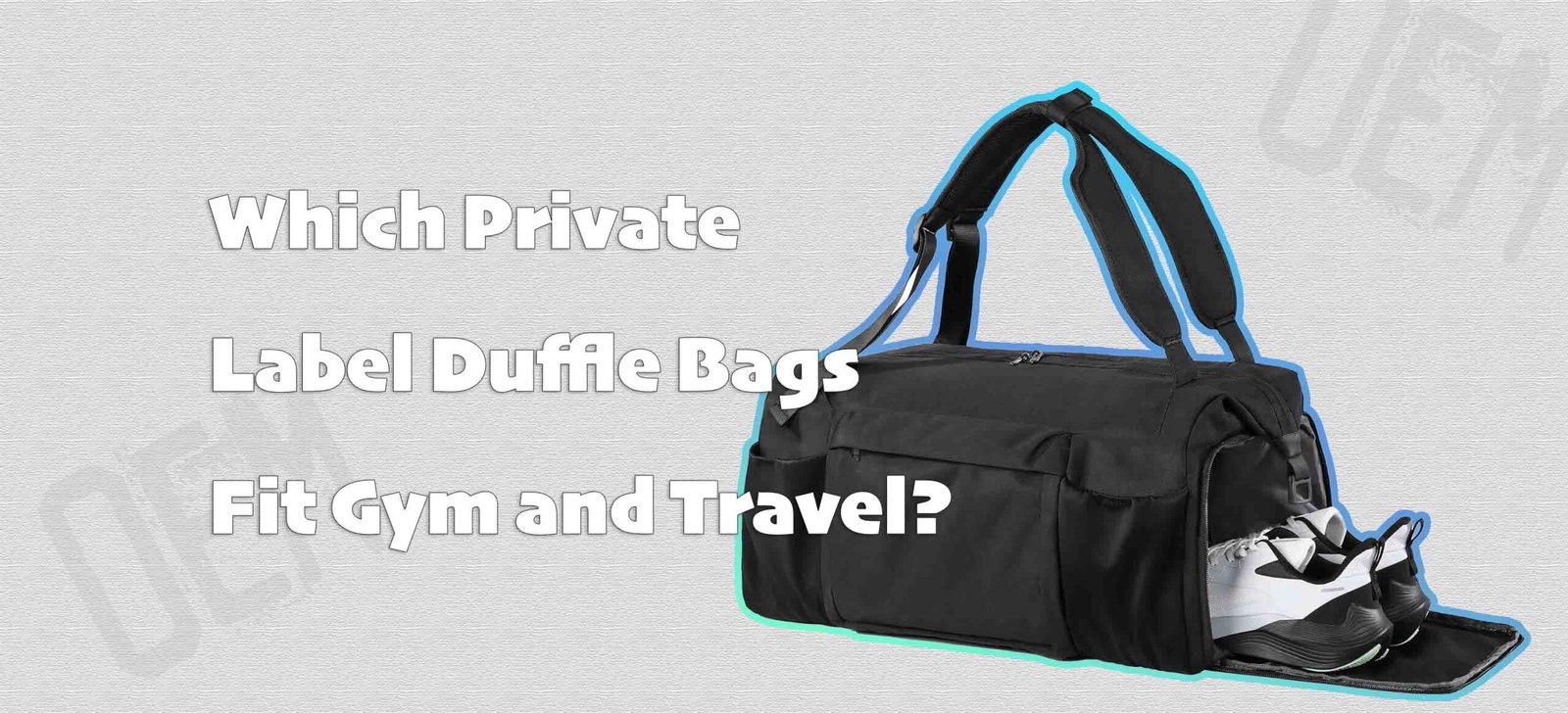
In private label duffle bag inquiries, buyers often start with capacity. We usually ask about the use scenario first. That one question changes almost every structural and material decision that follows. The sections below walk through each of those decisions in order.
What Duffle Bag Size Works Best for Gym and Weekend Use?
Buyers often request the largest capacity available. When we ask who the end user is, the answer rarely matches that request.
For a bag that covers both gym sessions and one-to-three night trips, a 40L to 55L capacity is usually the practical range. Below 40L, shoe storage and a change of clothes become difficult. Above 60L, the bag becomes too large for gym locker standards1 and too heavy for carry-on travel comfort2.
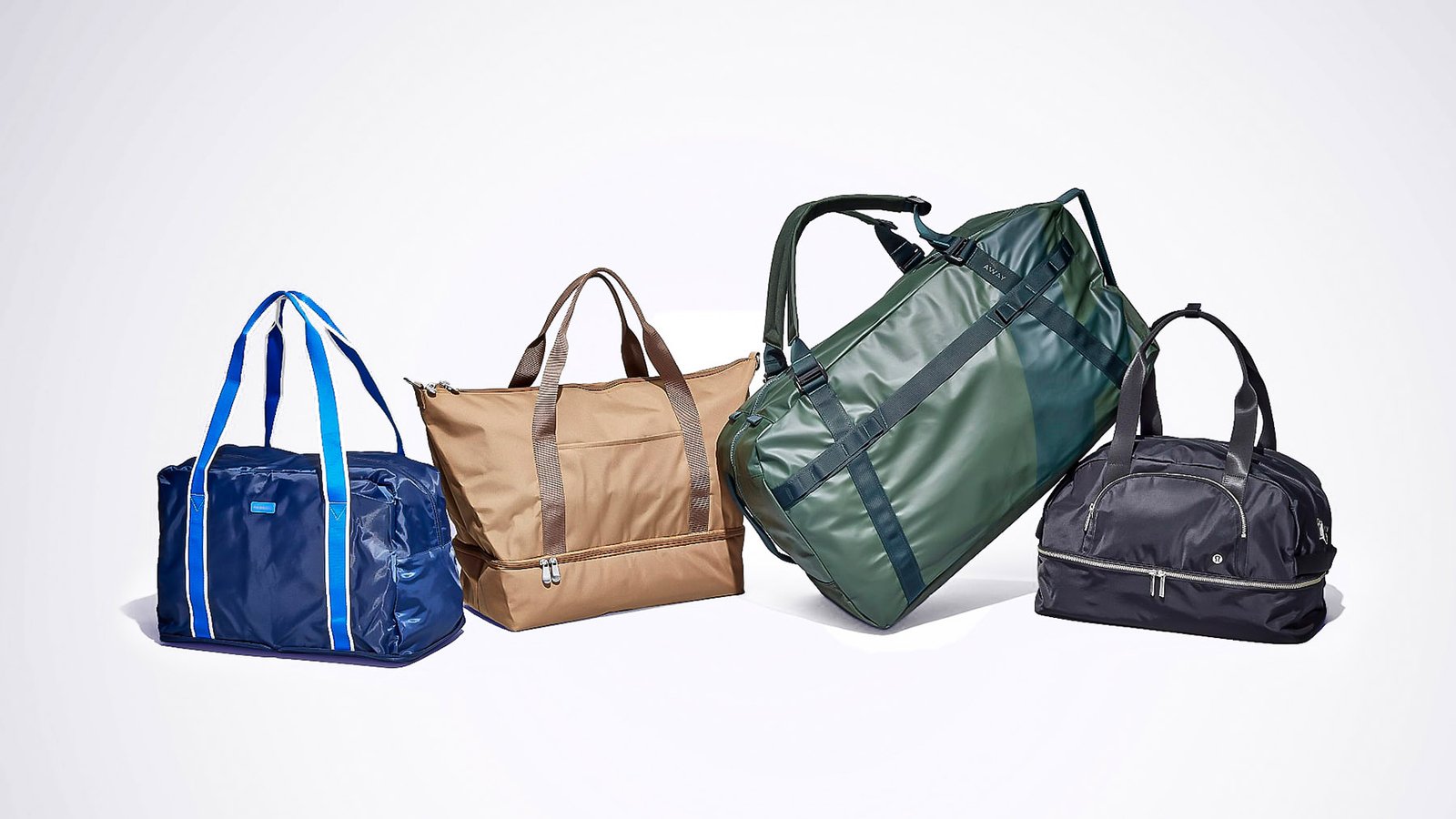
Capacity alone does not tell the full story. The internal shape, main opening width, and compartment layout determine how usable that volume actually is.
Why Volume Numbers Can Be Misleading
A 50L bag with a narrow barrel shape packs worse than a 45L bag with a wide rectangular base3. I have seen buyers approve a sample by volume spec only to receive complaints that the bag feels small. The issue was not the number. It was the shape.
Here is a simple way to think about use-case fit:
| Use Case | Recommended Capacity | Key Structural Need |
|---|---|---|
| Daily gym only | 25L – 35L | Shoe pocket, ventilation |
| Gym + one overnight | 40L – 50L | Shoe compartment, wet pocket |
| Weekend trip (2–3 nights) | 50L – 60L | Full shoe compartment, packing space |
| Extended travel only | 60L+ | Frame support, packing cubes fit |
For most gym-plus-travel private label programs, the 45L to 55L range covers the widest retail use case. Going above that adds cost, weight, and shipping bulk without clear retail benefit. Going below it creates product complaints from travelers.
Another thing worth checking at the sample stage is the bag's standing structure. A bag that collapses when empty looks cheap at retail and photographs poorly for product listings. A small amount of base stiffener or bottom board adds very little cost and solves this problem.
Is a Separate Shoe Compartment Necessary for Team Programs?
Many buyers treat the shoe compartment as optional. For gym-focused private label bags, it is rarely optional.
A separate shoe compartment is important for gym and team programs because it keeps footwear away from clean clothing and personal items. For team use, it also speeds up packing during group activities. A vented or mesh-lined shoe pocket reduces odor buildup and extends the bag's usable life in the field4.
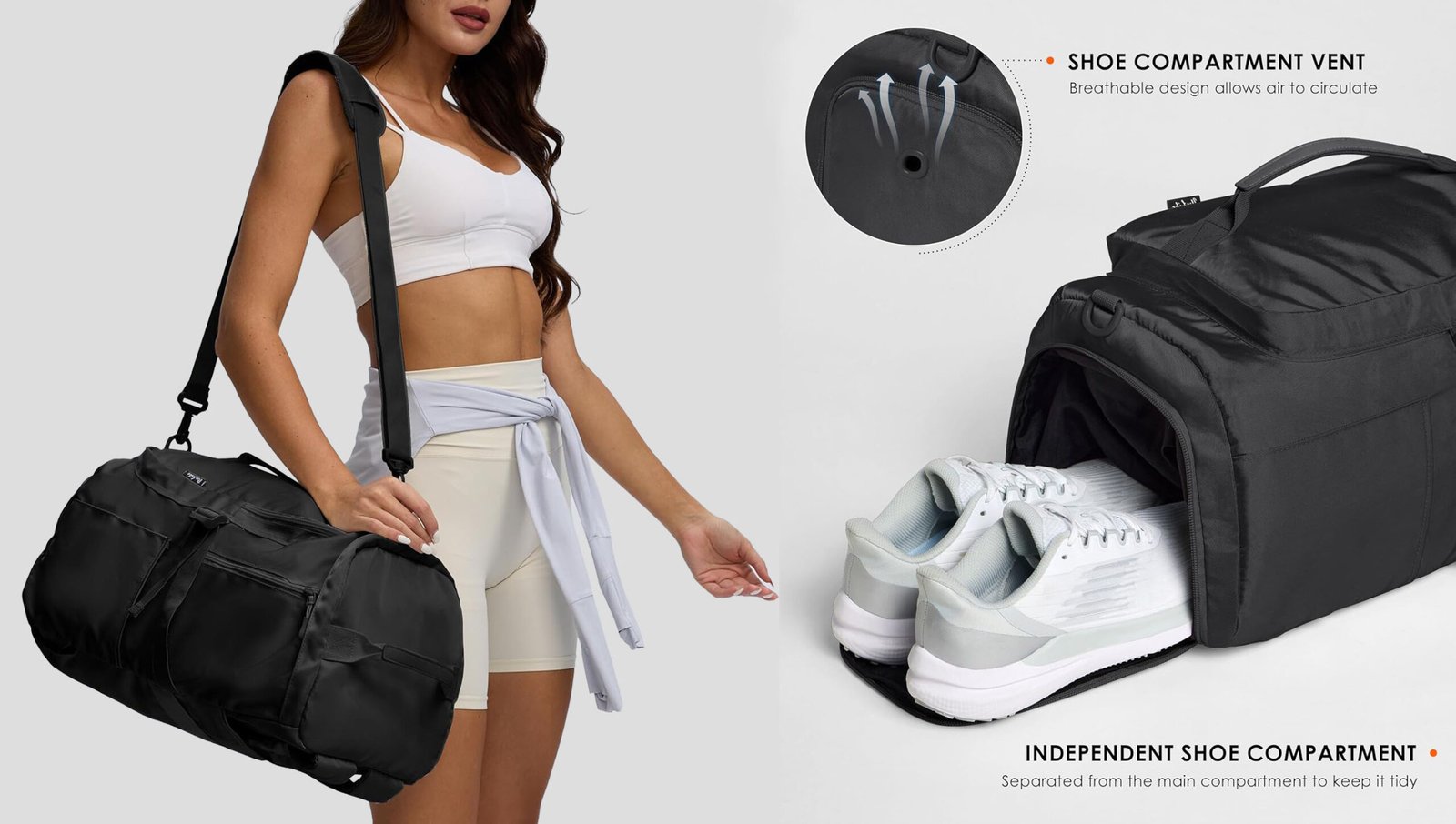
The structural placement of the shoe compartment matters more than buyers expect. There are three common positions, and each one affects the rest of the bag's design.
Three Shoe Compartment Positions and Their Trade-Offs
| Position | Benefit | Drawback |
|---|---|---|
| Bottom end panel | Keeps shoe weight low, stable standing | Reduces main compartment depth |
| Side panel (exterior) | Easy access without opening main bag | Adds width, harder to fit in lockers |
| Interior base layer | Clean separation inside main body | Reduces packing flexibility in main space |
For most retail gym bags, the bottom end panel position is the most common and practical choice. It keeps the center of gravity low when the bag is carried, and it does not add external bulk.
For team programs where players pack quickly and repeat use is heavy, the venting material on the shoe pocket matters. A solid nylon pocket traps odor. A mesh or perforated panel lining handles moisture better and adds a performance visual that reads well at retail.
Shoe compartment size is something we check on every sample before approving a bulk run. A compartment that fits a size 9 shoe but not a size 12 generates product complaints within the first season. We test with a size 12 as the minimum standard for general retail programs.
Which Opening Style Makes Packing and Cleaning Easier?
Opening style is one of the details buyers skip during the brief stage. It is one of the details end users notice most.
A wide U-shaped zipper opening that runs along the top and both sides of the bag provides the easiest access for packing, unpacking, and interior cleaning. This style opens the bag nearly flat, which is better than a center-top zipper that leaves the main compartment partially closed at all times.
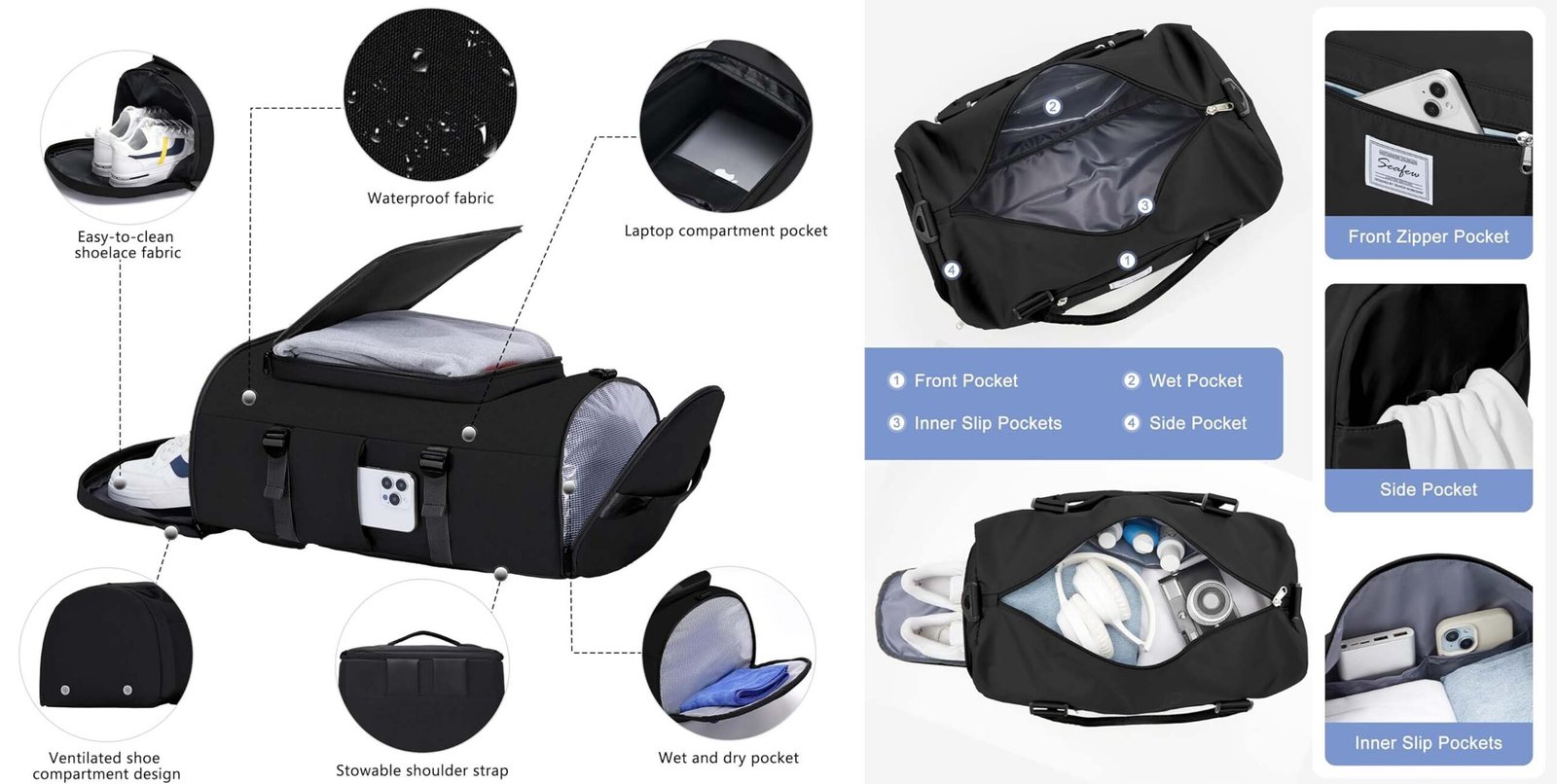
There are three main opening styles used in duffle bag production. Each one has a different impact on daily use experience and on production complexity.
Opening Style Comparison
| Opening Style | User Experience | Production Notes |
|---|---|---|
| Center-top zipper | Simple, low cost | Limited access, bags with depth feel cramped |
| U-shape top and sides | Full access, near-flat open | More zipper length, slightly higher cost |
| Barrel roll-top | Secure closure, large opening | Common in gym bags, harder to customize shape |
For gym-plus-travel programs, the U-shape is the strongest default choice. It opens wide enough to pack shoes, folded clothing, and toiletry kits side by side, which is how most people actually pack. It also makes interior cleaning practical. Wet bags develop mildew if the interior cannot be fully opened and dried5.
The zipper itself needs to match the opening style. A long U-shape zipper on a heavy bag needs a #8 or #10 zipper with a large pull. Using a #5 zipper on a wide opening creates slider failure within months of regular use6. This is a cost-cutting decision that causes return rates to rise. We flag this during every sample review.
Should Buyers Add Removable Straps, Dividers, or Wet Pockets?
Accessory features are where most buyers either over-specify or ignore the structure entirely. Both directions cause problems.
For gym and travel duffle bags, the three features with the clearest practical return are: an adjustable and removable shoulder strap, at least one wet-lining pocket for damp items, and padded haul handles. Internal dividers and packing cubes are secondary and depend on the target retail price point.
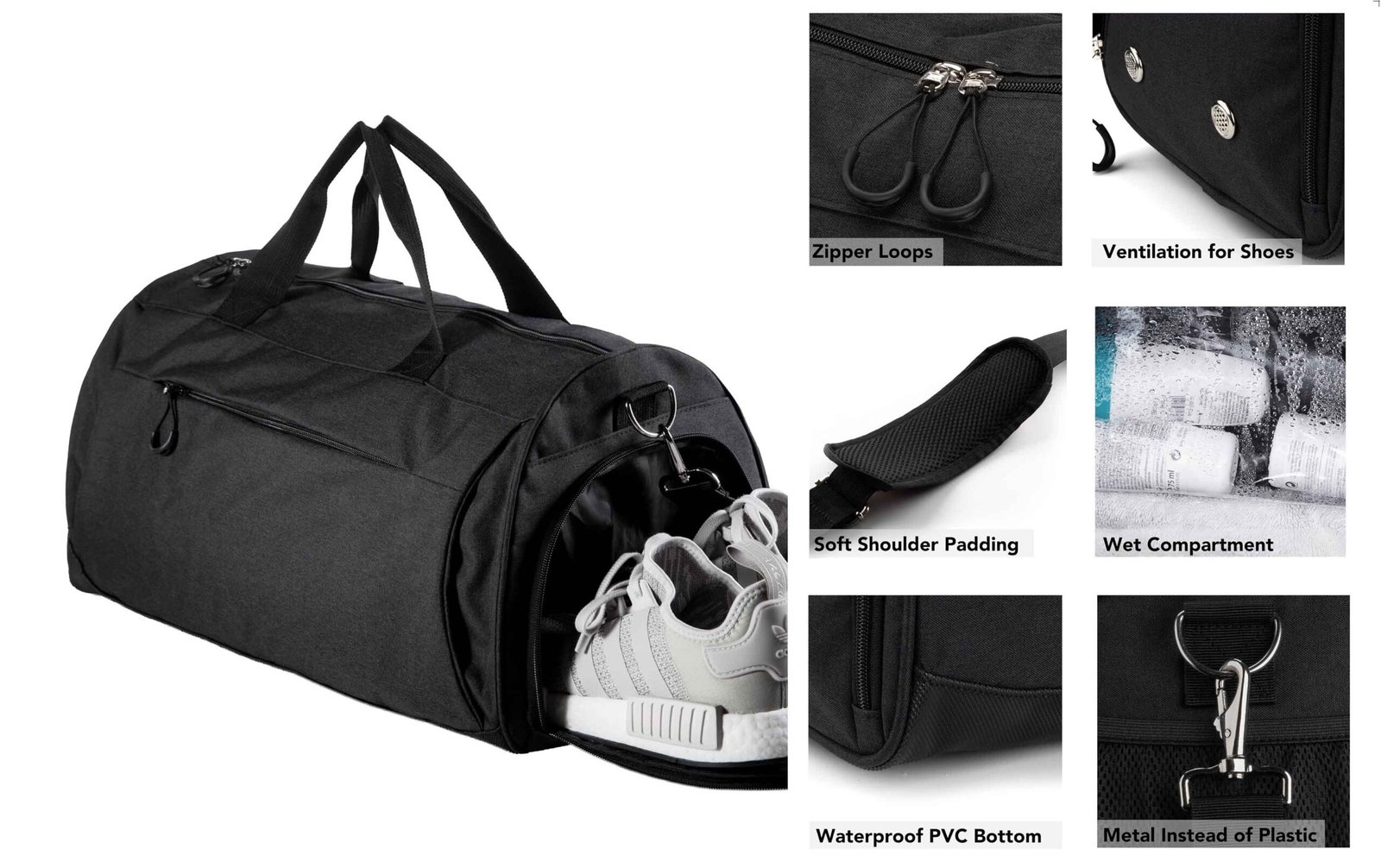
Each of these features adds cost, weight, and production steps. The decision should come from the use ratio, not from a feature checklist.
Feature Decision Guide by Use Ratio
| Feature | Gym-First Program | Travel-First Program | Balanced Program |
|---|---|---|---|
| Removable shoulder strap | Optional | Recommended | Recommended |
| Padded haul handles | Recommended | Recommended | Recommended |
| Wet pocket (PU or coated lining) | Recommended | Optional | Recommended |
| Internal zip divider | Low priority | Medium priority | Medium priority |
| Trolley sleeve | Not needed | Recommended | Optional |
| Key clip inside | Optional | Low priority | Optional |
The shoulder strap attachment point is a structural risk area. A strap attached only to the outer fabric layer fails under load. The attachment must be reinforced through to the main body with bar-tack stitching and a D-ring sewn into the seam structure7. On samples, I always pull the strap with full hand force. If the attachment moves or puckers, it fails the test before bulk.
The wet pocket lining material matters for smell and durability. A cheap coated lining delaminate after repeated washing. A PU-coated nylon or TPU lining holds up significantly better8. For any gym program, this detail is worth the cost difference.
Which Fabrics Balance Durability, Weight, and Cost?
Fabric choice is where production cost and retail positioning meet. Getting this wrong in either direction hurts the product.
For private label gym and travel duffle bags, 600D polyester and 1680D ballistic nylon are the two most practical fabric choices across most price tiers. 600D polyester covers mid-market retail well. 1680D ballistic nylon suits premium positioning9. Recycled versions of both materials are available for eco-label programs10.
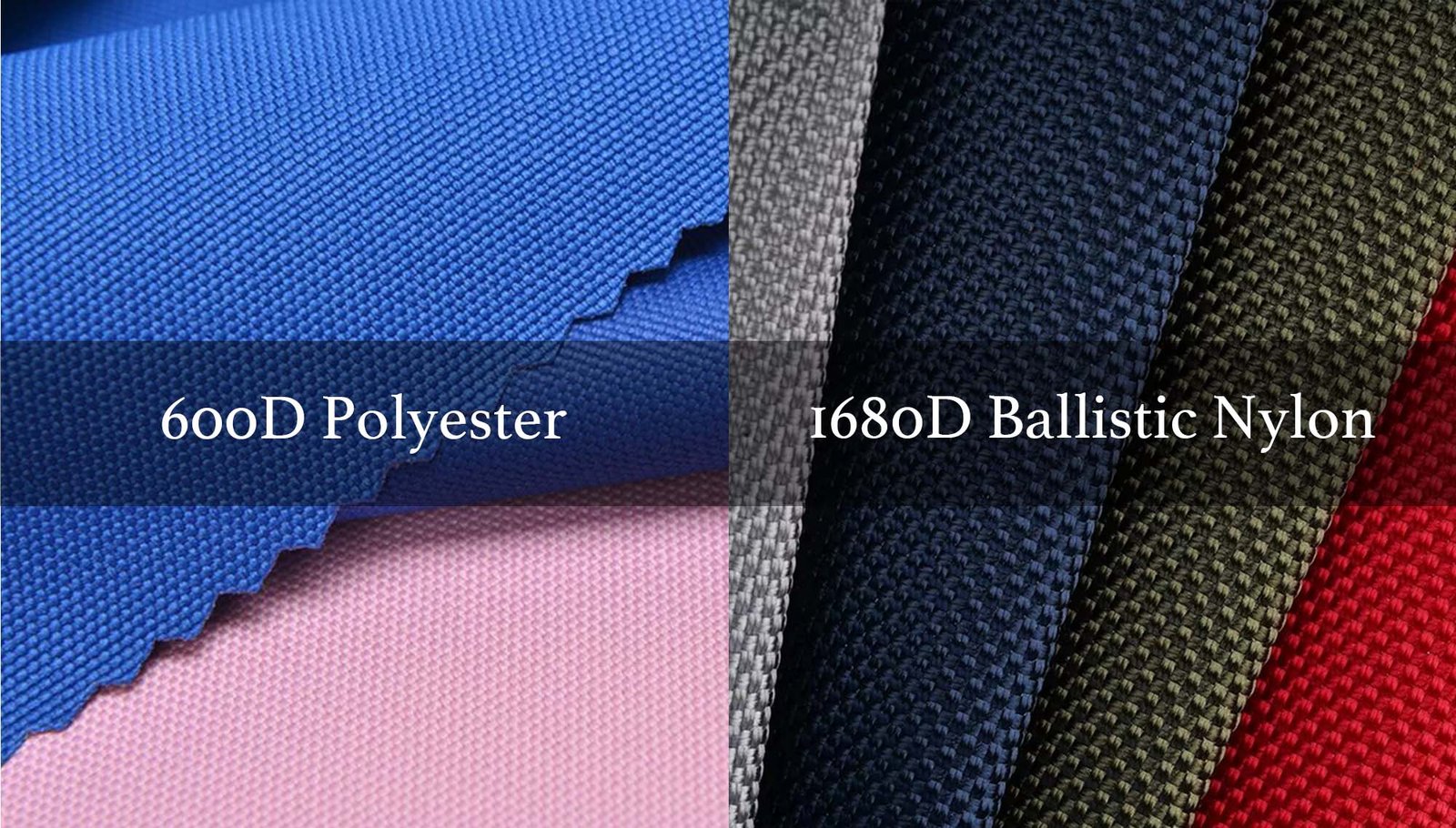
Fabric weight, texture, and coating all affect how the bag looks, feels, and wears over time. Buyers who source by price per meter without checking denier and coating often receive product that looks good in the sample and wears poorly in use.
Fabric Comparison for Duffle Bag Production
| Fabric | Weight | Durability | Cost Level | Best Use Case |
|---|---|---|---|---|
| 300D polyester | Light | Low | Low | Promotional, single-use |
| 600D polyester | Medium | Medium | Low-mid | Mass retail, mid-tier gym bags |
| 900D polyester | Medium-heavy | Medium-high | Mid | Value sport bags |
| 1680D ballistic nylon | Heavy | High | High | Premium travel, outdoor programs |
| Recycled 600D rPET | Medium | Medium | Mid | Eco-label programs, EU retail |
| Canvas (10oz–12oz) | Heavy | Medium-high | Mid-high | Lifestyle, fashion-adjacent retail |
The coating on the outer fabric matters as much as the base material. A 600D polyester with a PU or PA coating resists surface moisture and holds color better than uncoated fabric of the same denier. This coating adds very little to the FOB price but changes the retail feel of the product noticeably.
Lining fabric is often treated as a cost-cutting area. For gym bags with wet items inside, the lining is a durability and hygiene factor. A plain polyester taffeta lining absorbs moisture. A coated nylon or polyester lining resists it. This difference shows up in customer reviews after three to six months of use11.
Zipper brand and grade also fall into this category. A YKK or equivalent-grade zipper on a correctly sized track adds a small cost per unit. A generic low-grade zipper on the same bag creates slider failure at the hinge point within months12. For private label programs where the buyer's brand name is on the product, zipper failure is a brand problem, not just a product problem.
What Sample Tests Matter Before a Bulk Order?
Buyers often treat the sample stage as a visual approval step. It is a stress and fit test, and skipping it creates bulk production risk.
Before approving a bulk order, private label duffle bag buyers should test: strap attachment strength under load, zipper smoothness and slider durability after repeated cycling, wet pocket lining integrity when exposed to moisture, shoe compartment sizing against real footwear, and overall bag standing structure when both empty and partially loaded.

A sample that passes visual review can still fail in use within the first season. The tests that matter most are the ones that simulate real packing and carrying behavior.
Sample Test Checklist for Gym and Travel Duffle Bags
| Test Area | What to Check | Failure Signal |
|---|---|---|
| Strap attachment | Pull with full body weight from both D-rings | Stitching pulls away from body fabric |
| Zipper cycling | Open and close main zip 50+ times | Slider stiffness, mistrack, or tooth gap |
| Wet pocket exposure | Place damp towel inside wet pocket for 24 hours | Lining peel, moisture transfer to exterior |
| Shoe compartment fit | Test with size 12 shoe on both sides | Compartment cannot close fully |
| Base standing test | Place upright empty and with 5kg load | Bag collapses or leans to one side |
| Haul handle grip | Carry full load by handles only for five minutes | Handle stitching shifts or hand discomfort |
| Color match | Compare sample fabric to approved color standard under different lights | Color shift between panels or under fluorescent light |
Private label programs also need to confirm brand elements at the sample stage. Logo placement, embroidery or print method, color match to brand standards, inner label content, hangtag design, and retail packaging all need physical confirmation before bulk production starts. A logo that looks correct on a digital mockup can read incorrectly at the wrong scale or position on the physical bag.
We treat the sample approval stage as the last point where corrections are low-cost. After bulk production begins, correction costs multiply. Buyers who approve samples quickly without running physical tests often discover structural or branding issues at the goods-receipt stage. At that point, the options are narrow and the cost is high.
Conclusion
The right private label duffle bag for gym and travel comes from confirming the use case first, then building structure, material, and brand details around that decision.
"Standard Locker Sizes with Diagram - Pinterest", https://ca.pinterest.com/pin/standard-locker-sizes-with-diagram--15129348743349409/. Standard commercial gym lockers typically range from 12 to 18 inches in width and 12 to 18 inches in depth, dimensions that constrain the practical size of bags intended for locker storage. Evidence role: statistic; source type: institution. Supports: Typical interior dimensions of gym lockers used in commercial fitness facilities, which would constrain the practical maximum bag size for locker storage. Scope note: Locker dimensions vary by facility and manufacturer; a single standard does not apply universally across all gym environments. ↩
"Carry-on bags − Travel information - American Airlines", https://www.aa.com/i18n/travel-info/baggage/carry-on-baggage.jsp. The International Air Transport Association (IATA) recommends a carry-on size limit of 55 × 35 × 20 cm, and many major carriers enforce similar or stricter limits; bags exceeding approximately 55–60L in volume frequently exceed these dimensional thresholds. Evidence role: statistic; source type: institution. Supports: That international airline carry-on size restrictions impose practical upper limits on bag dimensions and volume relevant to travel use cases. Scope note: Carry-on policies vary by airline, route, and fare class; the IATA guideline is a recommendation rather than a universally enforced standard. ↩
"Packing problems - Wikipedia", https://en.wikipedia.org/wiki/Packing_problems. Research on packing efficiency demonstrates that container geometry significantly influences the proportion of nominal volume that can be practically utilized, with rectangular forms generally outperforming cylindrical ones when packing rectilinear objects. Evidence role: mechanism; source type: paper. Supports: That geometric shape of a container affects how efficiently its nominal volume can be utilized when packing irregularly shaped items. Scope note: Most packing efficiency literature addresses industrial or mathematical contexts; direct studies on consumer bag geometry and perceived usability are limited. ↩
"Footwear microclimate and its effects on the microbial community of ...", https://pmc.ncbi.nlm.nih.gov/articles/PMC8514438/. Microbial studies on athletic footwear indicate that odor-causing bacteria thrive in warm, moist, enclosed environments, and that increased airflow reduces moisture retention and associated bacterial proliferation. Evidence role: mechanism; source type: paper. Supports: That moisture accumulation in enclosed spaces promotes bacterial growth responsible for odor, and that ventilation reduces this effect. Scope note: Most studies focus on footwear materials directly rather than on the secondary effect of compartment ventilation in bags. ↩
"A Brief Guide to Mold, Moisture and Your Home | US EPA", https://www.epa.gov/mold/brief-guide-mold-moisture-and-your-home. Mycological literature establishes that mildew-forming fungi require sustained relative humidity above approximately 70–80% and organic substrate to proliferate; textile surfaces in enclosed, poorly ventilated spaces that retain moisture provide conditions conducive to fungal colonization. Evidence role: mechanism; source type: paper. Supports: That mildew-causing fungi require sustained moisture and limited airflow to colonize textile surfaces, and that enabling full drying access reduces this risk. Scope note: Growth thresholds vary by fungal species and ambient temperature; the article's claim is directionally supported but the specific risk level depends on use environment and drying behavior. ↩
"Zipper Gauge Sizes Explained | Complete #5 #8 #10 Guide", https://lenzip.com/zipper-gauge-sizes-explained-the-complete-5-8-10-guide/. Zipper manufacturers publish gauge specifications correlating slider size to tensile and shear load ratings; a #5 zipper is rated for lighter loads than a #8 or #10, making gauge selection a functional rather than purely aesthetic decision. Evidence role: definition; source type: institution. Supports: That zipper gauge numbers correspond to defined load-bearing and dimensional specifications, and that mismatched gauge selection leads to premature mechanical failure. Scope note: Published load ratings vary by manufacturer and zipper type (coil vs. molded tooth); the article's claim of failure within months is a field observation rather than a controlled test result. ↩
"[PDF] 5100-85C - USDA Forest Service", https://www.fs.usda.gov/t-d/programs/fire/documents/0085/5100_85C.pdf. Bar-tack stitching, a dense concentration of zig-zag stitches applied across a narrow width, is specified in military and commercial textile standards as a reinforcement method at stress concentration points such as strap attachments and D-ring anchors. Evidence role: definition; source type: institution. Supports: That bar-tack stitching is a recognized reinforcement technique used at high-stress attachment points in textile goods, including military and commercial bag specifications. Scope note: Specific load ratings for bar-tack stitching depend on thread type, stitch density, and substrate; the article does not quantify the load threshold being addressed. ↩
"Coating of TPU-PDMS-TMS on Polycotton Fabrics for Versatile ...", https://pmc.ncbi.nlm.nih.gov/articles/PMC6418616/. Materials science literature on coated technical textiles indicates that polyurethane and thermoplastic polyurethane coatings form continuous barrier layers that resist moisture penetration and maintain adhesion through repeated mechanical stress and washing cycles better than uncoated woven substrates. Evidence role: mechanism; source type: paper. Supports: That TPU and PU coatings on textile substrates provide superior moisture resistance and wash durability compared to uncoated woven polyester. Scope note: Performance differences depend heavily on coating thickness, application method, and substrate; the article's claim of superiority is directionally supported but not quantified. ↩
"Ballistic nylon - Wikipedia", https://en.wikipedia.org/wiki/Ballistic_nylon. Ballistic nylon was originally developed for military flak jackets and is characterized by a high denier count and tight weave that provides substantially greater abrasion and tear resistance than standard nylon fabrics of lower denier. Evidence role: historical_context; source type: encyclopedia. Supports: That ballistic nylon is a high-denier, high-abrasion-resistance fabric with origins in military protective applications, supporting its reputation as a premium durable material. Scope note: The term 'ballistic nylon' in consumer goods refers to the weave structure and denier rather than the original military-grade specification; performance varies by manufacturer. ↩
"Effect of Recycling PET Fabric and Bottle Grade on r-PET Fiber ...", https://pmc.ncbi.nlm.nih.gov/articles/PMC10224041/. Recycled polyester (rPET) produced from post-consumer PET bottles is commercially available as a woven fabric input; certification bodies such as the Global Recycled Standard (GRS) provide third-party verification used by retailers to substantiate eco-label claims. Evidence role: general_support; source type: institution. Supports: That recycled polyester derived from post-consumer PET is commercially available as a textile input and is subject to certification standards used in eco-label retail programs. Scope note: Certification requirements and definitions of 'recycled content' vary by standard and market; the article does not specify which eco-label framework applies. ↩
"Super-Hydrophobicity of Polyester Fabrics Driven by Functional ...", https://pmc.ncbi.nlm.nih.gov/articles/PMC9957304/. Textile science literature documents that uncoated polyester woven fabrics exhibit measurable moisture absorption at the fiber surface, while hydrophobic coatings reduce wetting and moisture retention, a distinction relevant to hygiene performance in bags used to carry damp athletic gear. Evidence role: mechanism; source type: paper. Supports: That uncoated polyester fabrics absorb and retain surface moisture while hydrophobic coatings reduce moisture uptake, affecting hygiene and material longevity in wet-use applications. Scope note: The three-to-six month timeline cited in the article is a field observation; controlled studies on consumer bag lining degradation under real-use conditions are not widely published. ↩
"Zipper Testing Frequency Guide | Quality Audit Standards", https://lenzip.com/how-often-should-zippers-be-tested/. Industry and international standards for zipper testing, including cyclic open-close fatigue tests, identify the slider hinge as a primary failure point; lower-grade sliders with reduced material quality or looser tolerances exhibit earlier fatigue failure under equivalent cycling loads. Evidence role: mechanism; source type: institution. Supports: That zipper sliders are subject to mechanical fatigue at the hinge point and that standardized durability testing exists to differentiate quality grades. Scope note: The article's claim of failure 'within months' is a field observation; actual failure timing depends on use frequency, load, and specific product grade. ↩