Many buyers lose money when a cheap cooler bag looks fine in a sample but fails in real use1. I see this happen when comparison starts with price, not use.
Buyers should compare wholesale cooler bags by use case fit, insulation structure, lining, capacity, load-bearing design, branding method, and bulk consistency, not just unit price. A good comparison checks whether the confirmed sample can be reproduced in mass production with stable quality and delivery2.
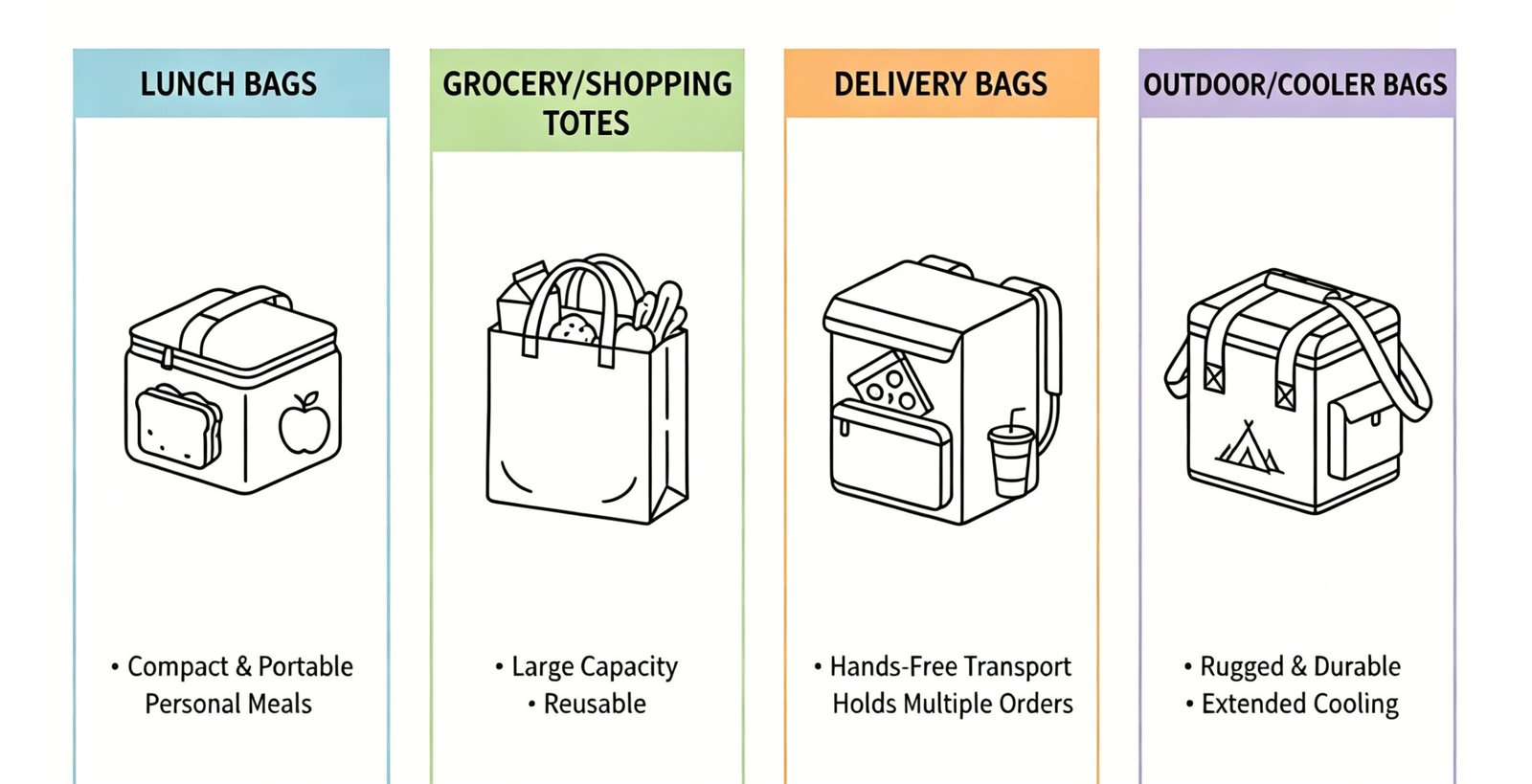
I handle cooler bag inquiries from buyers every week. I have learned one simple thing. Two bags can look almost the same, yet perform very differently after filling, carrying, cleaning, and repeating daily use. That is why I always pull the discussion back to actual use. Once that is clear, the right comparison becomes much easier.
What Insulation Thickness Do Cooler Bag Buyers Need?
Many buyers ask for the thickest insulation first. That sounds safe, but it often leads to extra cost, bulkier bags, and poor fit for the real selling plan.
The right insulation thickness depends on use scenario, bag size, product weight, cooling source, and how long the contents must stay cool.3 Buyers should compare insulation as part of the full bag structure, not as a single number.
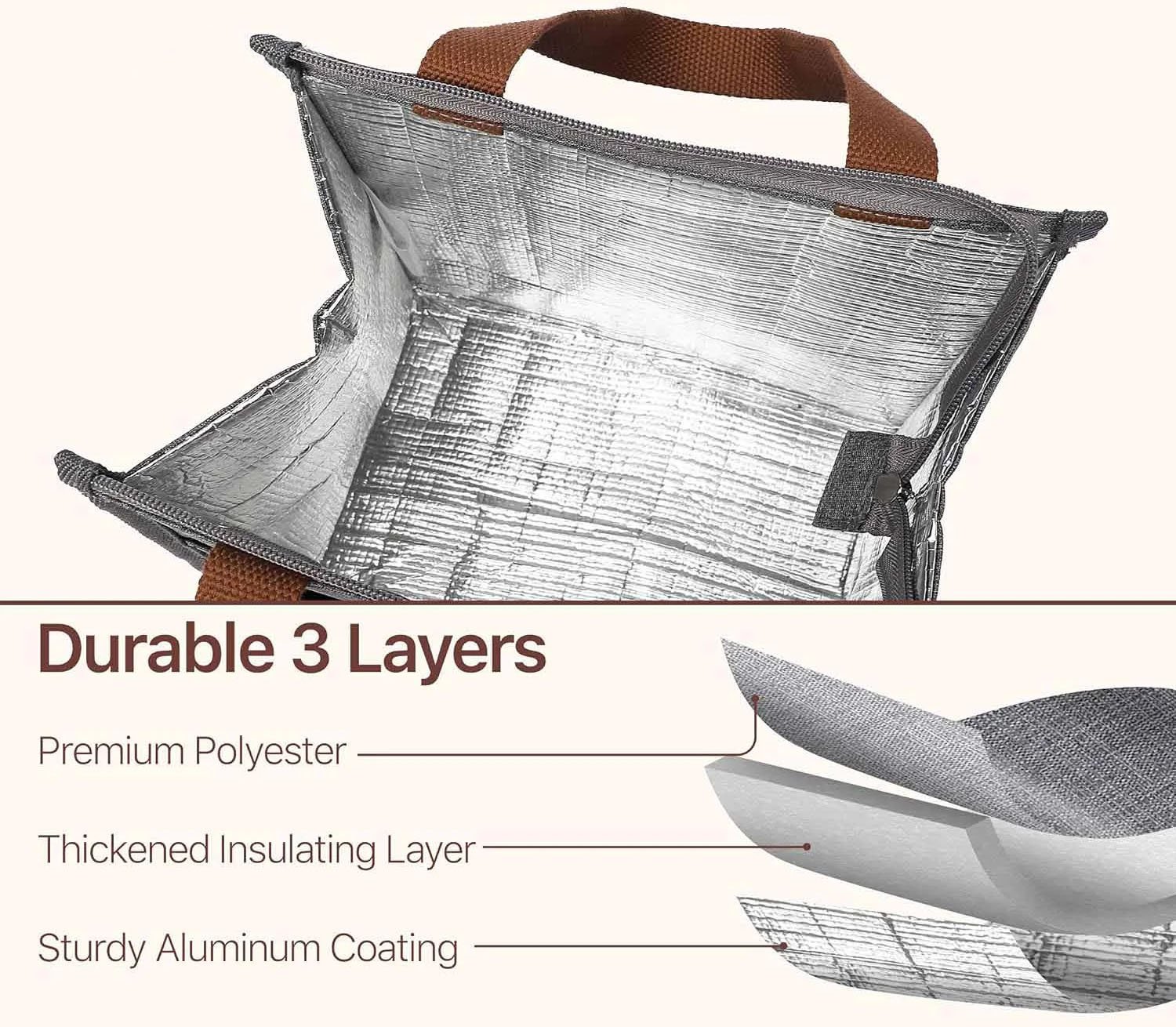
In wholesale cooler bag inquiries, we usually first confirm what the bag will carry. I ask whether the bag is for frozen food delivery, supermarket promotion, meal packing, picnic use, or beverage transport. This step matters because insulation thickness alone does not decide real performance. The outer fabric, inner lining, zipper closure, seam handling, and bag size all affect heat transfer and user experience.4
I have seen buyers compare two bags with the same foam thickness and assume they are equal. They are not always equal. One may use a better zipper and tighter stitching. One may have less air leakage around the opening. One may have a lining that wrinkles less and keeps shape better. These details change results in use.
| Use scenario | Usual buyer concern | What I compare first |
|---|---|---|
| Supermarket frozen promotion | Short-term carrying | Balanced thickness, good sealing, low cost |
| Food delivery | Repeated daily use | Strong structure, easy cleaning, zipper durability |
| Picnic or outdoor retail | Longer cooling expectation | Better insulation build, stronger handles |
| Gift or promotional campaign | Appearance and budget | Print effect, practical structure, controlled cost |
Before quoting, a supplier should understand expected cooling duration, whether ice packs will be used, and how often the bag will be reused. That gives a more useful answer than chasing the thickest foam.
Which Lining Materials Are Easier to Clean?
Many product complaints start after use, not at delivery. A cooler bag can look good at first, but if the lining is hard to wipe, buyers will hear about odor, stains, and fast wear5.
Lining materials that are smoother, more stain-resistant, and better sealed are usually easier to clean.6 Buyers should compare not only the lining material name, but also surface feel, thickness, seam finish, and how it performs after repeated wiping.
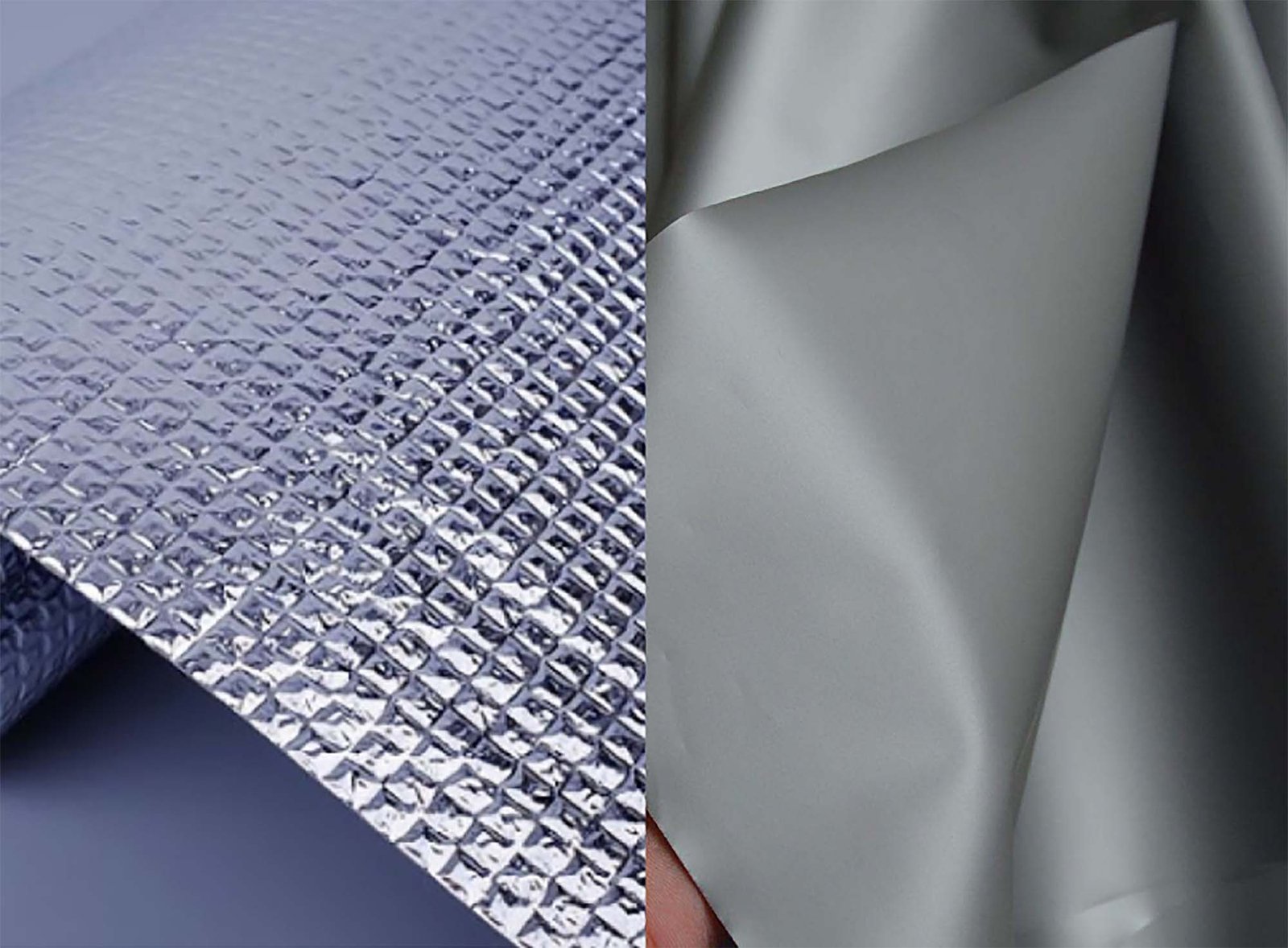
I often tell buyers that lining choice is not just about cost. It is about the after-sales result. If the bag will carry drinks, fresh food, or items with possible leakage, the lining must be easy for the end user to wipe and dry. In sampling, many linings seem acceptable. In bulk use, the small differences become obvious.
A lining should be checked by practical questions. Does it wrinkle too much? Does it trap liquid in corners? Are the seams neat? Is the edge binding done well? Is the material too thin for repeated use? A cheap lining may lower the quote, but it can also raise complaint risk.
Here is the way I usually guide buyers during comparison:
| Compare point | Why it matters |
|---|---|
| Surface smoothness | Smoother surfaces are easier to wipe |
| Thickness and hand feel | Very thin lining may feel weak and crease easily |
| Seam and corner finish | Poor corners collect dirt and liquid |
| Odor after opening | This affects user impression |
| Match with bag use frequency | Frequent-use bags need more durable lining |
I once worked on a project where the sample looked fine, but the buyer later worried about heavy daily use. We reviewed the lining again. We changed to a more practical option with better wipe-clean handling. The unit cost changed a little, but the buyer reduced the risk of complaints from store users. That was the better decision.
How Should Buyers Choose Cooler Bag Capacity?
Many buyers ask for a 6-can, 12-can, or 24-can bag and stop there. That is not enough. Capacity on paper does not always match real packing needs.
Buyers should choose cooler bag capacity by actual packed items, inner dimensions, insulation thickness, and carry weight. A useful comparison checks what fits inside after insulation takes space, not just the outside size or marketing capacity name.
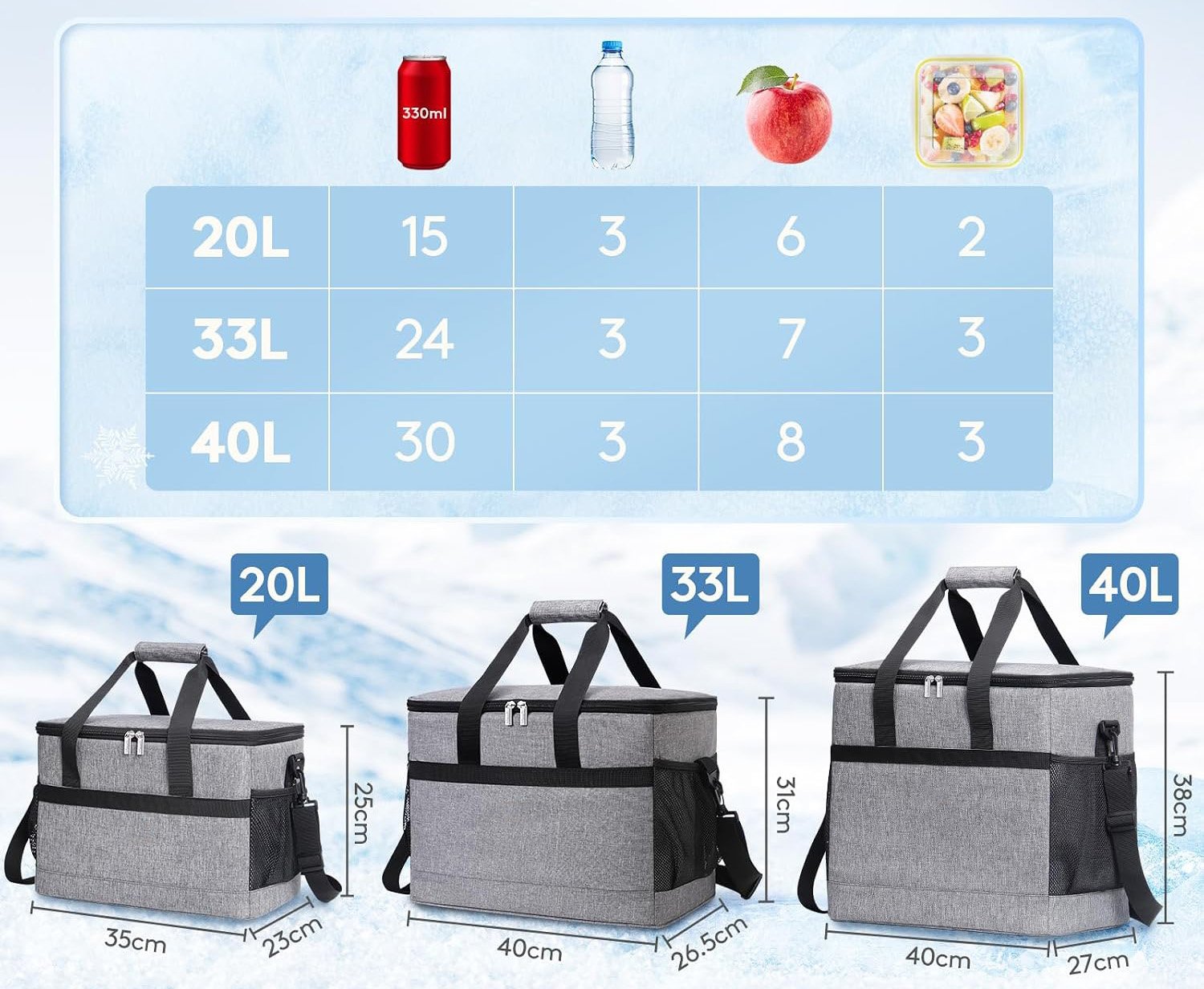
This is one of the most common mistakes I see. A buyer sends a reference photo and asks for a quote on “the same size.” But what matters is not only the outer size. The insulation layer reduces inner space.7 The shape of the opening also affects how easily products can be loaded. A bag may look large but still feel tight in real use.8
Before we quote, I prefer to confirm these points: What exactly goes inside? What are the dimensions of those items? Will there be ice packs? Does the user need to open and close the bag many times? Is the bag meant for hand carry, shoulder carry, or both? These details help avoid a bag that is technically the right size but poor in use.
| Buyer question | Better question to ask |
|---|---|
| How many liters is the bag? | What exact items must fit inside? |
| Is this size popular? | Does this size match my packing plan? |
| Can you copy this sample? | Can the inner space still work after insulation is added? |
| Can it hold more? | Can users carry the filled weight comfortably? |
I usually suggest that buyers test with a packing list, not just a volume target. For supermarket and chain buyers, that step is even more important because shelf plan, shipping carton layout, and user handling all connect to final size. A practical capacity choice lowers waste and improves repeat orders.
What Handles and Straps Work Best for Heavy Loads?
A cooler bag often fails at the handles before it fails at insulation.9 This is a serious issue because load complaints directly affect user trust and store returns.
For heavy loads, buyers should compare handle attachment, webbing width, stitch reinforcement, strap connection points, and bottom support. The best option depends on expected weight, carry distance, and how often the bag will be reused.
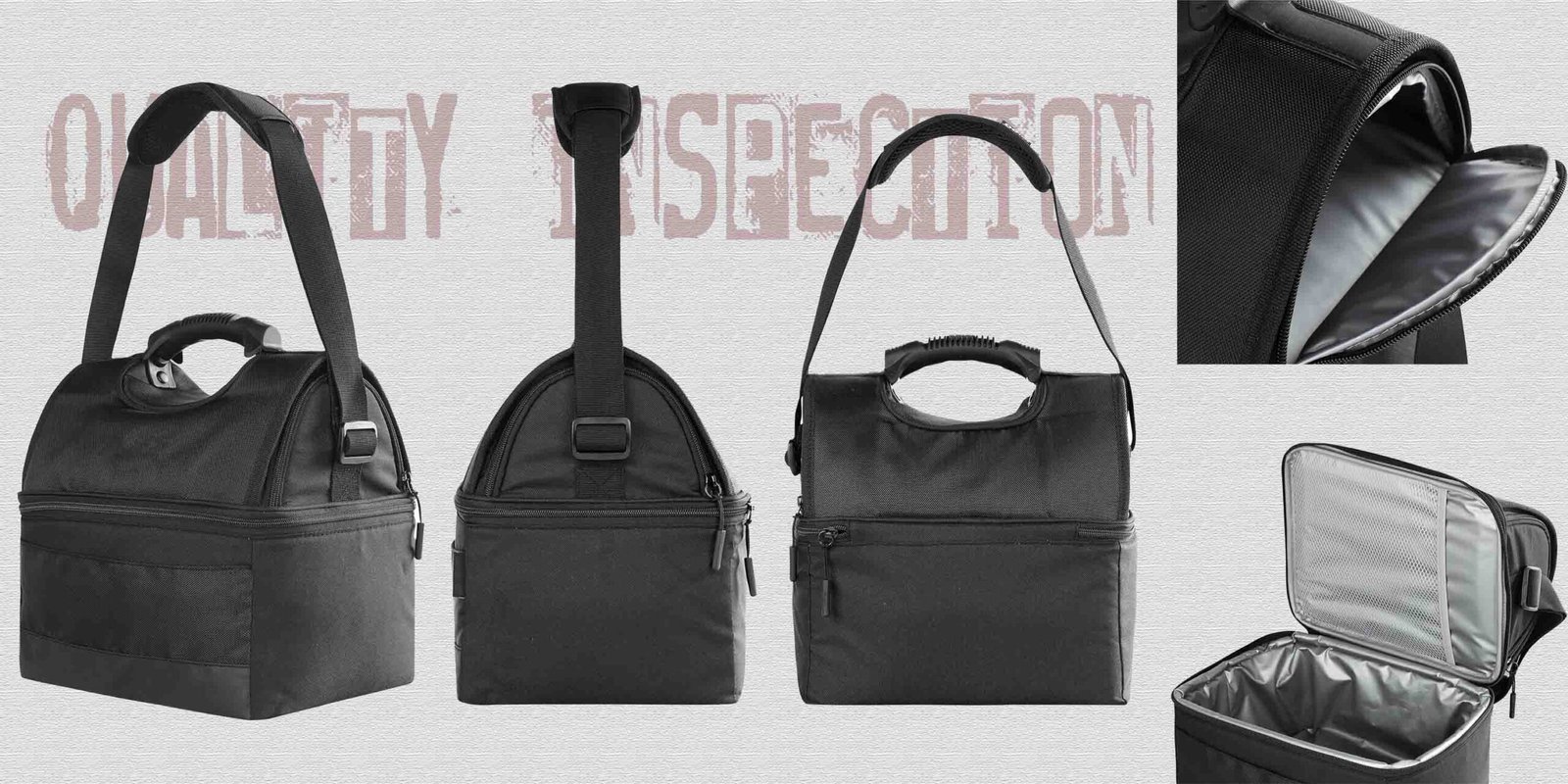
In many inquiries, the first discussion is fabric or print. I understand that. But when the bag is meant to carry drinks, frozen packs, or large grocery loads, handle construction becomes a key quality point. Similar-looking straps can have very different real strength.10
I look at the full load path. Where does the force start? Does the handle wrap under the body or stop at the top seam? Are the stitches reinforced at stress points? Is the shoulder strap hook matched to the expected weight? Is the zipper area under extra pressure when the bag is full? These are small factory details, but they decide whether the bag survives bulk use.
| Load need | What I suggest buyers compare |
|---|---|
| Light promotional use | Basic handle structure may be enough |
| Medium grocery use | Wider webbing and reinforced stitching |
| Heavy beverage or food load | Wrapped handles, stronger joints, better bottom support |
| Frequent reuse | Strong strap hardware and stable sewing quality |
Sample approval is not enough here. A supplier should also show that bulk production will keep the same construction. I have seen cases where a good sample used careful stitching, but bulk goods became inconsistent. That is why I believe buyers should ask how handle sewing is controlled in production, not only whether the sample feels strong in hand.
What Custom Branding Options Are Practical for Cooler Bags?
Branding can make a cooler bag sell better, but the wrong branding choice can create peeling, poor color effect, or a cost jump that does not match the project.
Practical cooler bag branding depends on fabric type, order quantity, logo size, color needs, and use environment. Buyers should compare branding methods by durability, appearance, and production fit, not only by the lowest decoration cost.
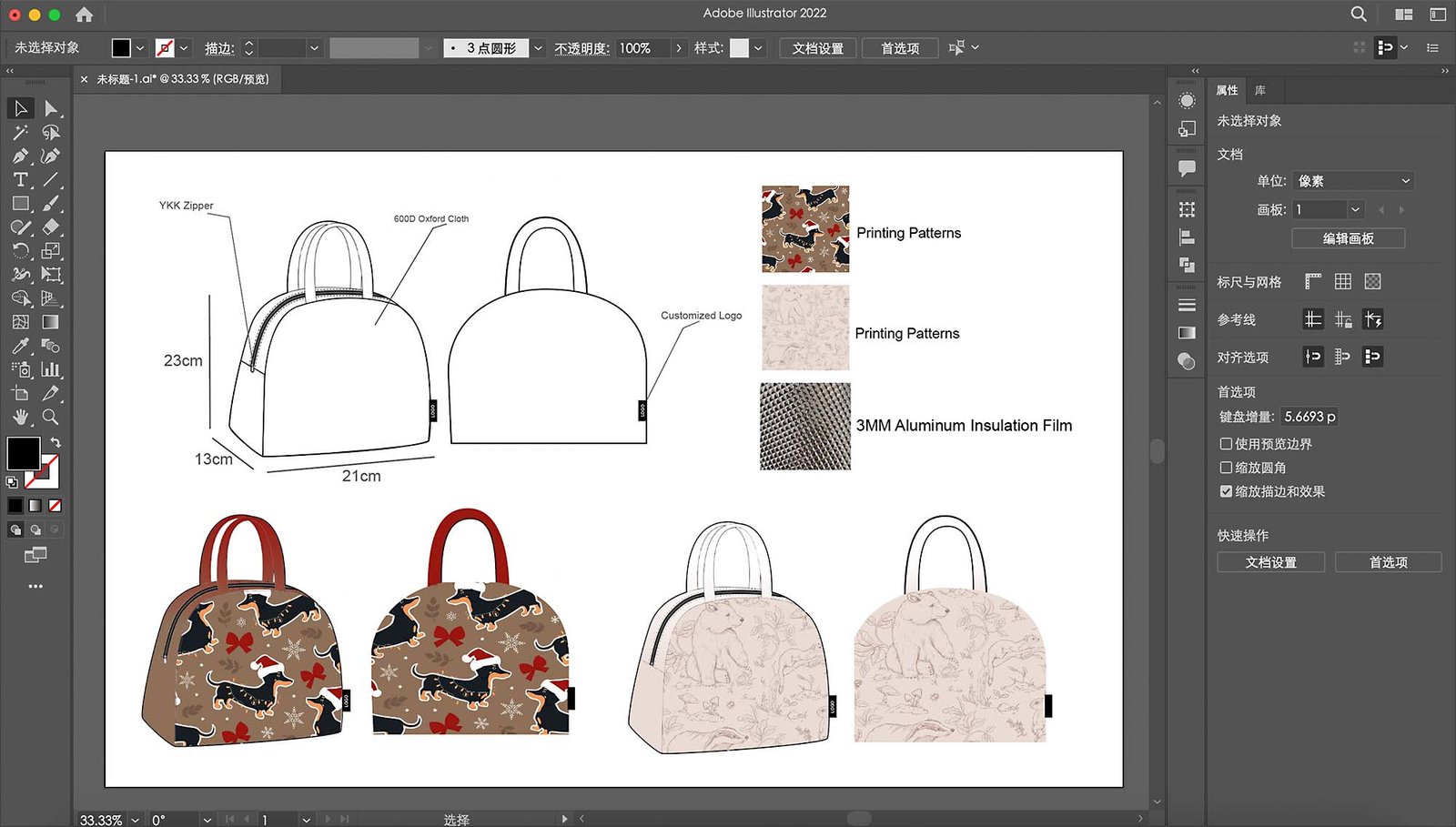
A lot of buyers want strong brand visibility. I understand that very well. Cooler bags often work as both packaging and advertisement.11 But branding should fit the bag material and the sales plan. A simple one-color logo may work better than a complex design if the bag is for large supermarket distribution. A premium retail line may need a cleaner finish. The right answer depends on the project.
In OEM and ODM communication, I usually confirm where the logo will be placed, how large it should be, and what the final use setting is. Will the bag be used outdoors? Will it be folded often? Will moisture or repeated wiping affect the print area? These points matter because some methods look nice at first but are less practical for rough daily use.
| Branding factor | Why buyers should compare it |
|---|---|
| Fabric surface | Some fabrics show logos better than others |
| Logo detail level | Fine details may not suit every method |
| Order quantity | Some methods fit bulk orders better |
| Use condition | Folding, friction, and moisture affect durability12 |
| Cost balance | A cheaper method may create more complaints later |
I always remind buyers to compare branding with bulk repeatability. A sample logo can look perfect. The bigger question is whether the same color, position, and finish can stay stable across mass production. For chain stores and large company programs, that consistency is often more important than choosing the most eye-catching option.
Conclusion
I believe buyers should compare cooler bags by real use, structure, and bulk consistency, because the best wholesale bag is the one that performs well after production, not just in a sample.
"Quality control - Wikipedia", https://en.wikipedia.org/wiki/Quality_control. Quality-control literature notes that conformity in an approved sample does not by itself ensure equivalent performance across production lots, particularly for products subject to repeated mechanical and environmental stress. Evidence role: general_support; source type: research. Supports: That prototype or sample acceptance does not guarantee equivalent durability or performance in repeated real-world use, especially when production consistency varies.. Scope note: This would provide general manufacturing and quality-assurance context rather than direct evidence specific to cooler bags. ↩
"Part 46 - Quality Assurance - Acquisition.GOV", https://www.acquisition.gov/far/part-46. Supplier-quality frameworks emphasize that approval of a pre-production sample should be coupled with evidence of process control and delivery capability so that the approved specification can be reproduced consistently in volume production. Evidence role: expert_consensus; source type: institution. Supports: That supplier evaluation should consider process capability and consistency between approved samples and mass production, not only quoted unit price.. ↩
"Analysis of Thermal Insulation Thickness for a Container House in ...", https://pmc.ncbi.nlm.nih.gov/articles/PMC9778341/. Heat-transfer references explain that cooling retention in insulated containers is governed not by insulation thickness alone but also by surface area, temperature gradient, thermal properties of materials, and the thermal mass of the contents and cooling medium. Evidence role: mechanism; source type: education. Supports: That thermal retention in insulated containers depends on insulation thickness together with geometry, contents, temperature difference, and cooling source.. Scope note: The source would support the physical mechanism and decision factors generally rather than prescribing one exact thickness for all cooler bags. ↩
""EXPERIMENTAL INVESTIGATION OF HEAT LEAKAGE AND AIR ...", https://open.clemson.edu/all_theses/2246/. Studies of insulated containers and heat transfer indicate that discontinuities such as closures and seams can increase heat gain through thermal bridging or air exchange, so overall performance depends on the complete construction rather than insulation thickness alone. Evidence role: mechanism; source type: research. Supports: That closure design, seams, and material layers can influence thermal performance by affecting insulation continuity and air leakage.. Scope note: Direct studies may focus on insulated containers broadly and only indirectly apply to consumer cooler bags. ↩
"Stain-free, self-cleaning clothing on the horizon", https://seas.harvard.edu/news/stain-free-self-cleaning-clothing-horizon. Materials research shows that absorbency, surface morphology, and abrasion resistance affect how readily a surface retains contaminants, stains, and odors and how quickly it degrades under repeated wiping and use. Evidence role: general_support; source type: research. Supports: That material properties such as absorbency, surface finish, and abrasion resistance can influence odor retention, staining, and wear under repeated cleaning and use.. Scope note: The support would be contextual across materials classes and may not directly test every lining used in cooler bags. ↩
"Cutting Boards - Food Safety and Inspection Service - USDA", http://www.fsis.usda.gov/food-safety/safe-food-handling-and-preparation/food-safety-basics/cutting-boards. Food-safety guidance commonly states that smooth, nonabsorbent, and easily cleanable surfaces are preferable because they retain less residue and can be wiped and sanitized more effectively than rough or absorbent materials. Evidence role: mechanism; source type: government. Supports: That smooth, nonabsorbent, and well-finished surfaces are generally easier to clean and less likely to retain residues than rough or porous ones.. Scope note: Such guidance usually addresses cleanability of surfaces in general and may not compare specific cooler-bag lining materials directly. ↩
"Intermodal container - Wikipedia", https://en.wikipedia.org/wiki/Intermodal_container. Basic geometric and packaging principles show that, for a container with fixed outer dimensions, thicker walls or insulation reduce the available interior dimensions and therefore the usable internal volume. Evidence role: definition; source type: education. Supports: That wall thickness occupies space within fixed external dimensions, reducing usable internal dimensions and volume.. ↩
"Container size influences snack food intake independently of portion ...", https://pubmed.ncbi.nlm.nih.gov/22306436/. Packaging and container-design studies note that nominal volume alone does not determine practical usability, because opening dimensions and internal geometry affect how efficiently items can be inserted, arranged, and removed. Evidence role: general_support; source type: research. Supports: That usable packing capacity depends not only on gross volume but also on opening geometry and internal shape, which affect loading efficiency.. Scope note: The source would support the principle generally rather than quantifying the effect for a specific cooler bag design. ↩
"Bolt Failures– Why Learn to Recognize Mechanical Failure Modes", https://smrp.org/News/Solutions-Monthly-Newsletter/Member-Written-Article-Submissions/Bolt-Failures-Why-Learn-to-Recognize-Mechanical-Failure-Modes. Load-testing and textile-product durability studies identify straps, seams, and handle attachment points as common mechanical failure locations in bags subjected to repeated carrying loads. Evidence role: case_reference; source type: research. Supports: That load-bearing components such as handles, seams, and attachment points are frequent mechanical failure points in bags under repeated use.. Scope note: This would support the prominence of handle-related failure modes but may not directly compare their frequency with insulation degradation in cooler bags specifically. ↩
"[PDF] Development of Kevlar parachute webbings", https://www.osti.gov/servlets/purl/6257636. Textile-engineering sources show that the strength of a carrying strap depends on fiber composition, webbing construction, width, stitching pattern, and attachment design, meaning visually similar straps can differ markedly in load performance. Evidence role: mechanism; source type: research. Supports: That strap performance depends on material and construction details, so visually similar straps may have different tensile and attachment strength.. ↩
"[PDF] Evaluation of the functions of packaging and their relations to ...", https://scholarworks.umt.edu/cgi/viewcontent.cgi?article=3278&context=etd. Marketing and packaging literature describes reusable bags as dual-function items that provide carrying utility while also extending brand exposure through repeated public use. Evidence role: historical_context; source type: education. Supports: That reusable branded bags can function simultaneously as packaging/carrying items and as mobile advertising displays.. Scope note: The support would address reusable branded bags generally and may not focus specifically on cooler bags. ↩
"Flexible and Durable Direct Ink Writing 3D-Printed Conductive ...", https://pmc.ncbi.nlm.nih.gov/articles/PMC12004193/. Materials and coating studies report that cyclic flexing, surface abrasion, and moisture exposure can degrade printed or coated finishes by weakening adhesion and accelerating visible wear. Evidence role: mechanism; source type: research. Supports: That repeated flexing, abrasion, and moisture exposure can reduce the adhesion and appearance durability of printed or coated decorations on textiles and polymers.. Scope note: This support would be about decoration systems on relevant substrates generally rather than a direct test of every cooler-bag branding method. ↩